Build full-body strength and cardio upstairs without jumps, thumps, or neighbor drama. A practical low-impact routine plus simple noise-reduction tips.
Home Pulse Fit
•
home workouts and fitness
10 Quiet Low-Impact HIIT Exercises for Apartments
Get a heart-pumping HIIT workout without the jumping. Here are 10 quiet, apartment-friendly low-impact exercises plus a simple 20-minute routine that keeps things effective and neighbor-friendly.

Marcus Thorne
Marcus Thorne is an NASM-certified personal trainer and the creator behind Home Pulse Fit. After successfully transforming his own health using only bodyweight routines in his small apartment, he left his demanding corporate career to help others do the same. Today, he is dedicated to making fitness accessible, sustainable, and entirely gym-free for busy beginners.
Published
October 18, 2026
Updated
October 18, 2026
I used to think “real HIIT” meant jumping, stomping, and leaving a sweat outline on the floor. Then I tried doing that in a small apartment with thin floors and quickly learned an important truth: you can get a very similar lungs-on-fire intensity without annoying your neighbors.
The secret is simple: move fast, stay controlled. Low impact does not mean low effort. It just means no heavy landings.
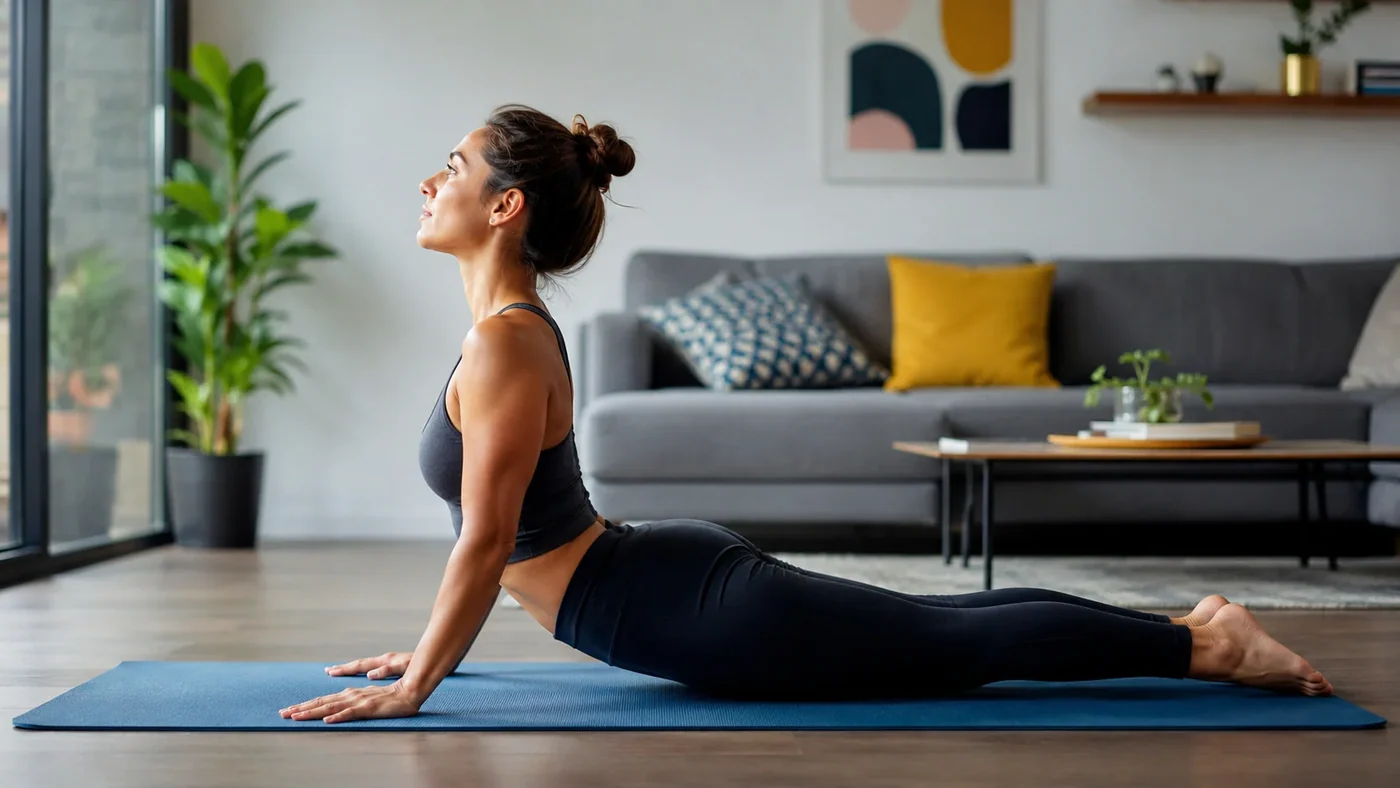
Before you start: 3 quiet HIIT rules
- Soft feet: Think “sneakers on a library floor.” Stay on the balls of your feet when you step and place each foot down gently.
- Bend your knees: Slightly bent knees absorb sound and can reduce joint stress. Locked knees are often louder and can feel harsher on your body.
- Control your core: The more stable your trunk, the less you wobble, slam, or stomp. Quiet workouts are usually better-form workouts.
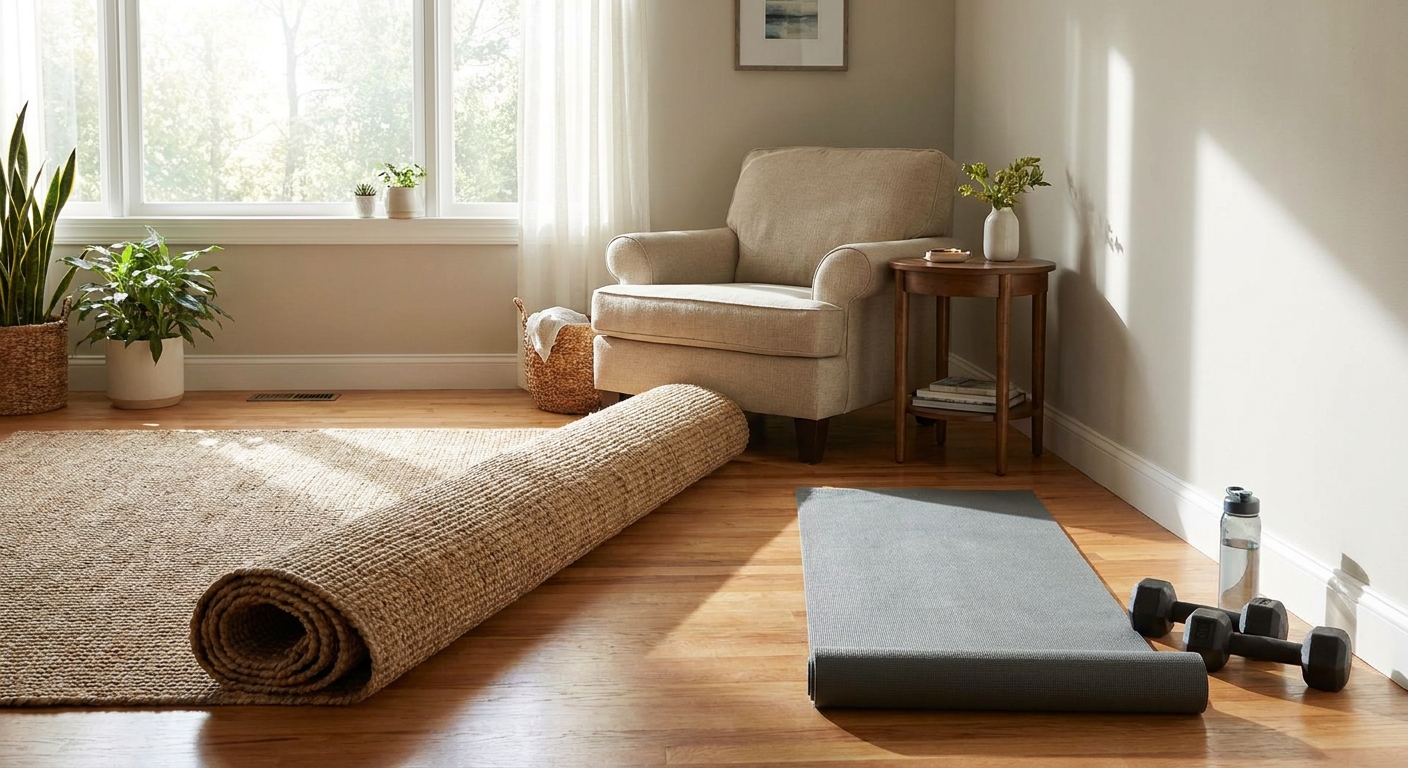
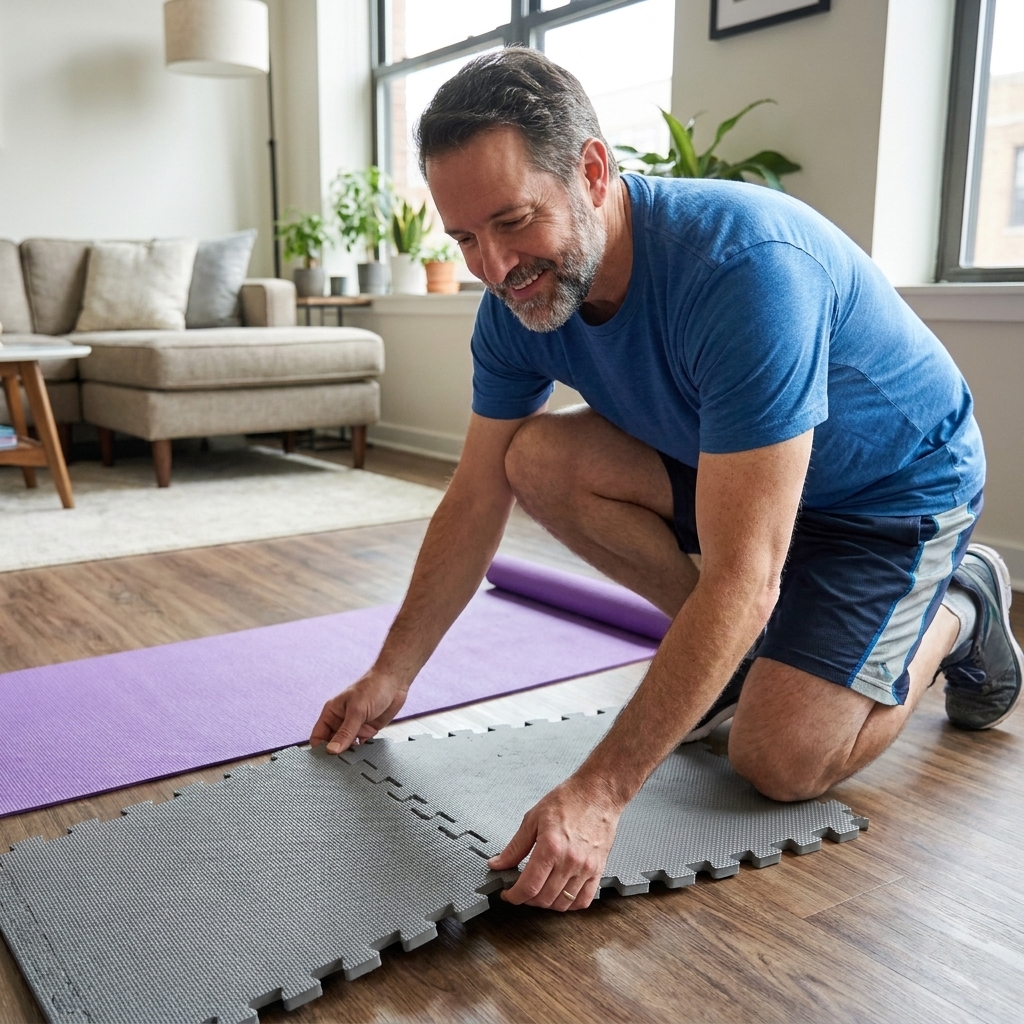
My neighbor-friendly setup: one yoga mat (or folded towel), supportive sneakers if your floors are hard, and a little space the size of a doormat.
10 quiet low-impact HIIT moves
Use these as a menu. Pick 5 to 8 moves and cycle them HIIT-style, or follow the complete routine later in this article.
1) Fast Feet (no hop)
What it is: Rapid alternating foot taps, like a run-in-place with no airtime.
How to do it (quiet version):
- Stand tall, knees slightly bent.
- Alternate lifting one foot at a time quickly, like you are tapping out a beat.
- Keep steps tiny and light. Your feet should barely travel.
Make it harder: Add quick arm pumps or increase speed while staying silent.
Common mistake: Turning it into “mini hops.” Keep it grounded, no bouncing.
2) Step Jack
What it is: Classic jack pattern using step-outs.
- Step right foot out as arms sweep overhead.
- Step back in as arms come down.
- Alternate sides at a brisk pace.
Make it harder: Drop into a tiny athletic quarter-squat the whole time.
3) Skater Steps
What it is: Side-to-side athletic steps that light up your legs and heart rate.
- Step your right foot diagonally behind you while your torso leans slightly forward.
- Keep the front knee bent and hips back.
- Step through to the other side, staying smooth and quiet.
Make it harder: Increase range, not impact. Go wider, not louder.
4) Squat to Calf Raise
What it is: A leg burner that can spike heart rate without any pounding.
- Lower into a comfortable squat, hips back, chest up.
- Stand up and immediately rise onto your toes.
- Lower heels softly and repeat.
Quiet cue: When you come down from the calf raise, lower like you are trying not to wake a sleeping baby.
5) Reverse Lunge to Knee Drive
What it is: A controlled strength and cardio combo.
- Step one leg back into a reverse lunge.
- Push through the front foot to stand.
- Drive the back knee up to hip height, pause for control.
Make it harder: Slow the lunge down to 2 to 3 seconds and drive the knee up fast.
6) Mountain Climbers
What it is: A core-heavy cardio move that can be nearly silent.
- Hands on the floor in a strong plank, shoulders over wrists.
- Drive one knee toward your chest, then switch.
- Keep hips level and steps quiet.
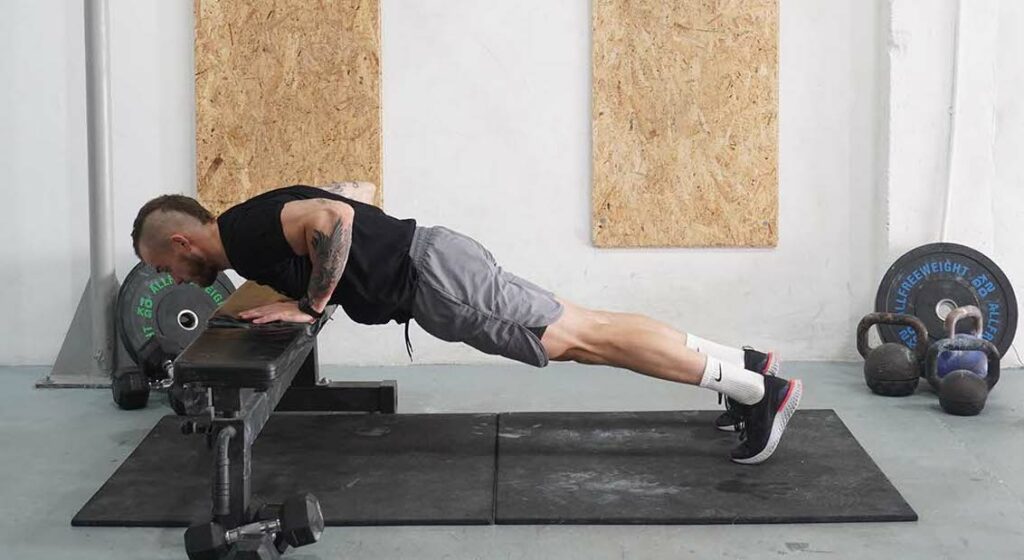
Neighbor-friendly tip: Put your hands on a sturdy couch or countertop to reduce floor noise and wrist strain.
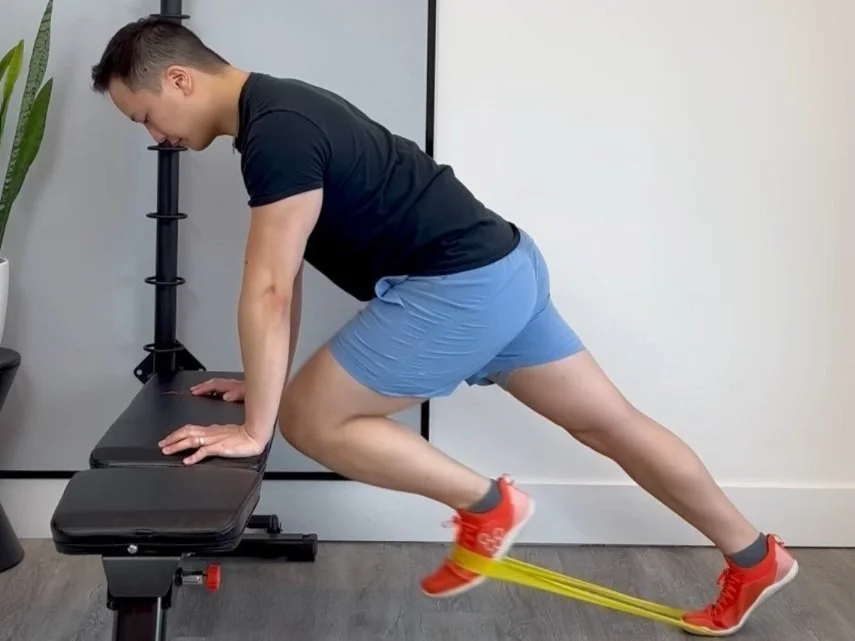
7) Plank Shoulder Taps
What it is: Core and shoulder stability that makes your heart work when done with speed and control.
- Start in a high plank.
- Tap right hand to left shoulder, then left hand to right shoulder.
- Fight the urge to sway your hips.
Make it harder: Narrow your stance (narrow base equals more core demand), but only if you can stay stable.
8) Bear Hold with Knee Taps
What it is: A sneaky cardio move that is more “shake” than “sound.”
- Hands under shoulders, knees under hips.
- Hover knees 1 to 2 inches off the floor.
- Alternate lightly tapping one knee to the floor and lifting it again.
Make it easier: Hold the hover without taps for 10 to 20 seconds.
Wrist-friendly option: Do this with hands on a sturdy couch or countertop for an incline bear hold.
9) Cross-Body Knee Drives
What it is: A standing core and cardio move that is great for small spaces.
- Bring right knee up toward left elbow with a slight crunch.
- Return with control and alternate.
- Move briskly while keeping posture tall.
Make it harder: Add a strong downward elbow drive and speed up the rhythm.
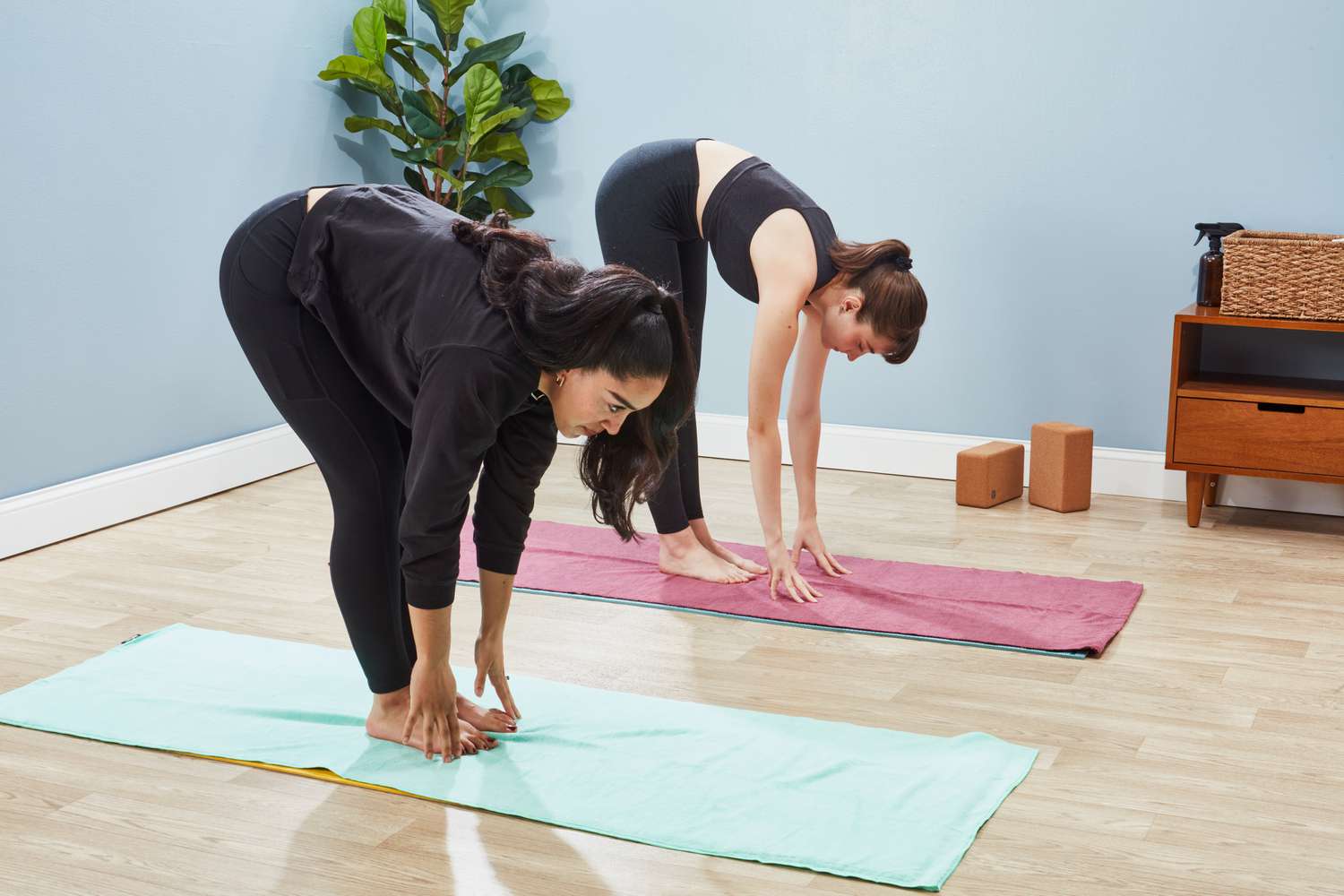
10) Walkout to Plank
What it is: Full-body conditioning with zero impact.
- Stand tall, hinge at the hips, hands to floor (bend knees as needed).
- Walk hands out to a plank.
- Hold 1 to 2 seconds, then walk hands back and stand.
Make it harder: Add a shoulder tap in plank before walking back.
Quiet cue: Your hands should land softly each step, no slapping the floor.
A 20-minute quiet HIIT workout
This is the exact structure I used when I first started training in my apartment. It feels intense, but it is joint-friendly and neighbor-friendly.
Quick safety note: If you are pregnant or postpartum, dealing with balance issues, wrist pain, or a heart or blood pressure condition, consider getting clearance and choosing incline or slower options. Stop if pain ramps up or feels sharp, pinchy, or wrong.
Warm-up (3 minutes)
- 30 seconds: marching in place with big arm swings
- 30 seconds: hip hinges (hands on hips, practice the squat pattern)
- 30 seconds: step jacks
- 30 seconds: gentle alternating reverse lunges
- 30 seconds: inchworms halfway out and back (short range)
- 30 seconds: easy fast feet (quiet)
Main set (14 minutes)
Format: 40 seconds work, 20 seconds rest. Complete 2 rounds of the 7 moves below.
Intensity target: Aim for an effort of about 7 to 9 out of 10. You should be breathing hard and able to say only a short sentence, not hold a casual conversation.
- Step Jack
- Squat to Calf Raise
- Cross-Body Knee Drives
- Skater Steps
- Mountain Climbers (incline or floor)
- Reverse Lunge to Knee Drive
- Plank Shoulder Taps
Cool-down (3 minutes)
- 60 seconds: slow breathing, hands on ribs (inhale through nose, long exhale)
- 60 seconds: quad stretch or couch-supported quad stretch
- 60 seconds: calf stretch against a wall
How to keep it intense
- Shorten rest: Keep the move easy on joints, but tighten the clock. Try 45 seconds work, 15 seconds rest.
- Add tension: In squats and lunges, move a little slower on the way down. Time under tension increases effort fast.
- Use your arms: Strong arm drive often boosts heart rate and helps you stay athletic without bouncing.
- Stay honest with form: If you are wobbling and stomping, you are going too fast. Quiet usually equals controlled, and controlled usually equals safer and more effective.
Make it even quieter
- Train on a mat: A yoga mat helps, but if floors are thin, layer a folded towel underneath the mat for extra dampening.
- Wear stable shoes: If your feet slap the floor barefoot, sneakers can reduce noise and improve comfort.
- Avoid twisting pivots: Fast pivots can squeak. Step and face forward instead.
- Choose daytime sessions: Not a fitness tip, just neighbor diplomacy.
FAQ
Is HIIT still HIIT if it is low impact?
Yes. HIIT is about alternating hard efforts with recovery. Impact is optional. You can hit high intensity with fast step patterns, controlled strength combos, and short rests.
How often should I do this as a beginner?
Start with 2 to 3 sessions per week, with an easier day between. On off days, a 10 to 30 minute walk or a simple mobility routine is perfect.
What if my knees hate squats and lunges?
Reduce range of motion and slow down. You can also swap squats for hip hinges and swap lunges for step-backs to a shallow bend. If discomfort increases during the workout, stop and adjust. If pain persists, worsens, or feels sharp or pinching, it is worth checking in with a qualified clinician or physical therapist.
Do I need equipment?
No. A mat helps. A couch or countertop is a great tool for incline options (mountain climbers, bear holds, support during balance moves) and it costs exactly zero dollars.
How do I progress without overthinking it?
Try this simple three-week build:
- Week 1: 30 seconds work, 30 seconds rest
- Week 2: 40 seconds work, 20 seconds rest
- Week 3: 45 seconds work, 15 seconds rest
Keep the moves the same so you can focus on getting quieter, cleaner, and faster.
Coach-in-your-corner reminder
If you live in an apartment, the goal is not to be “quiet at all costs.” The goal is to be consistent without stressing your joints or your neighbors. Pick 4 to 6 moves you like, repeat them for two weeks, and aim to finish feeling proud, not destroyed.
Consistency beats intensity every time. Especially when you are training six feet from your couch.