Follow this month-long, no-equipment bodyweight plan designed for true beginners. Clear weekly schedule, step-by-step workouts, and simple progressions for s...
Home Pulse Fit
•
home workouts and fitness
Build a Weekly Home Fitness Schedule
Create a weekly home workout schedule from scratch with the right mix of strength, cardio, and rest days. Includes beginner-friendly templates, intensity tips, and simple progress rules.

Marcus Thorne
Marcus Thorne is an NASM-certified personal trainer and the creator behind Home Pulse Fit. After successfully transforming his own health using only bodyweight routines in his small apartment, he left his demanding corporate career to help others do the same. Today, he is dedicated to making fitness accessible, sustainable, and entirely gym-free for busy beginners.
Published
October 18, 2026
Updated
October 18, 2026
If you have ever tried to “just work out more” and ended up doing random sessions until you fizzled out, you are not alone. The simplest way to make home fitness sustainable is to give your week a little structure: a few strength days to build your engine, a little cardio for your heart and stamina, and real recovery so your body can adapt.
I used to think fitness required a perfect plan and a two-hour gym visit. What finally worked for me was the opposite: a small weekly schedule I could repeat even when work was chaos. This guide will help you build your own from scratch, based on your time, your space, and your starting point.
Start with your non-negotiables
Before we talk exercises, decide what you can realistically repeat for the next 4 weeks. Consistency beats intensity, and your schedule has to fit your life.
Answer these 4 questions
- How many days per week can you commit? For many beginners, a common sweet spot is 3 to 5 workout days, but fewer can still work if you are starting from zero or your schedule is tight.
- How long can each session be? A reliable 20 minutes beats an occasional 60.
- What time of day is most consistent? Morning, lunch, or after dinner, pick the slot with the fewest obstacles.
- What equipment do you have? Bodyweight is enough. If you have a band or a pair of dumbbells, great, but not required.
Coach tip: If your schedule is unpredictable, plan “floating” days: three workouts you complete anytime between Monday and Sunday, instead of assigning a strict day.
The three building blocks
A good weekly plan balances strength, cardio, and recovery. When beginners get stuck, it is usually because one of them is missing.
Strength days (2 to 4 days per week)
Strength training plays a major role in shaping your body and building the muscles that support your joints. At home, this usually means pushups (or incline pushups), squats, hip hinges (like glute bridges), rows (with a band, or a secure setup), and core stability.
Beginner goal: Full-body strength 2 to 3 days per week.
Cardio days (1 to 3 days per week)
Cardio improves heart health, endurance, and overall conditioning, so you can catch your breath faster between efforts. At home, cardio can be low impact and still effective: brisk walking, stair climbing, marching intervals, shadow boxing, dance workouts, or short “cardio finishers” after strength.
Beginner goal: 1 to 2 cardio sessions per week, or 10-minute add-ons.
Recovery days (at least 1 to 2 per week)
Recovery is when your body adapts to training. Recovery does not mean doing nothing. It can mean easy walking, light mobility, gentle stretching, or simply sleeping more.
Beginner goal: 1 full rest day minimum. Many beginners thrive on 2.
Pick your anchor days
Anchor days are the workouts that never move. Everything else flexes around them. For most beginners, strength days make the best anchors.
Examples of anchor choices
- Two strength anchors: Tuesday and Friday
- Three strength anchors: Monday, Wednesday, Saturday
- Two strength plus one cardio anchor: Monday and Thursday strength, Saturday cardio
Once your anchors are set, fill the gaps with optional cardio, mobility, or rest depending on your energy and time.
Choose a strength format
You do not need a complicated split as a beginner. Your joints and tendons are still adapting. Repeating simple patterns is the fastest way to build momentum.
Option A: Full-body (best for most beginners)
Each strength day includes a push, a pull, a squat or lunge, a hinge or glute movement, and a core exercise.
- Pros: efficient, balanced, easy to schedule
- Best when: you train 2 to 3 days per week
Option B: Upper/lower split (when you hit 4 strength days)
Two upper-body focused days and two lower-body focused days.
- Pros: more total strength work without marathon workouts
- Best when: you are consistent with 4 workout days
Option C: Full-body plus accessories
Two full-body days, plus one “extras” day for posture, glutes, and core.
- Pros: great for desk workers, lower soreness
- Best when: you want 3 strength days but shorter sessions
Build your first week
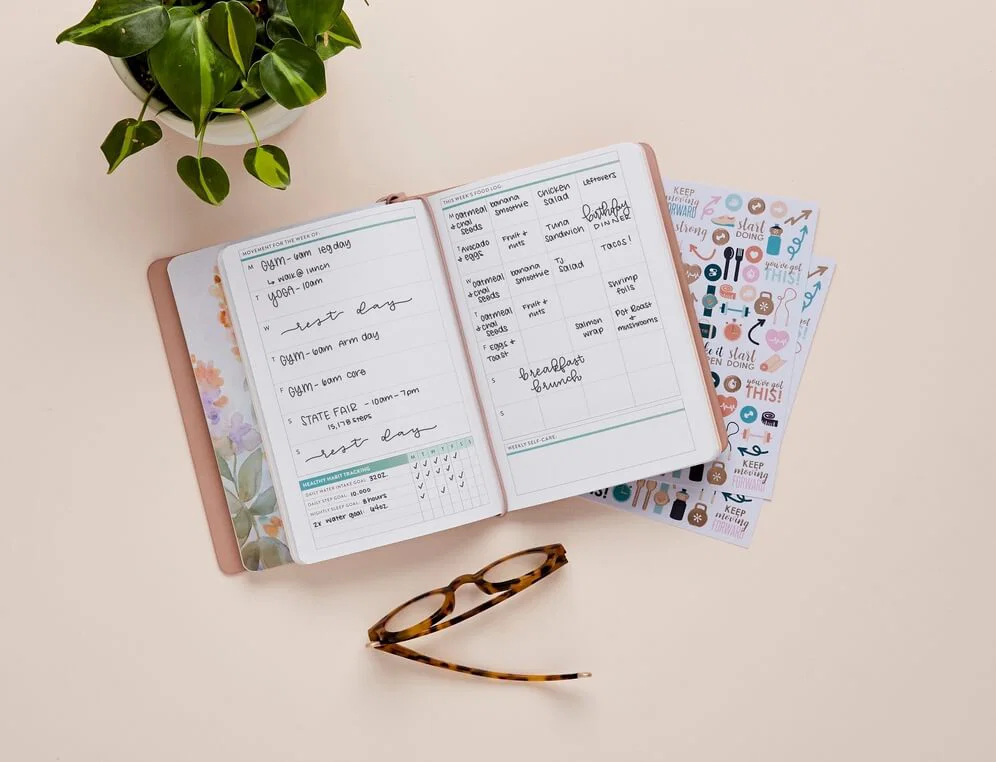
Use one of these schedules as your starting point, then customize it. The best plan is the one you can repeat for 4 straight weeks.
Template: 3 days per week
- Day 1: Full-body strength
- Day 2: Rest or easy walk
- Day 3: Full-body strength
- Day 4: Rest or mobility
- Day 5: Full-body strength + 5 to 10 minutes easy cardio
- Weekend: One optional easy walk (light recovery), one full rest day
Template: 4 days per week (2 strength + 2 cardio)
- Day 1: Full-body strength
- Day 2: Rest or mobility
- Day 3: Cardio (low impact intervals) or brisk walk
- Day 4: Rest
- Day 5: Full-body strength
- Day 6: Cardio (steady pace)
- Day 7: Rest
Template: 5 days per week
- Day 1: Strength
- Day 2: Cardio
- Day 3: Strength
- Day 4: Mobility + easy walk
- Day 5: Strength
- Day 6: Cardio
- Day 7: Rest

What each workout looks like
Your weekly schedule is only half the battle. The other half is knowing what you will do when you press start.
Simple intensity guidelines
- Strength: Aim to finish most sets with about 2 to 3 reps left in the tank. You should feel challenged, but not wrecked.
- Cardio: Use the talk test. On easy to moderate days you should be able to speak in short sentences. If you can only gasp single words, dial it back.
A simple 20-minute strength session blueprint
- 2 minutes: warm-up (marching in place, arm circles, hip circles)
- 15 minutes: 4 to 5 moves in a circuit
- 3 minutes: cool down (easy breathing, gentle stretches)
Beginner full-body circuit (no equipment)
Do 2 to 4 rounds. Rest as needed.
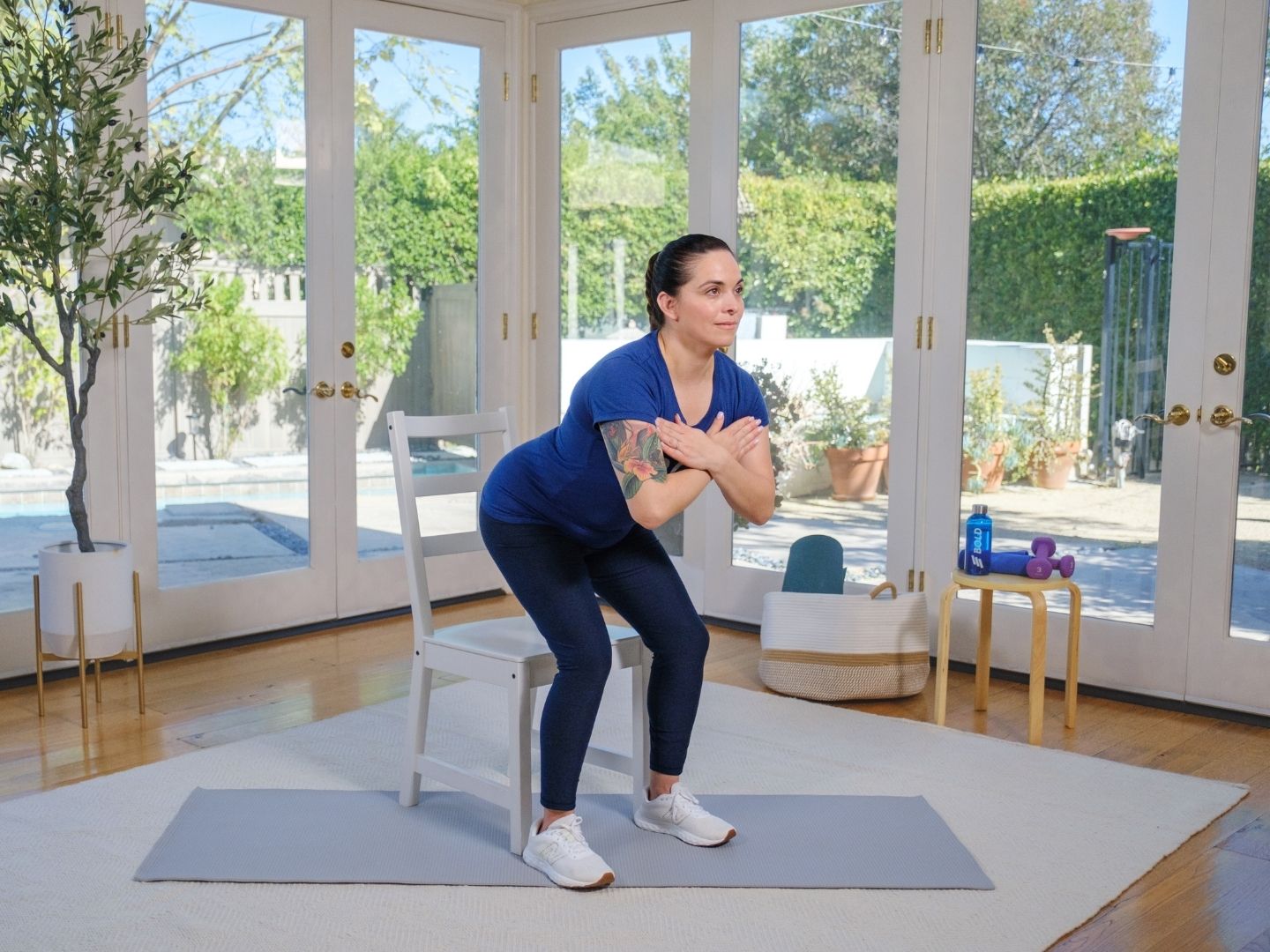
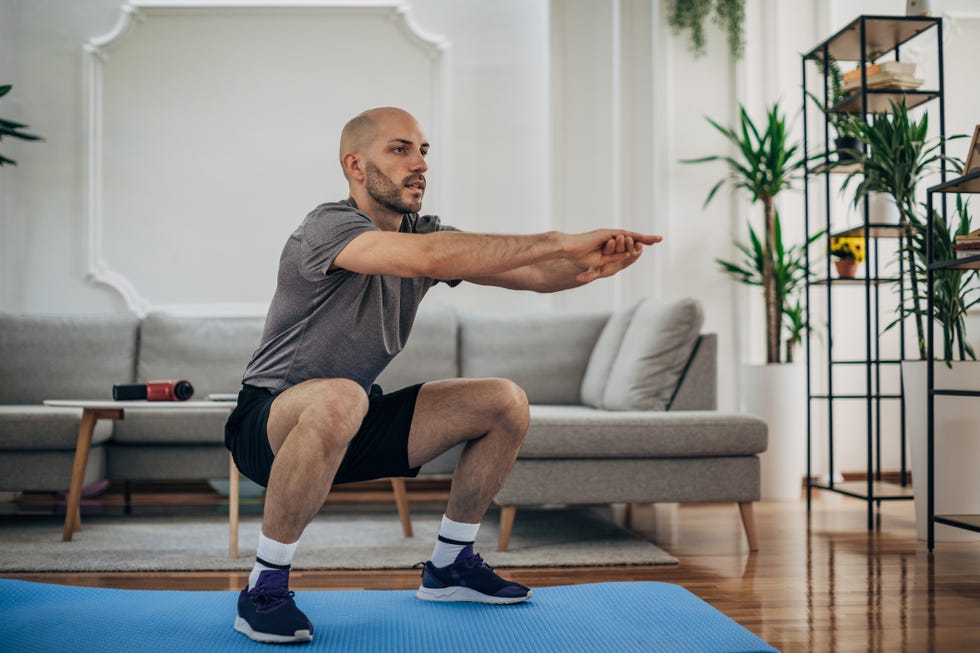
- Squat to a chair or bodyweight squat: 8 to 12 reps
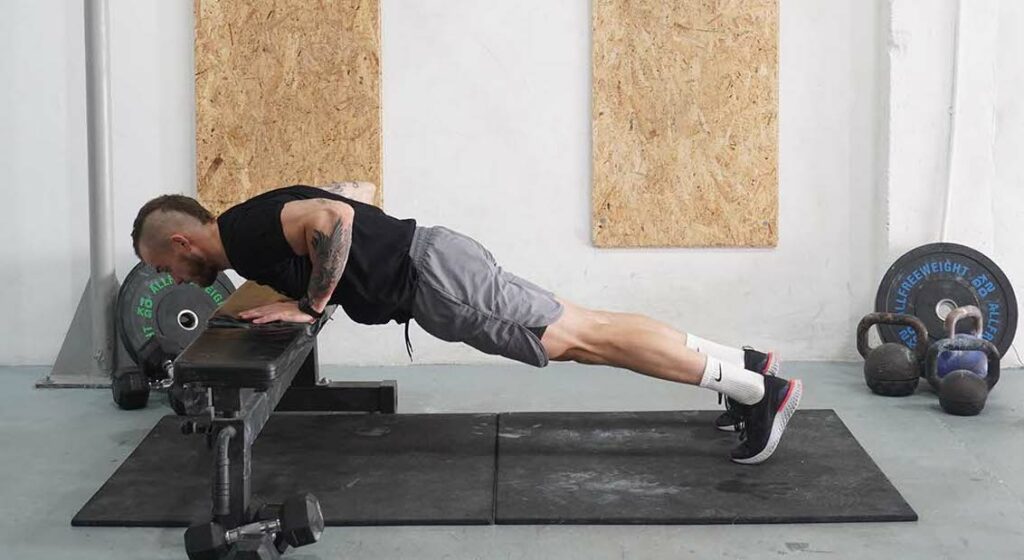
- Incline pushup on a counter or couch: 6 to 12 reps
- Glute bridge: 10 to 15 reps
- Dead bug (slow): 6 to 10 per side
- Plank (knees down is fine): 15 to 30 seconds
A simple cardio session blueprint
- Warm-up: 3 minutes easy pace
- Main: 10 to 20 minutes steady OR intervals like 30 seconds brisk, 60 seconds easy
- Cool down: 2 to 3 minutes easy pace
Balance your week
Rule 1: Leave a gap between hard strength days
If you are doing full-body strength, aim for at least one day between sessions at first. That is not weakness, it is smart recovery.
Rule 2: Match cardio to your recovery
If your legs are sore, choose low impact cardio like walking, cycling, or a gentle step-up pace. Cardio should support your plan, not sabotage your next strength day.
Progress without overthinking
Your schedule should feel slightly easier after 2 weeks, not harder. That is your cue to progress.
Pick one progress knob at a time
- Add reps: go from 8 to 10 reps per set
- Add a round: go from 2 rounds to 3
- Reduce rest: keep the same work, shorten breaks slightly
- Make the move a bit harder: incline pushups to lower incline, chair squats to free squats
- Add minutes to cardio: +2 to 5 minutes per session
My favorite beginner rule: Only change one thing per week. This keeps soreness manageable and motivation high.
Customize for goals
If your goal is fat loss
- Keep 2 to 3 strength days as your base
- Add 1 to 2 cardio days or 10-minute finishers after strength
- Prioritize daily steps if you can, even 10 minutes after meals
If your goal is muscle and tone
- Do 3 strength days consistently
- Keep cardio low to moderate so you recover well
- Track reps so you can gradually increase them
If your goal is energy and stress relief
- Use shorter sessions, 15 to 25 minutes
- Choose low impact cardio and simple strength circuits
- Schedule at least 2 recovery focused days with walks and mobility
Make it stick
Lower the barrier to starting
- Keep your mat and shoes where you will see them
- Use a simple timer app, not a complicated workout tracker
- Have a “minimum workout” for chaotic days (example: 5 minutes)
Use the minimum workout
On your busiest day, do:
- 10 squats
- 10 incline pushups
- 20-second plank
That is it. You are keeping the habit alive. Most days, once you start, you will do more.
Track the right thing
Beginners often track scale weight and get discouraged. Track attendance first. If you complete your planned sessions for 4 weeks, you are winning.
Safety notes
- Pain versus effort: muscles working is normal, sharp or joint pain is not.
- Warm up and cool down: take 2 to 5 minutes to ramp up and ramp down, especially if you are deconditioned or stiff.
- Form first: go slower before you go harder.
- Secure your setup: if you do band rows or any kind of anchored pulling, only use anchors you trust. If you are unsure, swap in safer options like bent-over backpack rows or band rows anchored around a heavy, stable object.
- Medical considerations: if you are pregnant, recovering from surgery, or managing a health condition, check with a qualified clinician before starting.
FAQ
How many rest days should a beginner have?
Most beginners do best with 2 rest or recovery days per week. You can still walk on those days, just keep it easy.
Is it okay to do strength and cardio on the same day?
Yes. If time is tight, do strength first, then add 5 to 15 minutes of easy cardio. Keep it simple.
What if I miss a workout?
Do not “punish” yourself with a double session. Just do the next planned workout. One missed day does not ruin a plan, quitting does.
How long should I follow the same weekly schedule?
Give it 4 weeks. If you are consistent and it feels manageable, keep it. If it feels too easy, progress one knob. If it feels too hard, reduce a day or shorten sessions.
Your next step
Pick a template, choose your anchor strength days, and commit to repeating your schedule for the next 4 weeks. You do not need perfect workouts. You need a plan that fits your real life and a rhythm you can keep.
If you want a simple starting point, choose the 3-day template and do full-body strength every time. That was the exact approach that helped me rebuild my health in a small apartment with zero gym time.