Build full-body strength and cardio upstairs without jumps, thumps, or neighbor drama. A practical low-impact routine plus simple noise-reduction tips.
Home Pulse Fit
•
home workouts and fitness
Low-Impact Home Fitness Plan
A beginner-friendly, joint-friendly home workout plan with step-by-step low-impact exercises, a weekly schedule, safety tips, and simple ways to progress without jumping.

Marcus Thorne
Marcus Thorne is an NASM-certified personal trainer and the creator behind Home Pulse Fit. After successfully transforming his own health using only bodyweight routines in his small apartment, he left his demanding corporate career to help others do the same. Today, he is dedicated to making fitness accessible, sustainable, and entirely gym-free for busy beginners.
Published
October 18, 2026
Updated
October 18, 2026
If your knees, hips, or ankles complain the moment a workout includes jumping, you are not broken. You are just looking for the right style of training.
I used to think “real workouts” had to be loud and intense. Then I started training in a small apartment with bodyweight moves that did not beat up my joints. The surprising part was how quickly my energy and strength improved when I stayed consistent.
This plan is built for beginners who want results without impact. No burpees. No jump squats. No guilt. Just a clear weekly schedule and joint-friendly moves you can do in a small space.
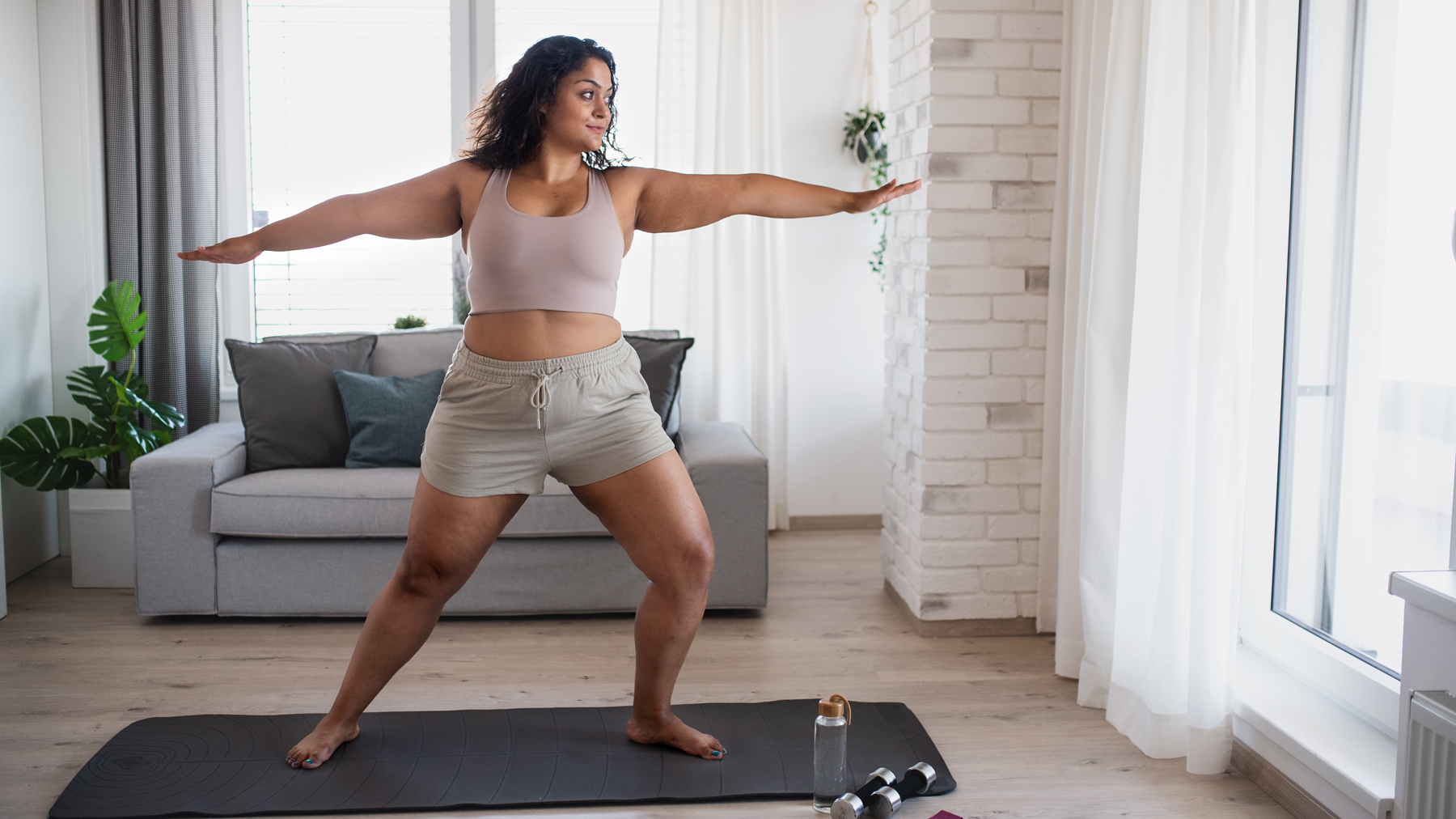
What “low-impact” means
Low-impact does not mean low-effort. It usually means no jumping or hard landings, and lower ground forces on your joints. You move smoothly, stay in control, and keep the “pounding” out of your workout.
- Low-impact: step-backs instead of jumps, controlled squats, marching, incline push-ups, glute bridges.
- High-impact: jumping jacks, jump rope, plyometrics, repeated hopping.
If you have arthritis, prior injuries, or you are returning after a long break, low-impact training is often a great way to build momentum. If symptoms flare or you have a known condition, it is smart to check in with a clinician or physio for personalized guidance.
Before you start
What you need
- A stable chair or couch edge (for support and incline push-ups)
- A yoga mat or folded towel (optional but nice for knees and comfort)
- Comfortable shoes or bare feet if your ankles prefer it
Quick safety check
- Chair safety: Use a solid, non-wheeled chair. If it slides, place it against a wall or on a grippy mat.
- Floor traction: Watch out for slippery rugs. If your mat shifts, fold it over or use a towel on top of carpet instead.
- Clear your space: Give yourself arm room. Shadow boxing into a lamp is not the vibe.
Your pain rule (important)
During these workouts, aim for muscle work, not joint pain.
- 0 to 3 out of 10 discomfort: usually acceptable.
- Sharp, pinchy, or worsening pain: stop and switch the exercise or shorten the range of motion.
- Pain that lingers or increases over 24 hours: scale back next session.
If you are dealing with a recent injury or a medical condition, get clearance before starting. This plan is general fitness guidance, not medical treatment.
How this plan works
You will train 4 days per week with 2 optional light days. Each workout is designed to take about 20 to 30 minutes, including warm-up.
- Strength Days (2x/week): build joint-supporting muscles using slow, controlled reps.
- Cardio Days (2x/week): raise your heart rate with no jumping.
- Optional Mobility (1 to 2x/week): feel better, move smoother, recover faster.
Weekly schedule
- Monday: Strength A
- Tuesday: Low-Impact Cardio
- Wednesday: Rest or Mobility
- Thursday: Strength B
- Friday: Rest
- Saturday: Low-Impact Cardio
- Sunday: Rest or Mobility
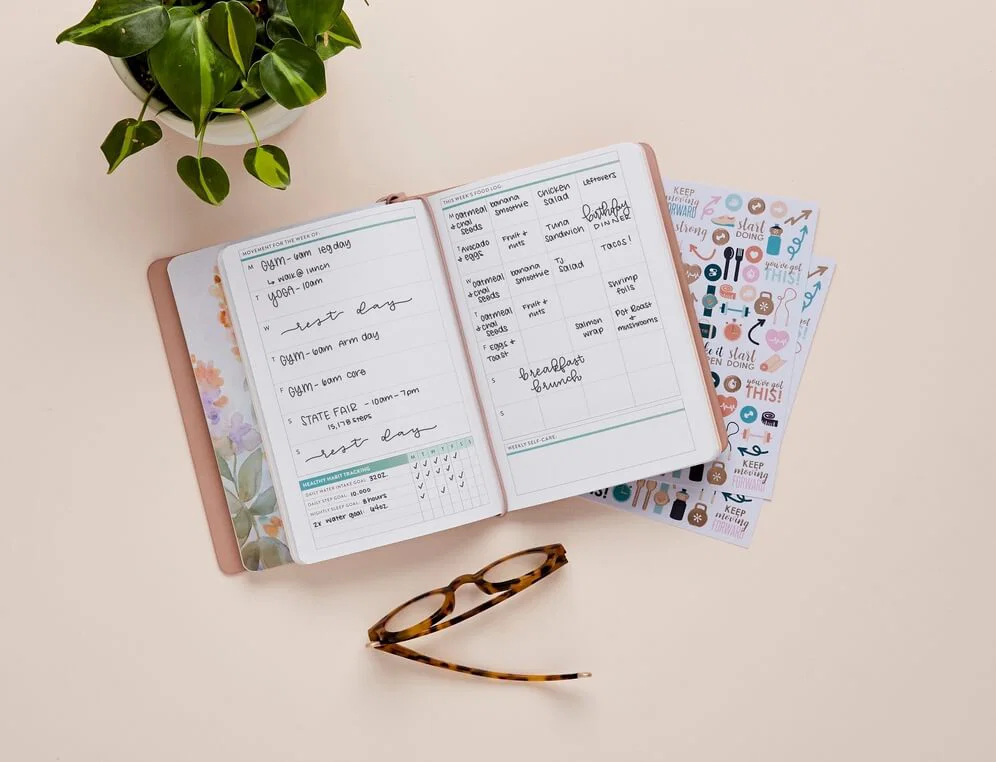
Simple tracking
Keep it low pressure. After each session, jot down:
- Rounds completed
- Reps (or time) you hit for each move
- Your effort (1 to 10)
That is enough data to progress without guessing.
Warm-up (5 minutes)
Keep it gentle. The goal is to warm your joints, increase circulation, and wake up your muscles.
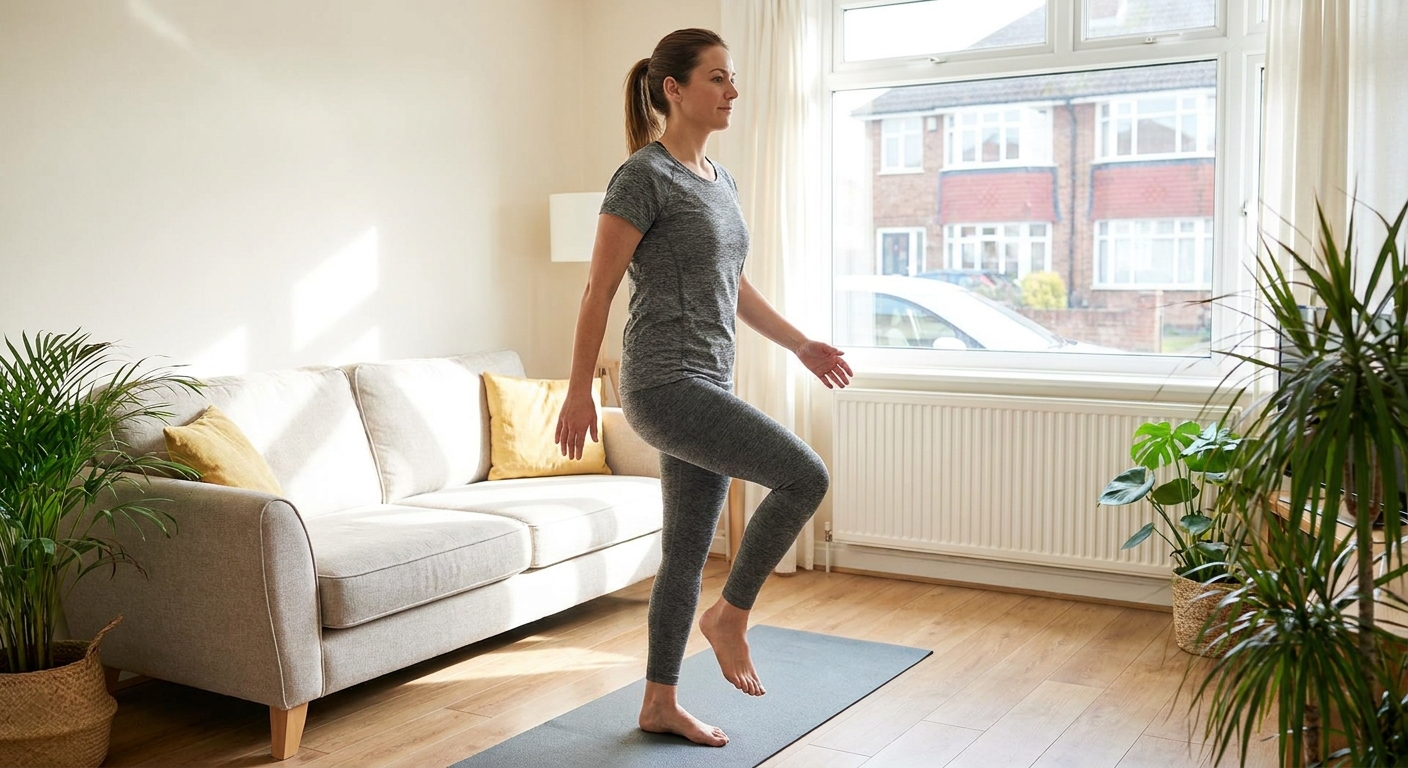
- March in place: 60 seconds
- Shoulder rolls: 10 circles back, 10 forward
- Hip circles: 10 each direction
- Heel-toe rocks: 30 seconds
- Chair-assisted squat to stand (partial range is fine): 8 slow reps
Strength Workout A
Do this circuit 2 to 3 rounds. Rest 45 to 75 seconds between exercises as needed. Your pace should feel controlled, not rushed.
Breathing cue: Inhale on the easier part, exhale on the effort. For example, exhale as you stand up, press up, or lift.
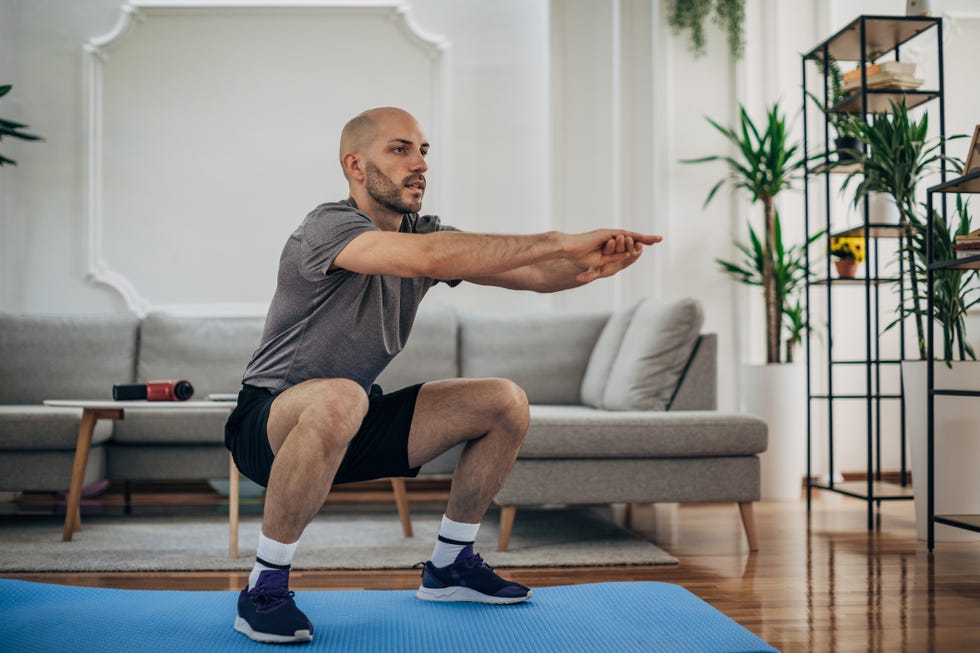
1) Chair-assisted squat
Reps: 8 to 12
How: Stand in front of a chair. Hinge hips back, lightly tap the chair with your glutes, stand back up. Hold the chair back or a countertop if balance is a concern.
Make it easier: Higher chair, smaller depth.
Make it harder: Pause for 2 seconds near the bottom.
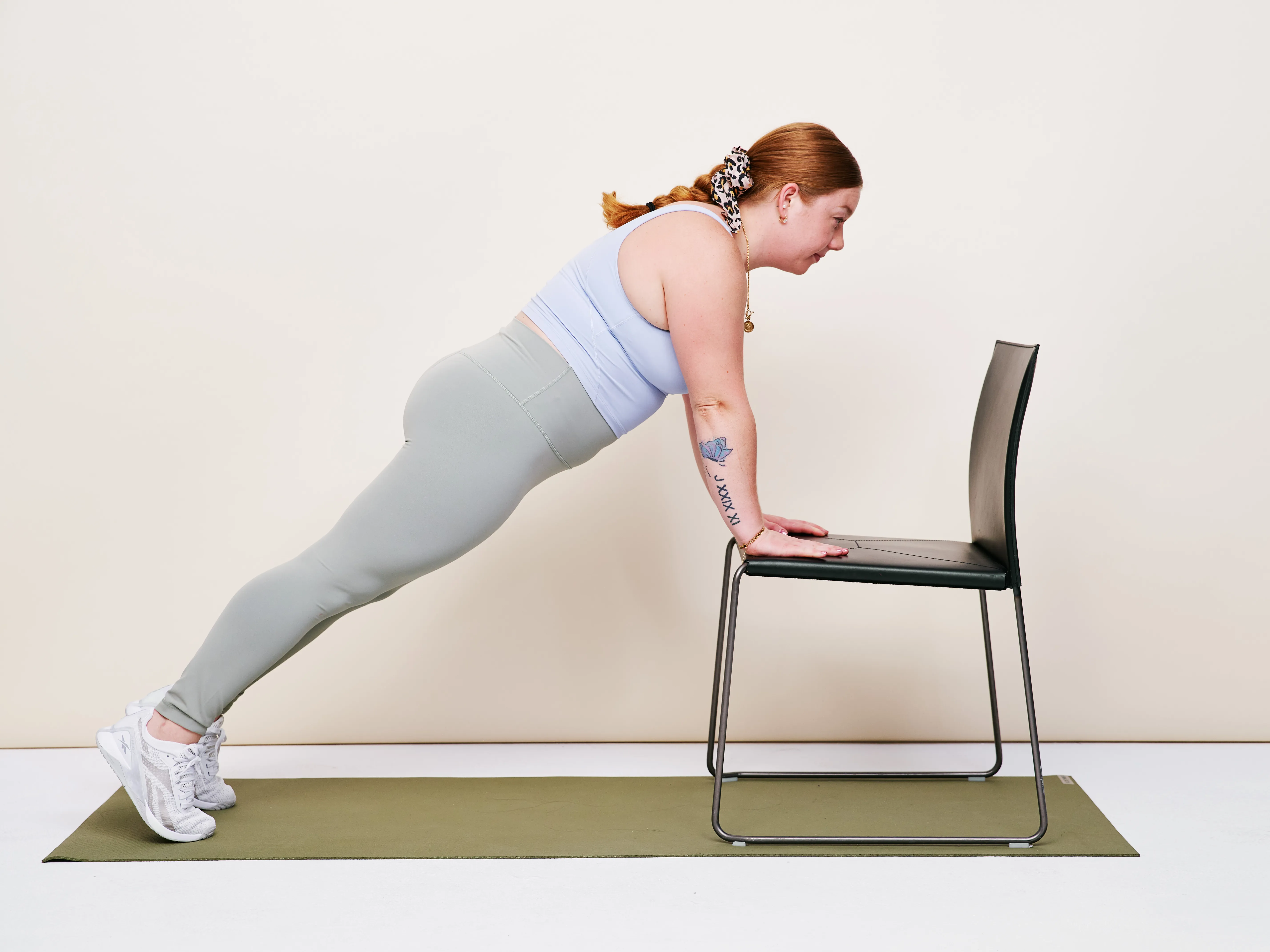
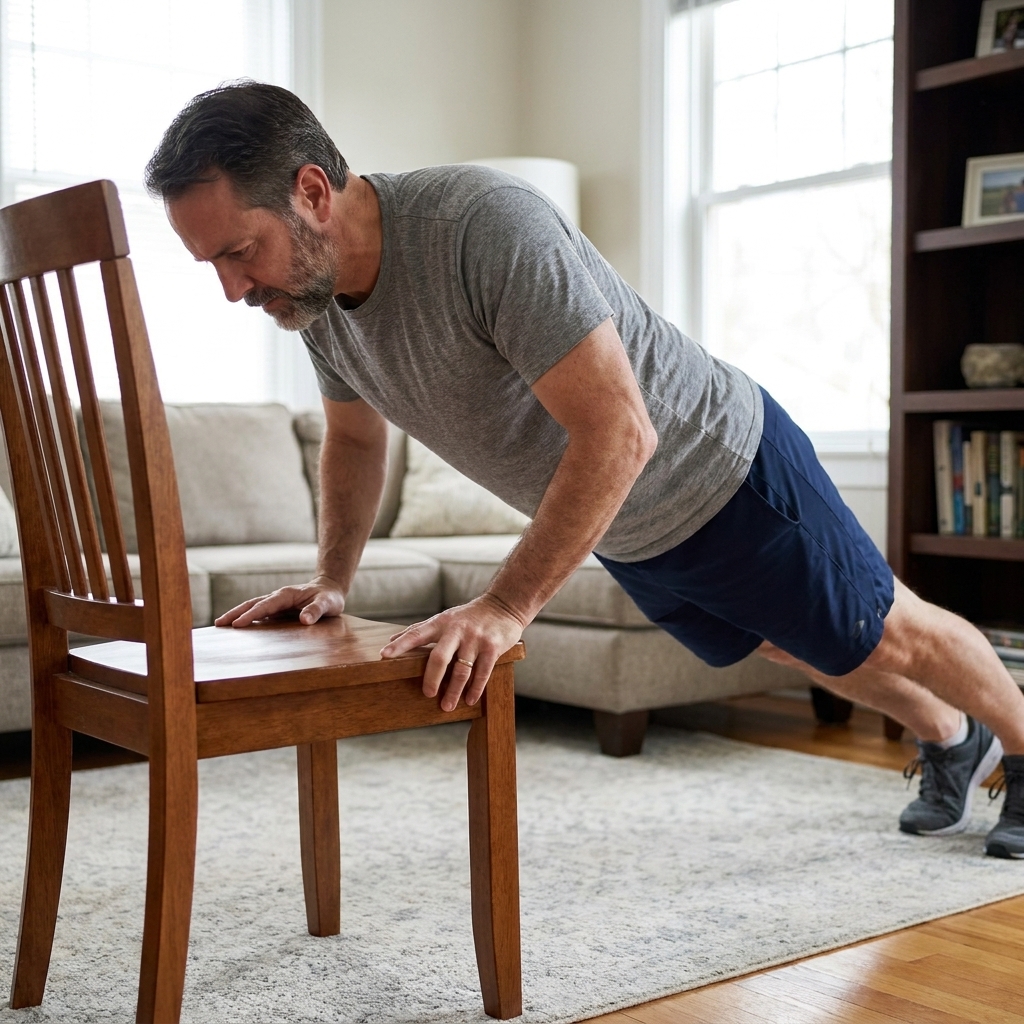
2) Incline push-up (hands on chair or counter)
Reps: 6 to 12
How: Hands on a sturdy chair or counter, body in a straight line. Lower chest toward hands, press away. Keep elbows about 30 to 45 degrees from your body.
Make it easier: Higher surface like a counter.
Make it harder: Lower surface like a sturdy chair.
3) Glute bridge
Reps: 10 to 15
How: Lie on your back, knees bent, feet flat. Press through heels, squeeze glutes to lift hips. Lower slowly.
Joint-friendly tip: Keep ribs down so your low back does not take over.
4) Supported reverse lunge (or step-back)
Reps: 6 to 10 per side
How: Hold a chair for balance. Step one foot back, lower only as far as comfortable, push through the front foot to return.
Make it easier: Smaller step back, shallow range.
Knee note: Reverse lunges are often kinder than forward lunges for many people, but your best option is the one that feels stable and pain-free.
5) Dead bug (core stability)
Reps: 6 to 10 per side
How: Lie on back, knees bent at 90 degrees. Brace your core gently like you are tightening a wide belt. Extend opposite arm and leg slowly, then return. Keep your lower back softly in contact with the floor.
If getting to the floor is hard
Swap these in and keep moving:
- Instead of glute bridges: Standing glute squeezes (10 to 15 reps) or standing hip extensions holding a chair (8 to 12 per side).
- Instead of dead bugs: Standing march with core brace (30 to 45 seconds).
Strength Workout B
Do this circuit 2 to 3 rounds. Rest as needed and keep every rep smooth.
Breathing cue: Exhale on the effort, inhale on the return.
1) Sit-to-stand
Reps: 8 to 12
How: Sit tall on a chair, feet flat. Lean slightly forward, stand up without using hands if possible, then sit down slowly.
Make it easier: Use hands on the chair.
Make it harder: Slow 3-second lower.
2) Wall push-up (or incline push-up)
Reps: 8 to 15
How: Hands on wall at chest height, step feet back. Lower your chest toward the wall, press away.
3) Hip hinge good morning (bodyweight)
Reps: 10 to 15
How: Stand tall, soft knees. Push hips back like you are closing a car door with your glutes, torso tilts forward, then stand tall by squeezing glutes.
Focus: You should feel hamstrings and glutes, not your low back.
4) Calf raise (supported)
Reps: 10 to 20
How: Lightly hold a chair. Rise onto the balls of your feet, pause 1 second, lower slowly.
5) Side-lying leg raise (hip stability)
Reps: 10 to 15 per side
How: Lie on your side, bottom knee bent for balance, top leg straight. Lift top leg a modest height, lower with control. Toes point forward, not up.
If getting to the floor is hard
Swap: Standing lateral leg raise holding a chair, 10 to 15 per side.
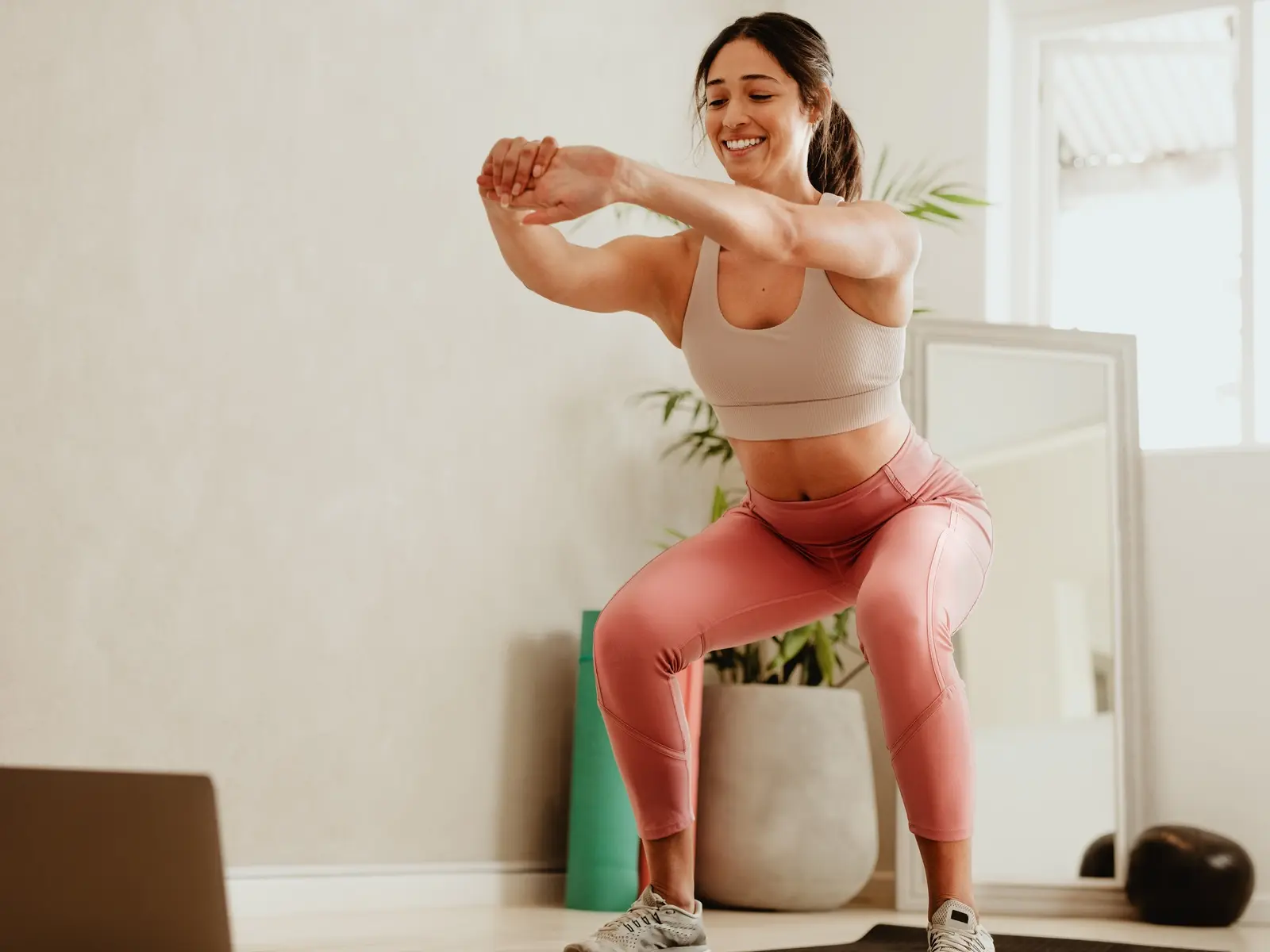
Low-Impact Cardio Workout
This is a simple interval session that gets your heart rate up without pounding your joints.
How it works
- Work: 40 seconds
- Easy pace: 20 seconds
- Complete 2 rounds of the 5 moves below
- Rest 60 seconds between rounds if needed
The 5 moves
1) March with arm swings
Stand tall, drive arms like you are brisk-walking.
2) Step jacks (no jump)
Step one foot out to the side as arms lift, step back in. Alternate sides.
3) Low step-back to chair plank
Place hands on the chair seat and keep them there. Step feet back one at a time until your body forms a straight line from head to heels at an incline. Brace your core. Step forward one foot at a time, stand tall. Smooth and controlled.
Note: Your hands stay on the chair and your feet stay on the floor the whole time.
4) Skater step (tap only)
Step diagonally behind and tap the toe, then switch sides. Keep it small and smooth.
5) Shadow boxing (light)
Soft knees, gentle pivots. Keep punches relaxed, breathe steadily.
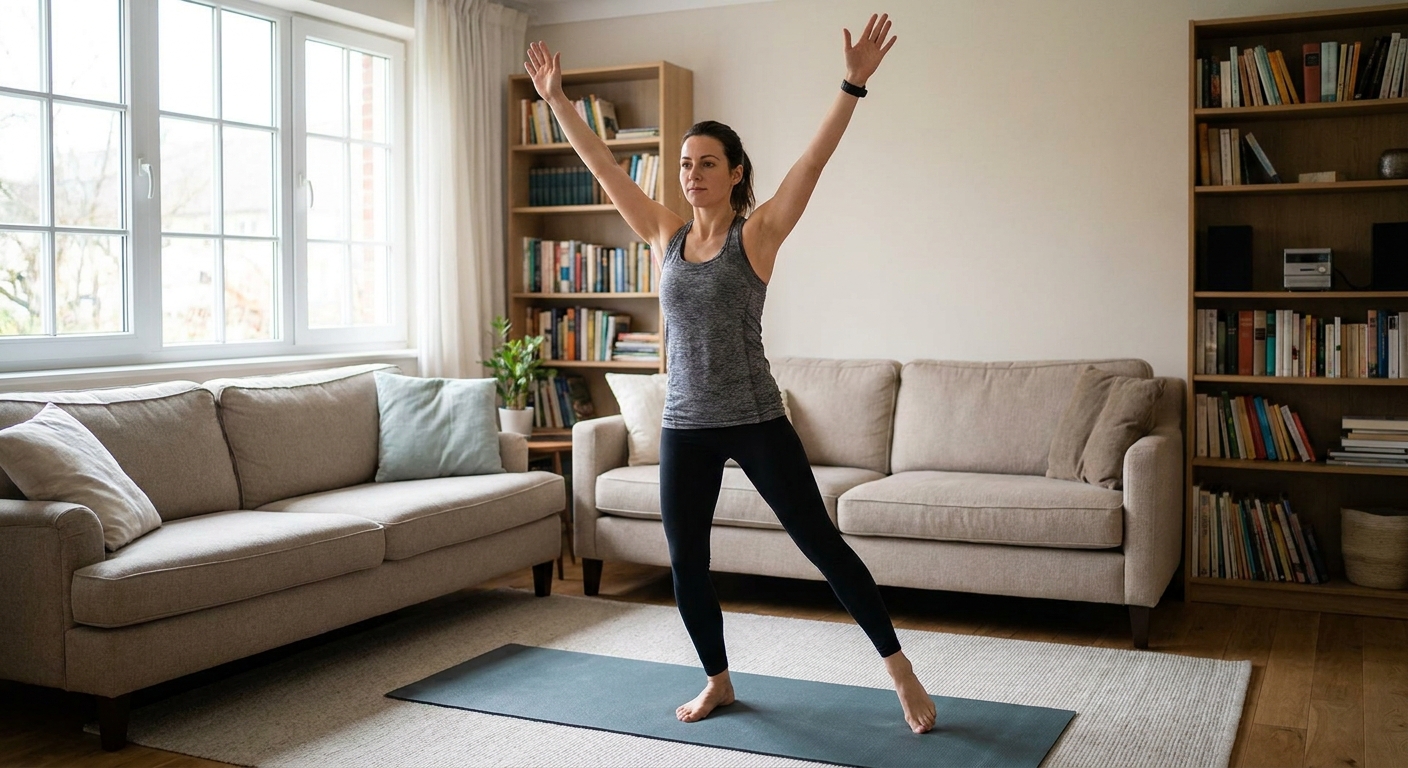
Mobility Day
This is your “feel better” session. It also makes the workouts easier because your body moves with less resistance.
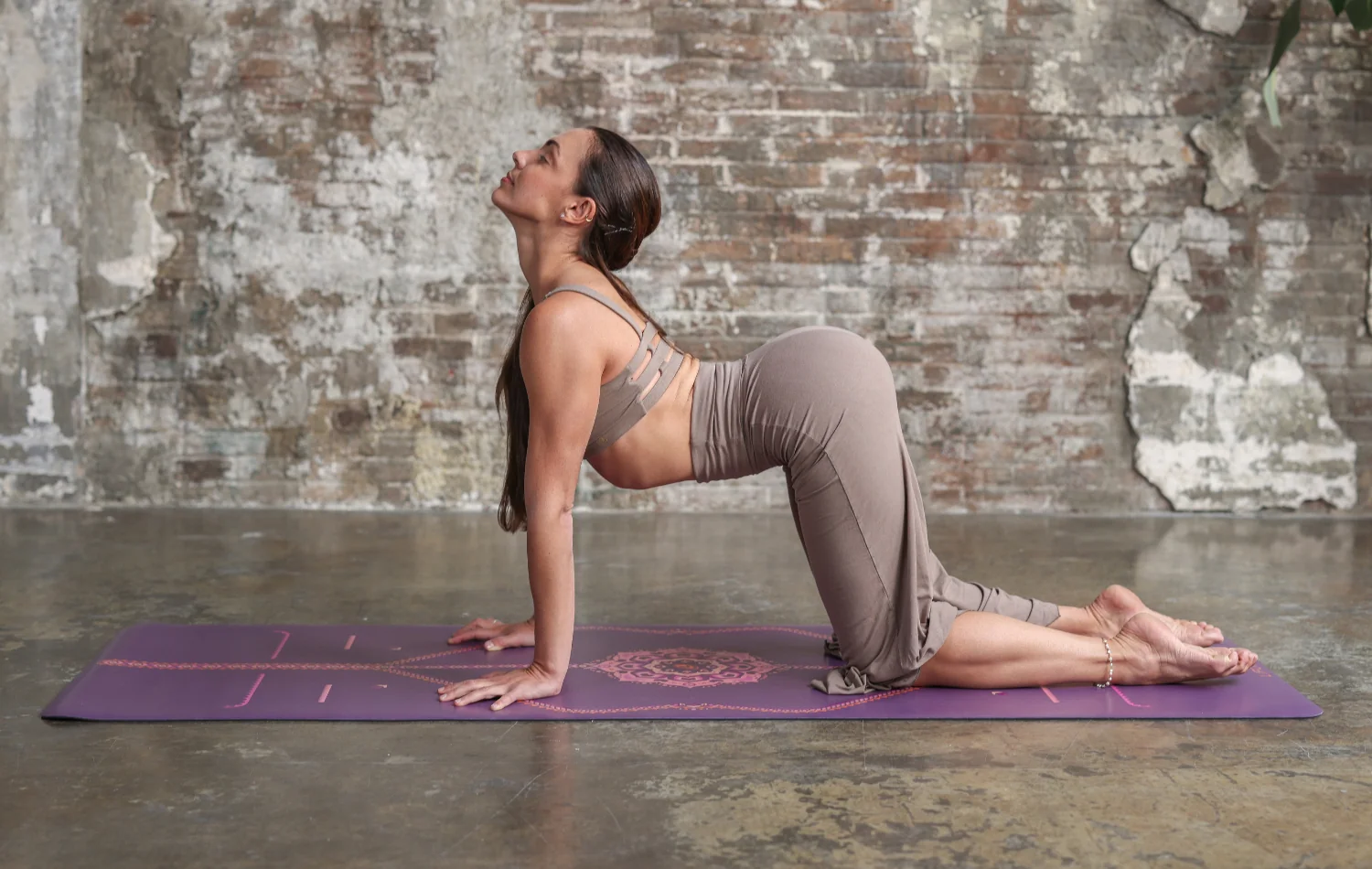
- Cat-cow: 6 slow reps
- Child’s pose breathing: 5 breaths
- Hip flexor stretch (gentle): 30 seconds per side
- Figure-4 stretch (on back or seated): 30 seconds per side
- Ankle circles: 10 each direction per ankle
- Thoracic open book (side-lying): 5 per side
Cool-down (2 to 3 minutes)
Nothing fancy. Bring your breathing down and let your joints feel calm again.
- Easy march or slow walk around the room: 60 to 90 seconds
- Gentle chest opener at a doorway: 20 to 30 seconds
- Calf stretch against a wall: 20 to 30 seconds per side
How to progress
Your joints usually prefer progress that is slow and boring. That is a compliment.
- Add reps: Move from 8 reps to 12 reps before you make it harder.
- Add a round: Start with 2 rounds, build to 3.
- Slow the lowering: Take 3 seconds down on squats or push-ups.
- Add pauses: 1 to 2 seconds at the hardest point of the move.
- Shorten rest: Keep form clean, then trim rest by 10 to 15 seconds.
Simple 4-week progression:
- Week 1: 2 rounds strength, 20-minute cardio at comfortable pace
- Week 2: Add 1 to 2 reps per set
- Week 3: Move to 3 rounds on one strength day
- Week 4: 3 rounds on both strength days or reduce rests slightly
Common form fixes
If squats bother your knees
- Sit back more like you are reaching for a chair
- Keep your weight spread across the whole foot
- Limit depth and build gradually
- Try sit-to-stand instead of free squats
If lunges feel unstable
- Hold onto a chair with one hand
- Shorten your step-back distance
- Swap to step-ups on a low step if that feels better
If wrists get cranky during push-ups
- Do wall push-ups
- Use fists (neutral wrist) on a mat if comfortable
- Elevate hands higher to reduce load
If your lower back takes over
- On bridges, tuck ribs down and squeeze glutes first
- On dead bugs, move slower and reduce range
- On hip hinges, keep a long spine and bend at the hips
How hard should this feel?
I like using a simple 1 to 10 effort scale.
- Strength days: Aim for about 6 to 8 out of 10 by the last few reps. You should feel like you have 2 to 3 reps left in the tank.
- Cardio days: Aim for 6 to 7 out of 10. You can talk in short sentences, but you are breathing heavier than normal.
If you are at a 9 or 10, the plan is too spicy right now. Dial it back. Consistency beats intensity, every time.
FAQ
Can I do this plan every day?
You can move every day, but I would not push hard every day. Keep at least 1 to 2 true rest or mobility-focused days per week so your joints and tendons can recover.
Will low-impact workouts help me lose weight?
Yes, especially if you can stick with them. Low-impact training burns calories, builds muscle, and improves daily activity tolerance. Pair it with basic nutrition habits like protein at each meal, more whole foods, and a consistent sleep schedule.
What if I have knee pain already?
Start with chair-assisted squats, sit-to-stand, glute bridges, and gentle cardio like marching. Avoid deep ranges that hurt. If pain is sharp, swelling is present, or symptoms persist, check in with a clinician.
Do I need equipment?
No. A chair and your bodyweight are enough. If you later want to add light resistance, a loop band can be a joint-friendly upgrade, but it is optional.
How soon will I feel results?
Some beginners notice better energy and less stiffness within a couple of weeks. Visible changes often show up around weeks 4 to 8, but it depends on consistency, sleep, nutrition, and your starting point.
Your next step
Pick your start day, save this page, and commit to the first week exactly as written. Not perfect. Just done.
If you want the simplest success metric, use this: Did I show up for 20 minutes? Stack enough of those, and your joints, strength, and confidence usually follow.