Follow this day-by-day, gym-free bodyweight plan built for true beginners. Short sessions, clear reps, built-in rest days, and simple progressions for real r...
Home Pulse Fit
•
home workouts and fitness
4-Week Full-Body Bodyweight Routine for Beginners
A complete 4-week, zero-equipment plan for beginners: 20–35 minute full-body workouts, simple progressions, warm-ups, cooldowns, and an easy weekly schedule you can do at home.

Marcus Thorne
Marcus Thorne is an NASM-certified personal trainer and the creator behind Home Pulse Fit. After successfully transforming his own health using only bodyweight routines in his small apartment, he left his demanding corporate career to help others do the same. Today, he is dedicated to making fitness accessible, sustainable, and entirely gym-free for busy beginners.
Published
October 18, 2026
Updated
October 18, 2026
If you are new to working out, the hardest part usually is not the exercises. It is the decision fatigue. What do I do today? Am I doing enough? Am I doing it right?
This is the exact kind of plan I wish I had when I started in my small apartment. It is gym-free, equipment-free, and built around a simple idea that made the biggest difference for me: consistency beats intensity. You will repeat a small set of foundational moves, get a little better each week, and build full-body strength without beating yourself up.
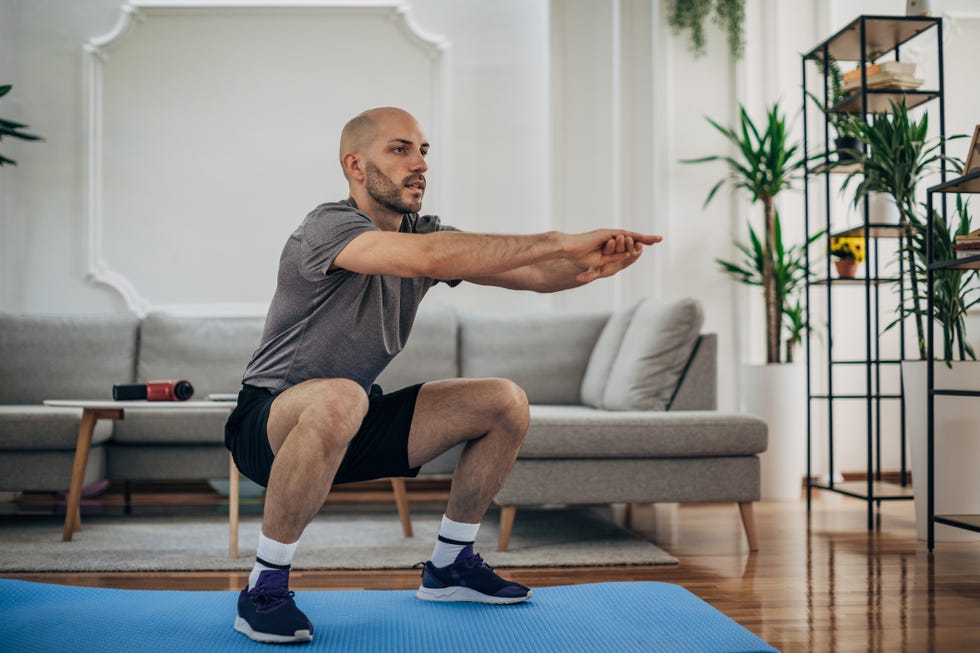
What you need: comfortable clothes, a little floor space (about the size of a yoga mat), and something stable to sit on for a few movements (a chair or couch edge works).
Quick safety note: If you are pregnant, recovering from an injury, or managing a chronic condition, check with a clinician before starting. During workouts, stop if you feel sharp pain. Muscle burn and breathing hard are normal. Sharp or shooting pain is not.
How this 4-week plan works
- Schedule: 3 full-body strength days per week (about 20 to 35 minutes), plus optional low-intensity movement days.
- Focus: squat, hinge, push, pull substitute, core, and carry substitute using bodyweight only.
- Progression: you will add reps or time first, then add an extra round, then reduce rest.
- Effort level: stop most sets with 2 to 3 reps in the tank. You should finish feeling challenged, not crushed.
Weekly rhythm (recommended):
- Mon: Workout A
- Tue: Optional walk 15 to 30 minutes + mobility
- Wed: Workout B
- Thu: Optional easy movement
- Fri: Workout C
- Sat: Optional walk, gentle bike, or light stretching
- Sun: Rest
Your warm-up (5 minutes)
Do this exactly as written. Simple is the point. It wakes up the joints you are about to use.
- March in place: 60 seconds
- Arm circles: 20 seconds forward, 20 seconds backward
- Hip hinges: 10 reps (hands on hips, push hips back, stand tall)
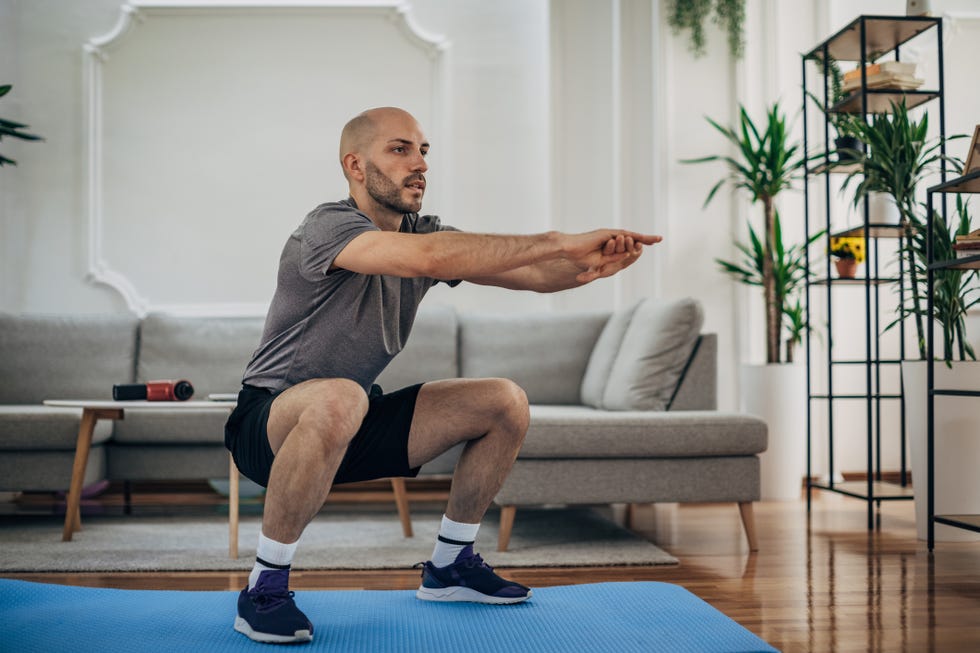
- Bodyweight squats: 8 reps (comfortable depth)
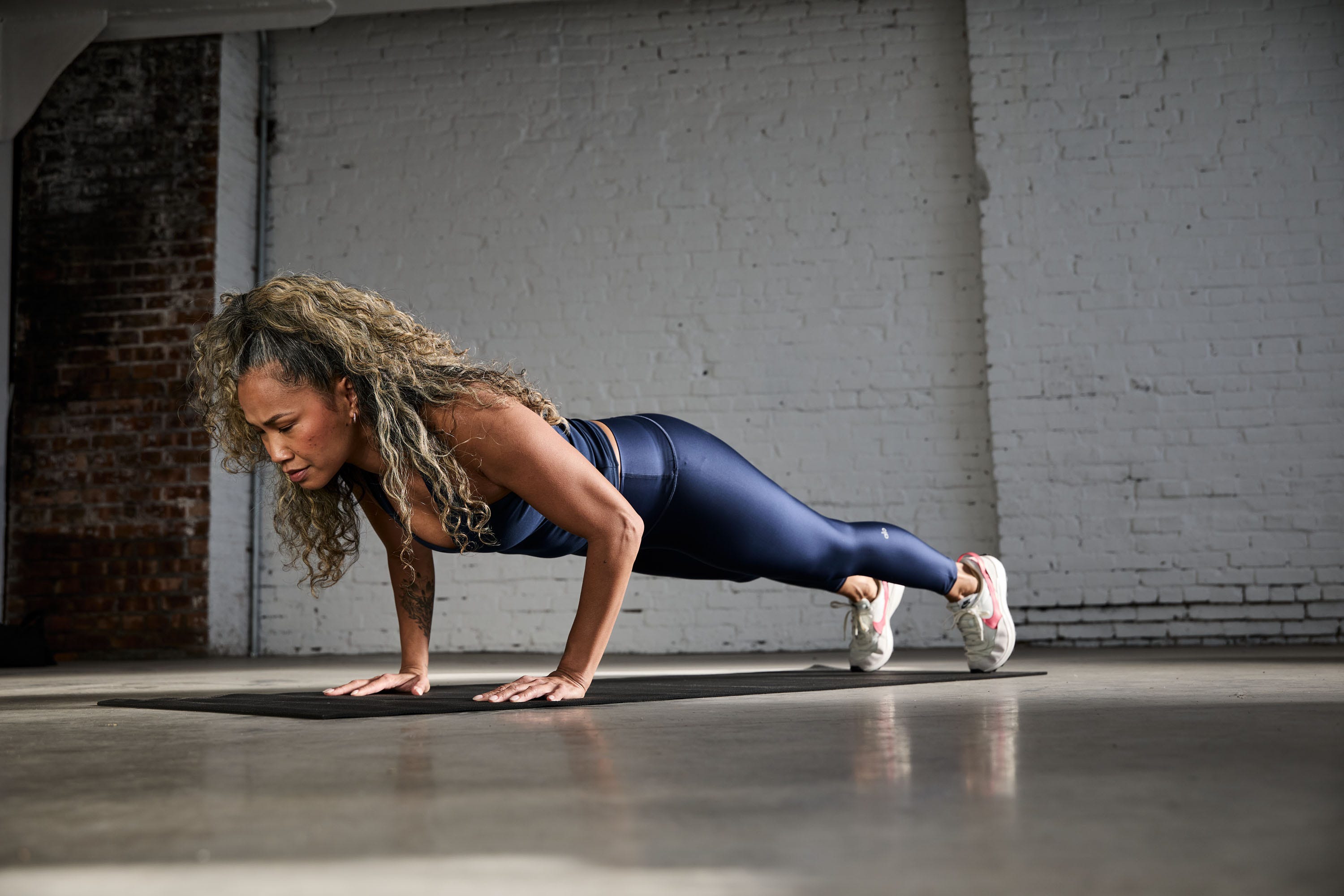
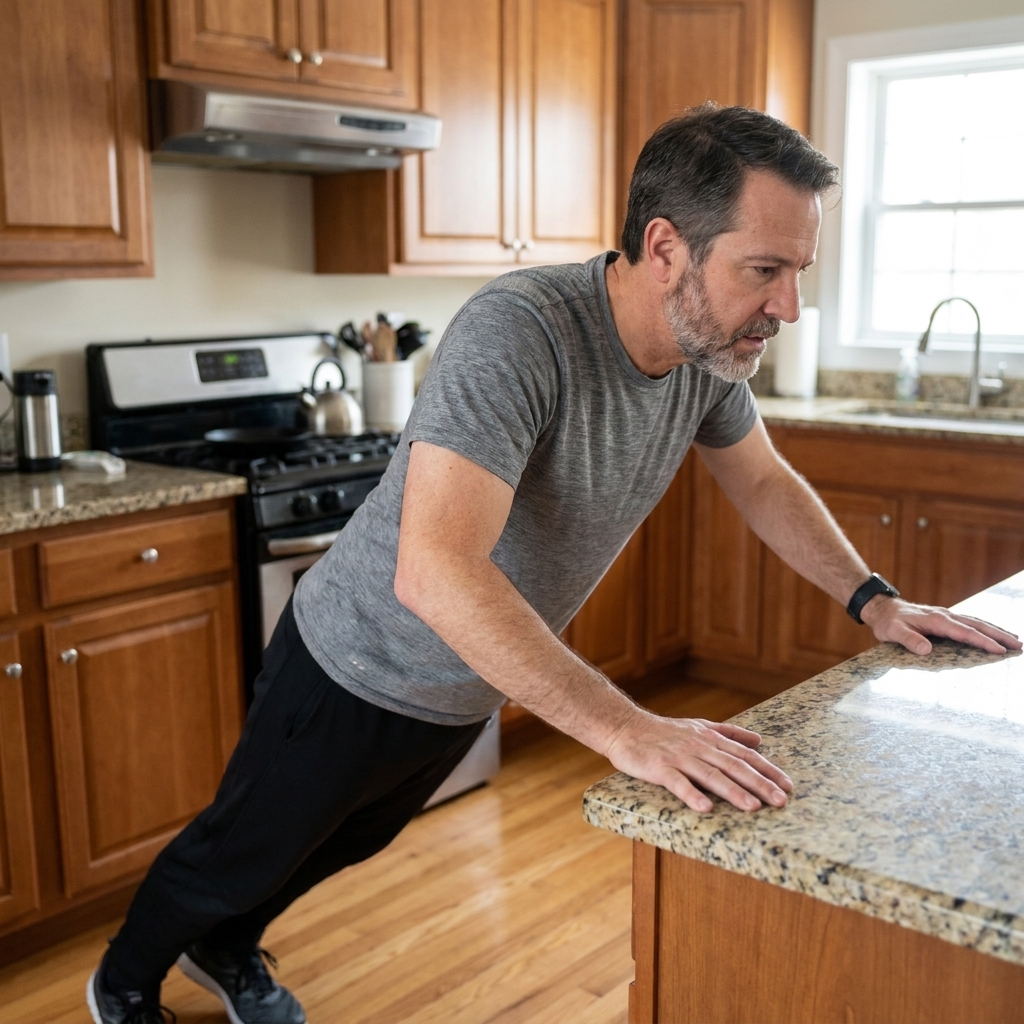
- Incline plank on a counter or sturdy table: 30 seconds
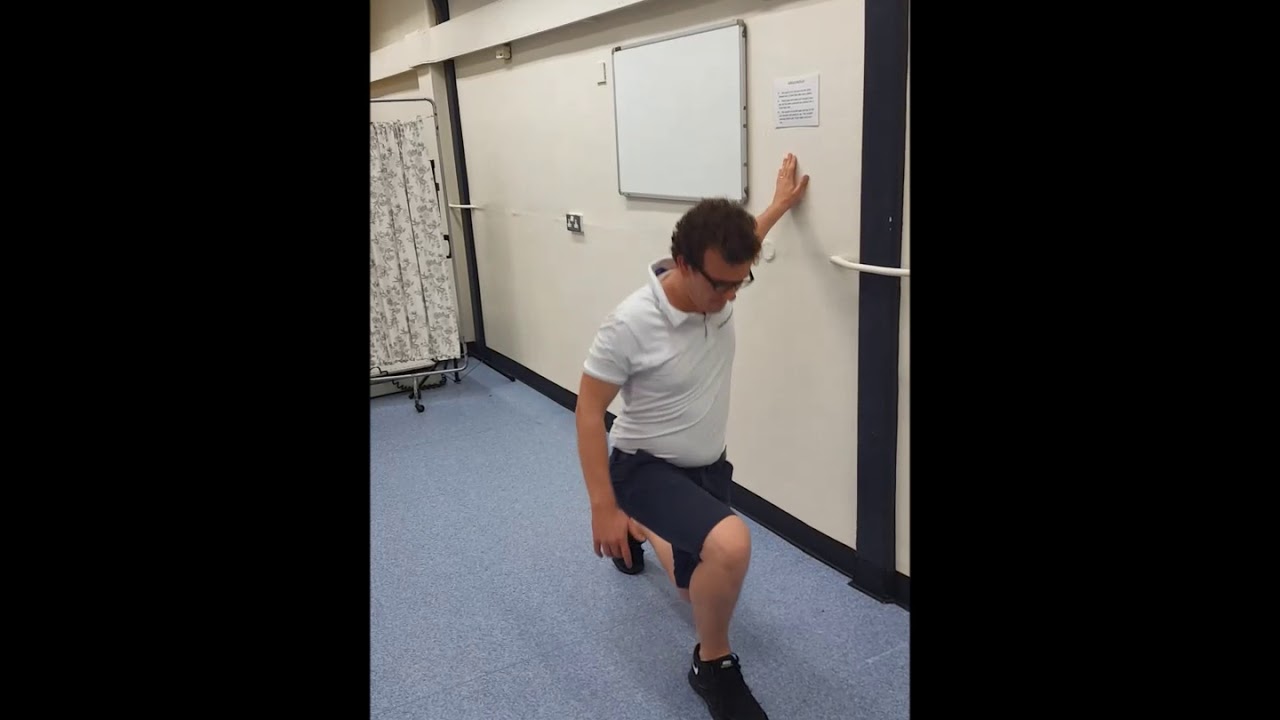
- Easy reverse lunges: 5 per side (hold a wall lightly if needed)
The workouts (A, B, and C)
Each workout is a circuit. You will do all exercises in order, rest, then repeat for multiple rounds based on the week you are in.
Form rules
- Move smoothly. No bouncing at the bottom of reps.
- Breathe. Exhale on the effort (standing up, pushing up, etc.).
- Use support. A wall, counter, or chair is not “cheating”. It is smart scaling.
- Stop if you feel sharp pain. Discomfort is information. Sharp pain is a stop sign.
Workout A (squat + push + core)
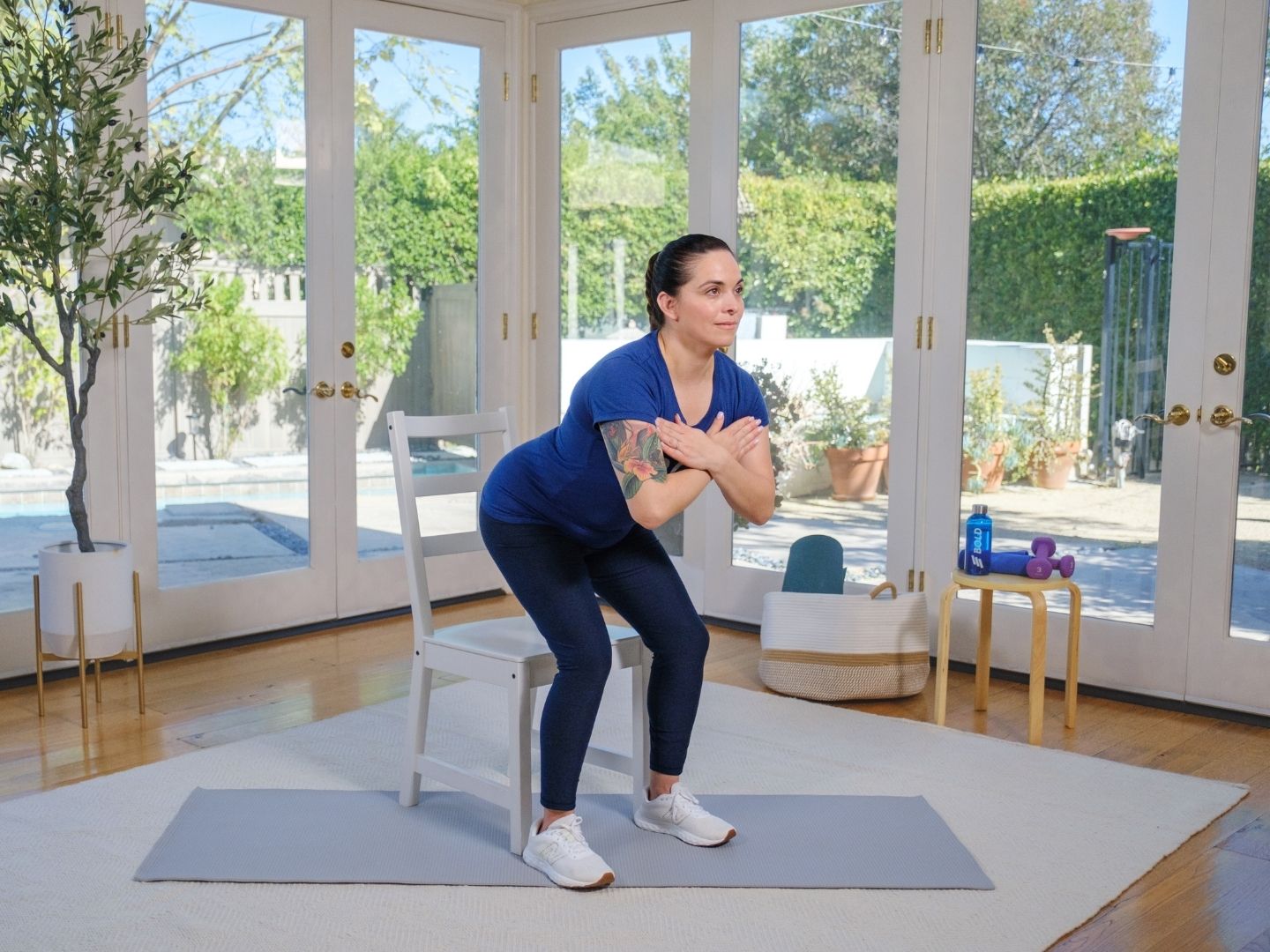
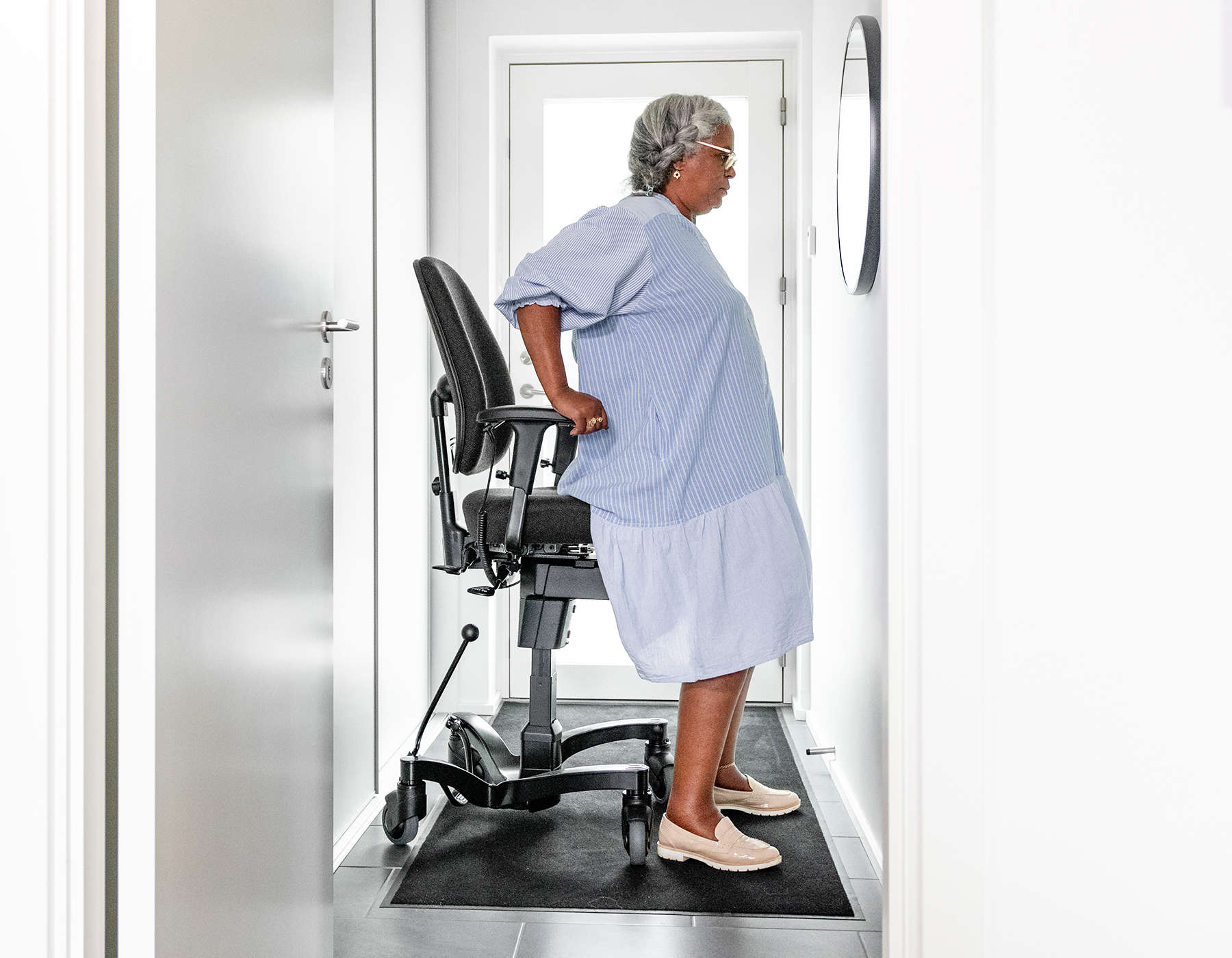
- Chair sit-to-stand (or bodyweight squat): 8 to 12 reps
- Incline push-up (hands on counter or sturdy table): 6 to 10 reps
- Glute bridge: 10 to 15 reps
- Dead bug (slow): 6 to 10 reps per side
- Front plank (knees down if needed): 20 to 40 seconds
Quick coaching cues:
- Sit-to-stand: lightly tap the chair, then stand tall. Knees track over toes.
- Incline push-up: body stays like a plank, elbows about 30 to 45 degrees from your sides.
- Dead bug: low back stays gently pressed into the floor.
Workout B (hinge + legs + pull)
- Good morning hinge (hands across chest): 10 to 15 reps
- Reverse lunge (supported if needed): 6 to 10 reps per side
- Wall push-up (or incline push-up): 8 to 12 reps
- Prone W raises (pull substitute): 8 to 12 reps
- Side plank (knees down if needed): 15 to 30 seconds per side
Quick coaching cues:
- Good morning: soft knees, push hips back, feel a stretch in the hamstrings, then stand tall.
- Reverse lunge: step back softly, torso tall, use a wall for balance.
- Prone W raises: lie face down, forehead on stacked hands or a towel. Lift elbows off the floor, squeeze shoulder blades down and back, then lower slowly.
Workout C (full-body + carry)
- Squat to reach (squat then reach overhead): 8 to 12 reps
- Knee push-up (or incline push-up): 5 to 10 reps
- Hip thrust on couch edge (upper back supported): 10 to 15 reps
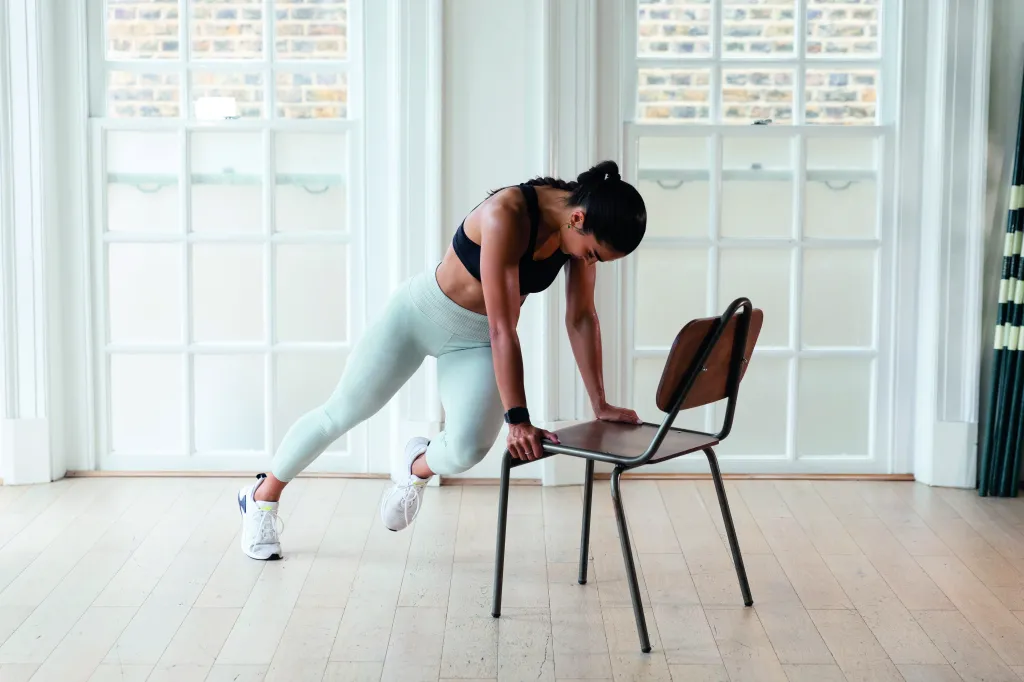
- Mountain climber (slow, hands elevated if needed): 20 to 40 seconds
- Bear hug hold (carry substitute): 20 to 40 seconds
Quick coaching cues:
- Mountain climber: slow is harder than fast. Keep hips steady.
- Bear hug hold: stand tall, ribs down, squeeze your arms like you are hugging a big pillow, and brace your midsection like someone is about to poke your sides.
The 4-week plan
Here is your progression. Same three workouts. The plan gets harder by changing rounds, reps, rest, and tempo.
Week 1: learn the moves
- Workouts: A on Monday, B on Wednesday, C on Friday
- Rounds: 2 rounds each workout
- Rest: 60 to 90 seconds between exercises as needed
- Reps/time: stay in the lower end of each range
Your Week 1 goal: finish every session thinking, “I could do a little more.” That is how we build the habit without burnout. Expect some soreness 24 to 48 hours later, especially after the first few sessions. That is normal.
Week 2: add reps
- Rounds: 2 rounds
- Rest: about 60 seconds between exercises
- Progression: add 1 to 3 reps per move (or 5 to 10 seconds on holds) compared to Week 1
If a move feels too tough, keep Week 1 numbers and focus on cleaner form.
Week 3: add a round
- Rounds: 3 rounds
- Rest: about 60 seconds between exercises, 90 seconds between rounds
- Reps/time: aim for the middle of each range
Tip: If time is tight, keep the reps honest and trim rest slightly instead of rushing. Smooth reps win.
Week 4: tighten rest
- Rounds: 3 rounds
- Rest: about 45 seconds between exercises, 75 seconds between rounds
- Tempo option: on squats and lunges, lower for 2 seconds, pause 1 second, stand up
Your Week 4 goal: feel more stable, more confident, and less winded doing the same movements.
Your cooldown (3 to 5 minutes)
This helps your nervous system downshift and keeps you moving well tomorrow.
- Slow breathing: 5 deep breaths (inhale through nose, exhale slowly)
- Hip flexor stretch: 30 seconds per side
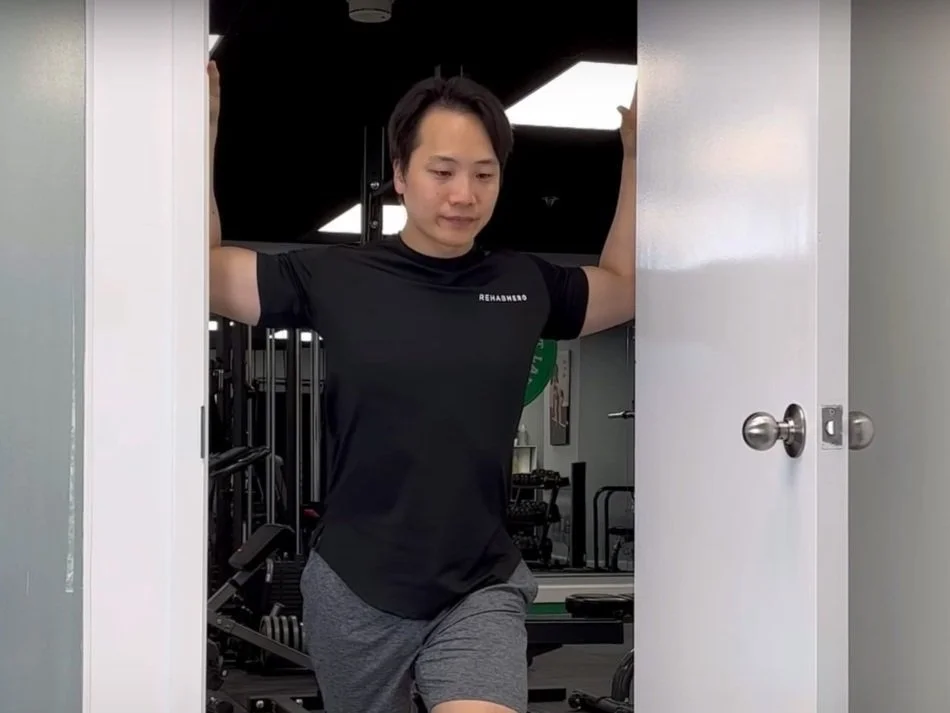
- Chest doorway stretch: 30 seconds per side
- Child’s pose (or knees-to-chest): 45 seconds
Beginner modifications
If squats hurt your knees
- Use chair sit-to-stand and keep your shin more vertical.
- Reduce depth. Pain-free range is the right range.
- Slow down the lowering part instead of going deeper.
If push-ups feel impossible
- Start with wall push-ups.
- Then use a counter.
- Then use a lower surface (sturdy chair or couch arm if stable).
If lunges mess with your balance
- Hold a wall lightly.
- Shorten the step back.
- Swap to split squat holds: get into a comfortable staggered stance and hold for 15 to 25 seconds per side.
If planks bother your wrists
- Do planks on a counter to reduce angle.
- Make fists or use a rolled towel under your palms.
- Swap to dead bug and glute bridge as your core focus.
If the prone W raises feel awkward
- Do standing wall slides: back to a wall, elbows and wrists gently pressing into the wall, slide arms up and down for 8 to 12 reps.
- Keep ribs down and neck relaxed.
How to know you are progressing
You do not need a fancy tracker. Look for these wins:
- You need less rest between exercises.
- Your reps look smoother and feel more controlled.
- You can use a lower incline for push-ups.
- You feel your glutes and core working more and your low back less.
- Stairs feel easier and daily energy improves.
If you want one simple metric: write down your incline push-up surface (wall, counter, chair) and your plank time once a week.
Common beginner questions
How long should each workout take?
Most beginners finish in about 20 to 35 minutes including warm-up and cooldown. If you only have 15 minutes, do the warm-up and one round. That still counts.
Should I work out four or five days a week instead?
You can, but I would rather see you nail three strength sessions every week for a month than go hard for six days and disappear. Add walking or gentle movement on the in-between days if you want more.
Will this help with weight loss?
This plan can build muscle and improve conditioning, which can support fat loss. For most people, fat loss still comes down to overall energy balance. The basics help: protein at meals, vegetables daily, and fewer liquid calories. If weight loss is your main goal, keep the workouts as written and add a daily walk.
What if I miss a day?
No guilt math. Just do the next workout in order. If you miss a whole week, restart Week 2 instead of trying to “make up” sessions.
When should I move on from this plan?
Run it for 4 weeks, then repeat it once more using a harder variation (lower incline push-ups, deeper squats, longer holds). If you can do 3 rounds comfortably and you are hitting the top of the rep ranges, you are ready for a more advanced progression.
Your next step
Put three workouts on your calendar right now. Not as a wish. As an appointment. Then start Week 1 on the next day that makes sense for your life.
If you want a simple rule of thumb to carry with you, use this: try not to miss twice. One missed workout is life. Two in a row becomes a pattern.
You have everything you need. A little floor space, a plan you can follow, and four weeks to prove to yourself that gym-free fitness can work.