No jumps, no heavy landings, no neighbor drama. Try these 10 low-impact HIIT moves and a ready-to-follow 20-minute apartment routine.
Home Pulse Fit
•
home workouts and fitness
Build Your Own HIIT Circuit in a Small Space
Learn how to design a safe, effective HIIT circuit that fits in a tiny living room using bodyweight moves. Includes templates, timing options, upper-back pull alternatives, and beginner-friendly progressions.

Marcus Thorne
Marcus Thorne is an NASM-certified personal trainer and the creator behind Home Pulse Fit. After successfully transforming his own health using only bodyweight routines in his small apartment, he left his demanding corporate career to help others do the same. Today, he is dedicated to making fitness accessible, sustainable, and entirely gym-free for busy beginners.
Published
October 18, 2026
Updated
October 18, 2026
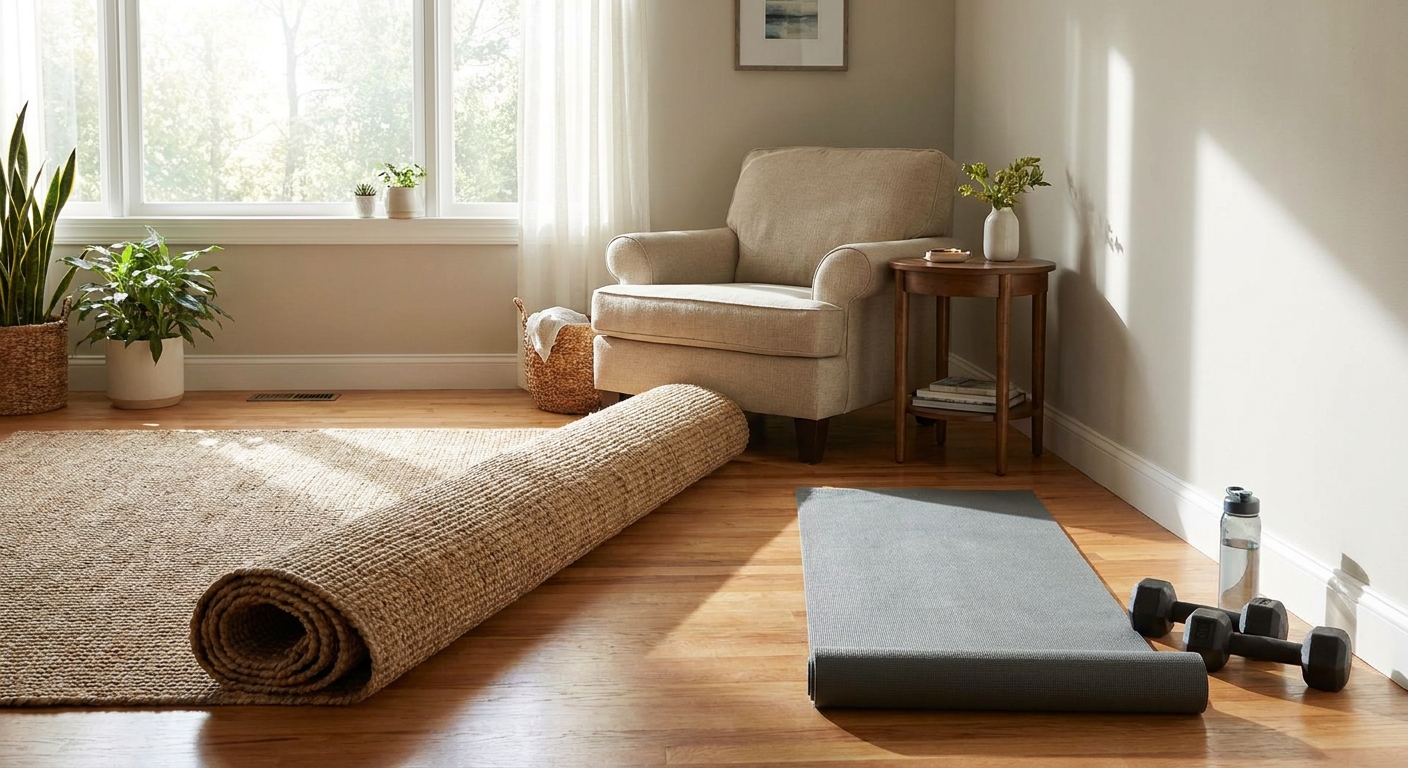
When I started doing HIIT in my apartment, my “gym” was basically the gap between the coffee table and the couch. No treadmill. No fancy equipment. Just 20 minutes, a little sweat, and a plan that actually fit my space.
This guide will show you how to build your own HIIT circuit that feels athletic, safe, and effective, even if you can only claim a few square feet of living room for the next 15 to 25 minutes.
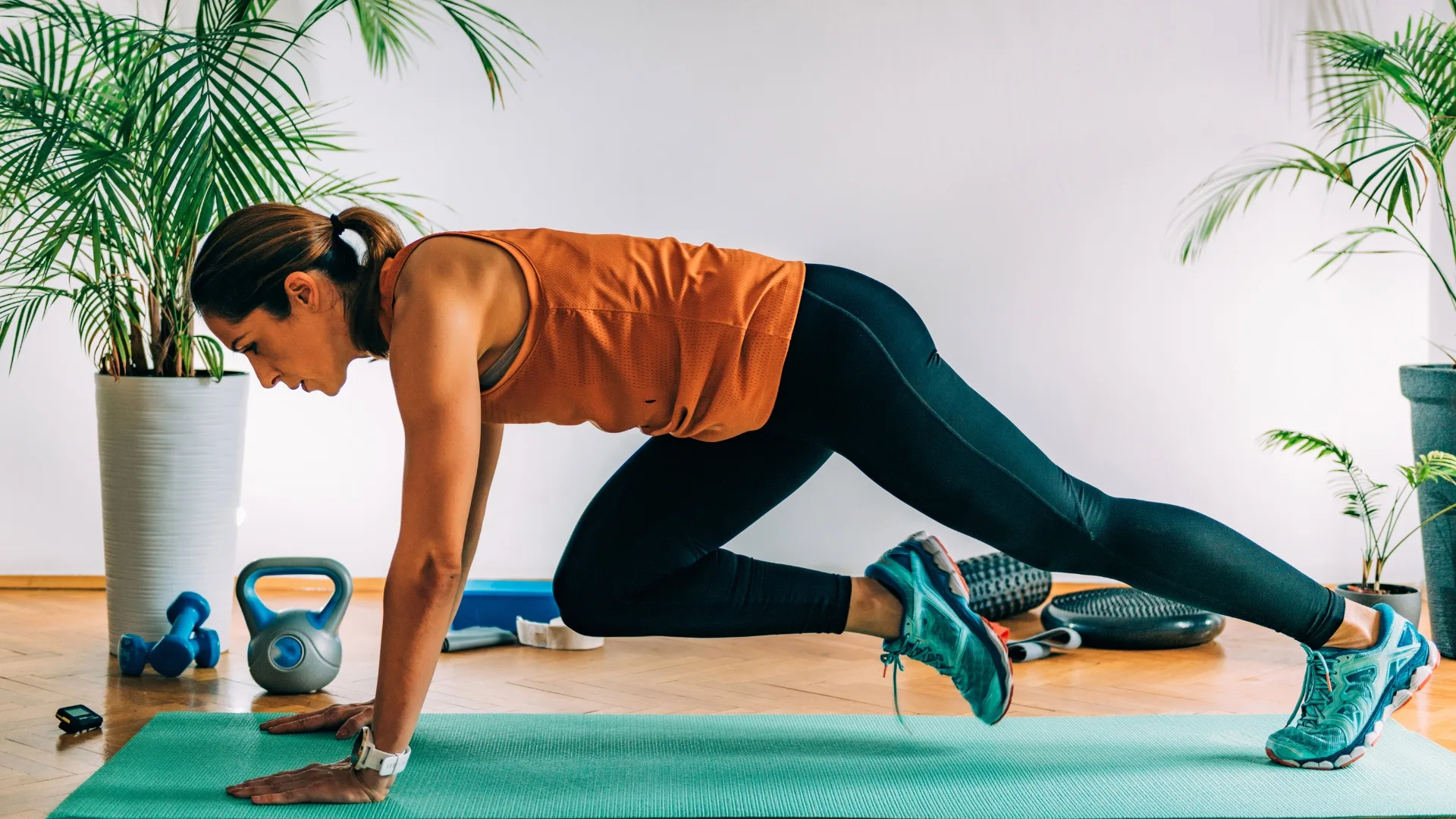
What makes a HIIT circuit work
HIIT stands for high-intensity interval training, but the “magic” is not suffering through chaos. A good HIIT circuit is simply:
- Intervals you can repeat: short work bursts, planned rest, and a structure you can follow
- Moves that match your space: low travel, minimal jumping if needed, no crashing into furniture
- Balanced muscle use: legs, push, hinge, core, and a “heart rate” move
- Clear progression: you get fitter by adding small challenges over time, not by going to war every session
If you finish a circuit feeling worked but not wrecked, you did it right. For most people, consistency beats intensity most of the time.
Step 1: Measure your workout zone
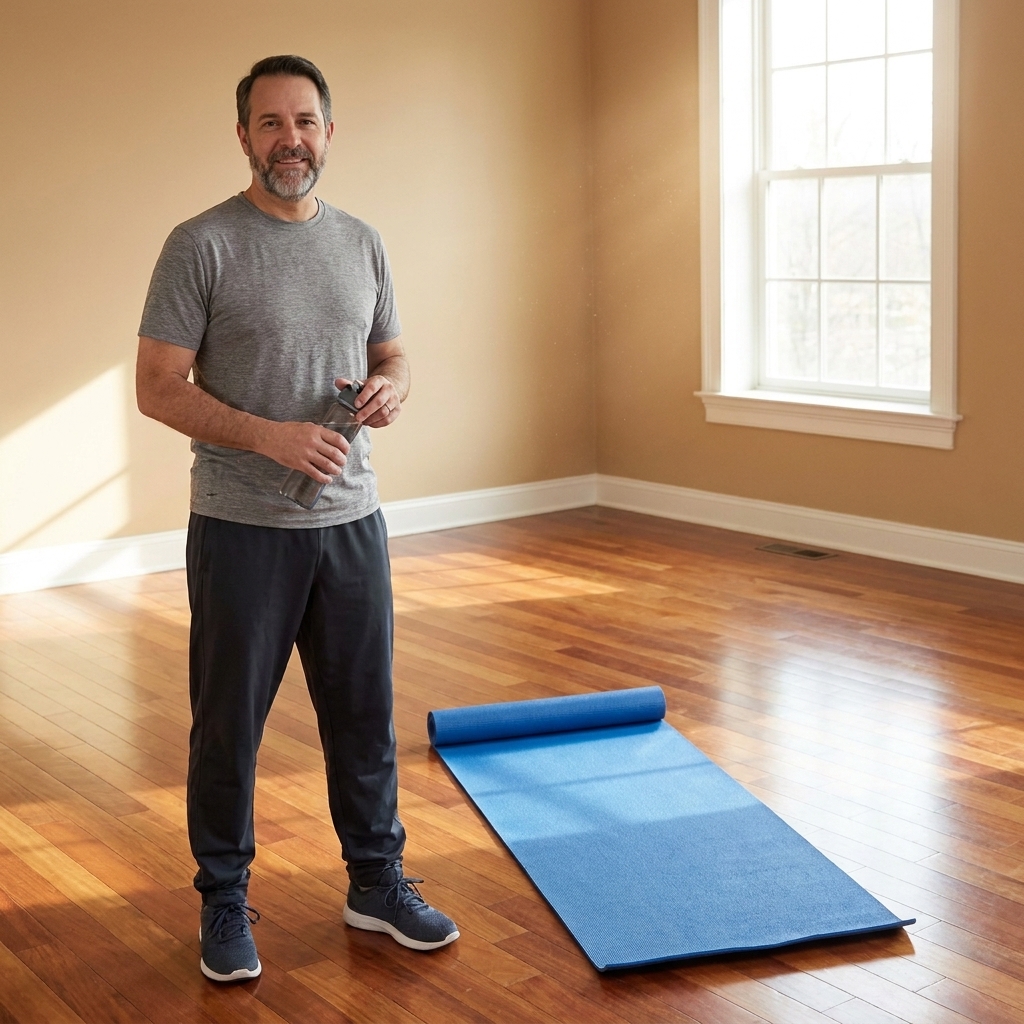
You do not need much room, but you do need a safe footprint.
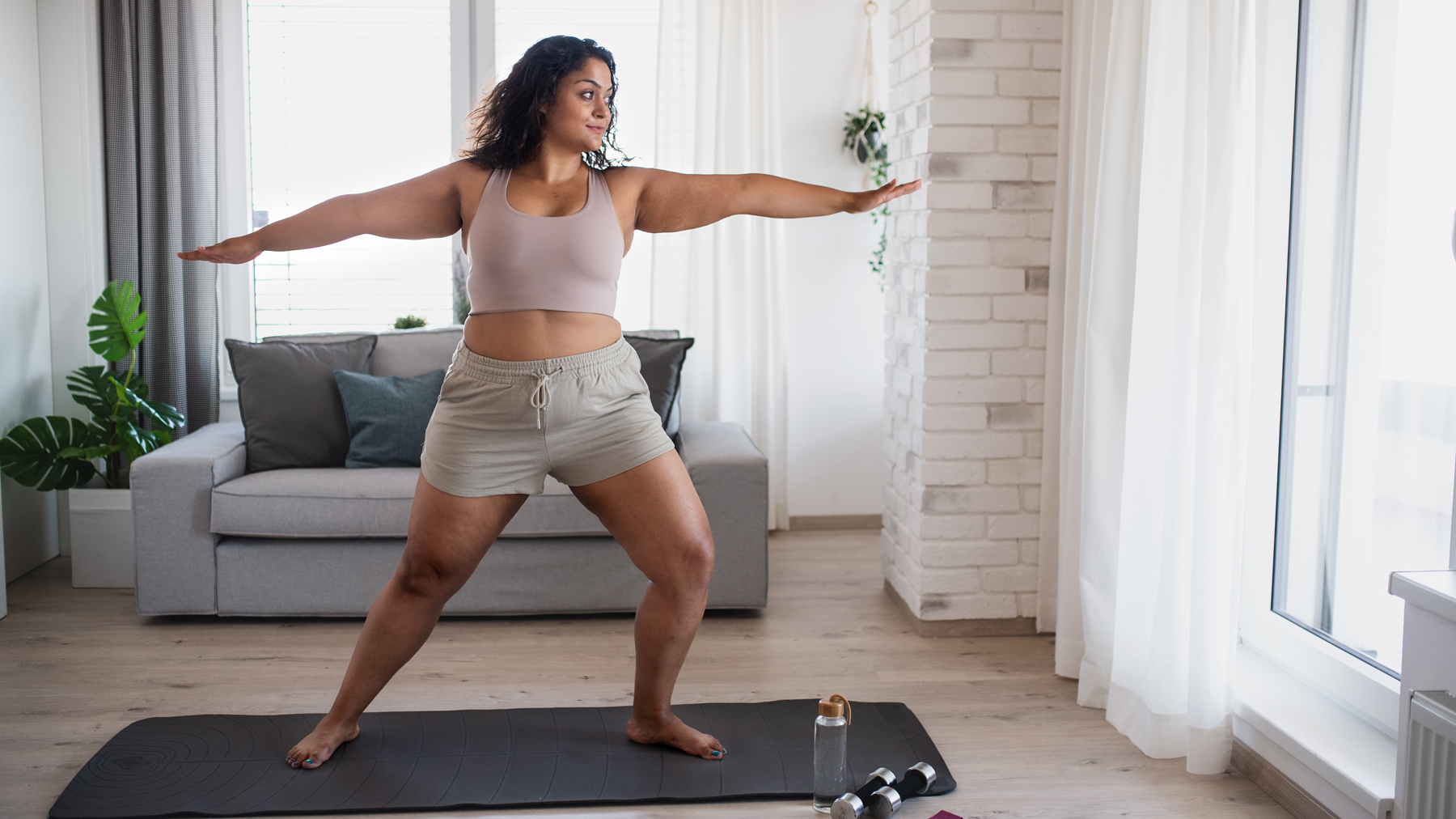
- Clear a rectangle: aim for a mat-sized space plus one arm’s length on each side.
- Ceiling check: if your hands can reach a light fixture during overhead reaches, skip overhead jumping moves.
- Noise check: if you have downstairs neighbors, plan for low-impact options from the start.
- Floor grip: socks on hardwood is a slip risk. Consider a grippy mat, going barefoot if that is comfortable and safe for you, or wearing trainers with traction.
Step 2: Pick 5 to 6 no-travel moves
In a small space, your best friends are in-place moves: squats, hinges, planks, push-ups, and marching style cardio. Here is a simple way to build a well-rounded circuit.
The small-space HIIT formula
- 1 lower-body move (squat pattern): squat, sit-to-stand, squat pulse
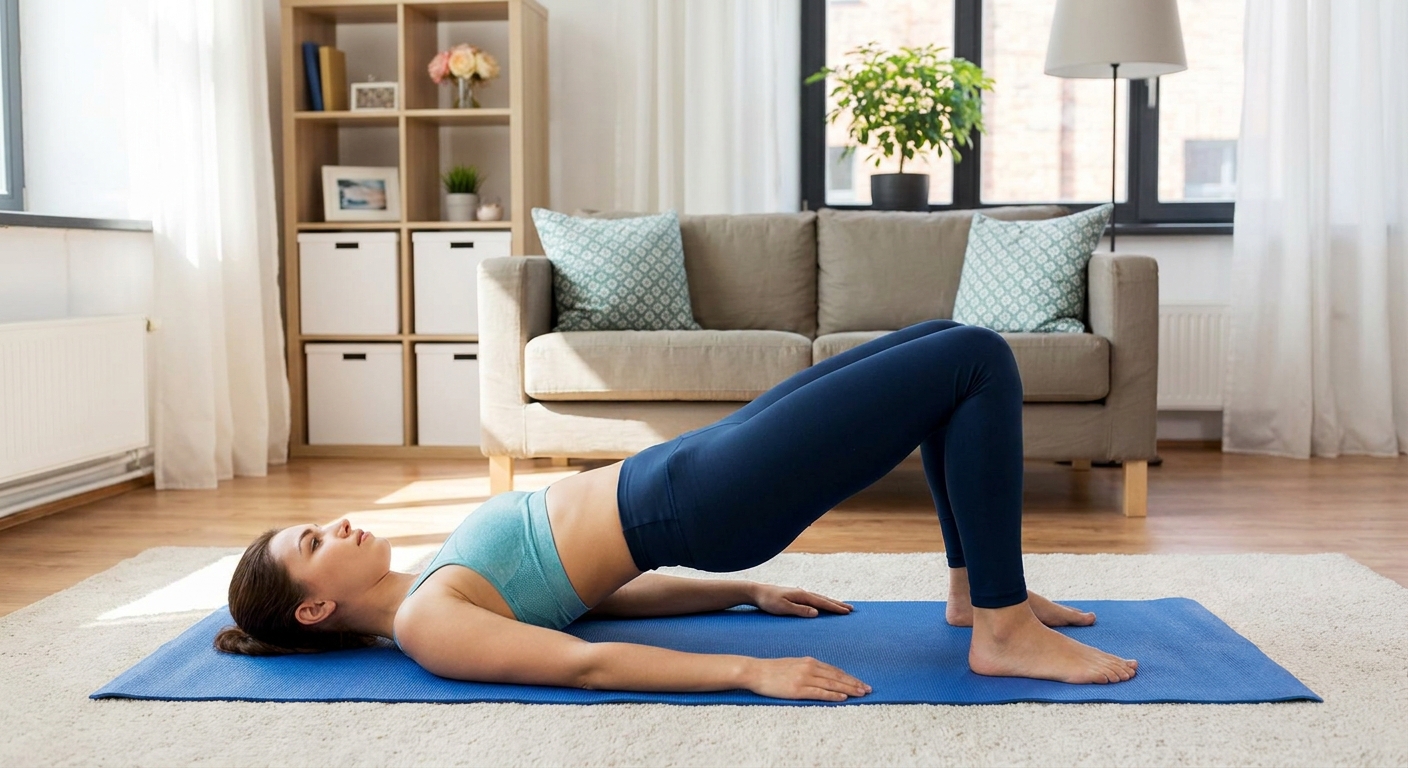
- 1 lower-body move (hinge pattern): hip hinge good-morning, glute bridge, single-leg hinge reach
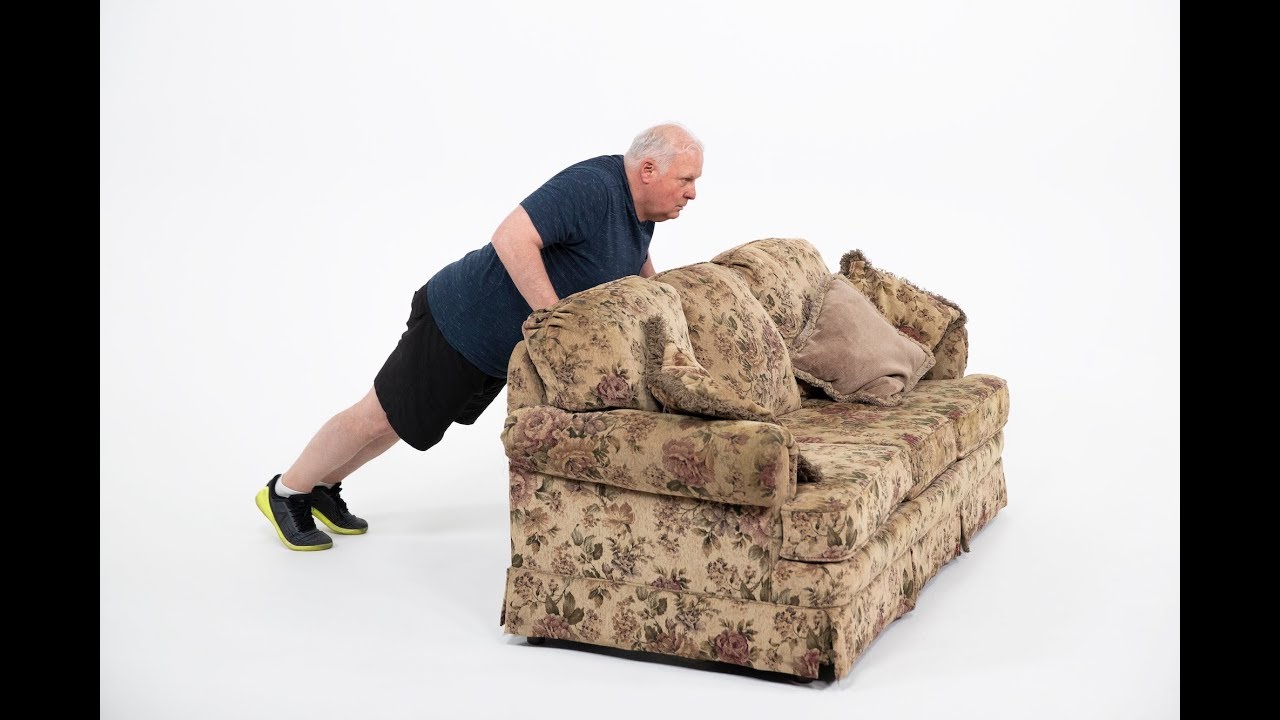
- 1 push move: wall push-up, incline push-up on couch, floor push-up
- 1 core stability move: plank, dead bug, bear hover hold
- 1 heart-rate move (low travel): high knees in place, fast feet, step jacks, shadow boxing
- Optional 6th move: an upper-back pull alternative or a mobility move like a deep squat hold
A quick note on pulling
“Pull” moves (rows, pull-ups) are harder to load with zero equipment. You can still train your upper back and posture with simple options, and if you have a resistance band, you can add a real row pattern.
- No equipment: prone W raises, prone Y raises, reverse snow angels, standing scapular squeezes (pull shoulders down and back, hold 2 seconds)
- Minimal equipment: resistance band row anchored to a sturdy, manufacturer-rated anchor point
- Skip risky setups: avoid improvising anchors that could slip or fail under tension
Beginner-friendly exercise menu (with quiet options)
- Squat: chair sit-to-stand (quiet, great form builder)
- Hinge: glute bridges (very quiet, very effective)
- Push: incline push-ups with hands on a sturdy couch
- Upper back: prone W raises (slow and controlled)
- Core: dead bug (slow, controlled, spine-friendly)
- Cardio: step jacks (low impact, minimal noise)
Not seeing burpees on the list? You can absolutely train hard without them, especially when space and joints matter.
Step 3: Choose your intervals
The most common HIIT mistake I see is starting with aggressive work times and almost no rest. You want intervals that let you keep decent form from round 1 to the final round.
Interval options (pick one)
- True beginner: 20 seconds work, 40 seconds rest
- Beginner to intermediate: 30 seconds work, 30 seconds rest
- Intermediate: 40 seconds work, 20 seconds rest
- Spicy but controlled: 45 seconds work, 15 seconds rest (choose simpler moves)
Coach tip: Use the talk test as one helpful check. During work intervals, you might only be able to say a couple of words at a time. Another simple target is effort: aim for about 7 to 9 out of 10 on the work bouts, then recover enough to repeat solid form. If your form falls apart, add rest or simplify the movement.
Step 4: Pick a circuit structure
You have two simple ways to run a circuit in a small space. Both work. Pick the one that feels less complicated.
Template A: Classic circuit
- Choose 5 exercises
- Do each for your chosen interval
- Rest 60 to 90 seconds after the full round
- Repeat 3 to 5 rounds
Example: 30 seconds on, 30 seconds off, 5 moves = 5 minutes per round. Do 4 rounds and you have a 20-minute workout.
Template B: Two mini-circuits
- Pick 3 exercises for Circuit 1, repeat 3 rounds
- Rest 1 to 2 minutes
- Pick 3 exercises for Circuit 2, repeat 3 rounds
This is also a nice way to separate strength-focused moves from cardio-focused moves.
Step 5: Warm up in place
A warm-up does not need to be long, but it should raise your temperature and prep the joints you are about to use.
5-minute small-space warm-up
- 60 seconds easy marching in place
- 40 seconds hip hinges (hands on thighs, slow and controlled)
- 40 seconds alternating reverse lunges or split-stance weight shifts
- 40 seconds arm circles and shoulder rolls
- 40 seconds squat-to-stand (grab ankles or shins, then stand tall)
- 40 seconds easy step jacks
If anything feels pinchy, do not push through it. Swap the move and keep going.
Three small-space HIIT circuits
Warm-up first, then run one of the circuits below as your main session. If a move is new to you, practice it slowly for a few reps before you turn it into an interval.
1) Quiet HIIT
Intervals: 30 seconds work, 30 seconds rest. Rounds: 4.
- Chair sit-to-stand
- Glute bridge
- Incline push-up on couch
- Dead bug
- Step jacks
2) Low-impact sweat circuit
Intervals: 40 seconds work, 20 seconds rest. Rounds: 3 to 4.
- Squat to calf raise
- Bear hover hold (or plank)
- Alternating reverse lunge
- Incline push-up
- Shadow boxing (quick hands, light feet)
3) Legs + core finisher
Intervals: 20 seconds work, 10 seconds rest. Rounds: 6 to 8 (a Tabata-style format).
- Squat pulses
- Mountain climbers (slow and strong is fine)
- Glute bridge march
- Plank shoulder taps (or plank hold)
With the 20/10 format, choose moves you can do safely while breathing hard. This is not the time for complicated footwork.
How to scale moves
You should never feel stuck because an exercise is “too easy” or “too hard.” Use one of these quick levers.
To make it easier
- Reduce range of motion: half squats are fine while learning
- Add support: hands on couch for incline push-ups, hold a wall for balance
- Slow it down: especially for core moves
- Increase rest: the simplest and most underrated option
To make it harder
- Add tempo: 3 seconds down, 1 second up on squats
- Add a pause: 2-second pause at the bottom
- Add density: more rounds, same form
- Tighten rest: move from 30/30 to 40/20 over time
Safety checks each session
HIIT should challenge you, not punish you. These checks keep you training week after week.
- Practice before speed: run through each exercise slowly before the first round, especially bear hovers, mountain climbers, and plank shoulder taps.
- Form first: if your lower back takes over in planks, drop to knees or shorten the lever.
- Knees tracking: on squats and lunges, aim knees in the same direction as toes.
- Shoulders and wrists: spread fingers, stack wrists under shoulders, and use incline options if the floor bothers your joints.
- Land softly: if you jump, land quietly like you are trying not to wake someone up.
- Stop for sharp pain: burning muscles and heavy breathing are normal. Sharp, stabbing, or escalating joint pain is not.
If you have a medical condition, are pregnant, or are returning after a long break, it is smart to get clearance from a healthcare professional before pushing intensity.
How often to do HIIT
If you are busy and new to training, you do not need daily HIIT. You need a schedule you can repeat.
A simple weekly plan for beginners
- 2 HIIT sessions per week (15 to 25 minutes)
- 2 low-intensity days (walking, easy cycling, mobility)
- 1 to 2 rest days as needed
Progression plan
Pick one change at a time:
- Week 1 to 2: learn the moves, keep rest generous
- Week 3 to 4: add 1 round or add 5 to 10 seconds of work per interval
- Week 5+: keep the same structure, but use harder variations for 1 or 2 exercises
Progress should feel like a small notch harder, not a new personality.
Common small-space issues
I keep hitting furniture
Choose moves with your feet mostly planted: squats, hinges, push-ups, planks, shadow boxing. Save traveling moves for bigger spaces.
My wrists hate planks and push-ups
Do incline push-ups on the couch, use fists instead of flat palms if that feels better, or switch to dead bugs and forearm planks.
I get gassed immediately
Start with 20/40 intervals and choose low-impact cardio. The goal is repeatable effort, not a single heroic round.
It is too loud for my building
Skip jumping. Use step jacks, marching high knees, shadow boxing, and fast bodyweight squats with controlled feet.
Quick cool-down
After your last round, take 2 to 4 minutes to bring your heart rate down.
- 60 to 90 seconds easy marching or pacing
- 4 to 6 slow breaths (inhale through nose, exhale long)
- Light stretching: hip flexors, glutes, chest
Quick FAQ
Is HIIT effective without equipment?
Yes. Your body is plenty of resistance when you use good form, full control, and smart intervals. Equipment can be great, but it is optional.
How long should my HIIT workout be?
For most beginners, 15 to 25 minutes is the sweet spot, plus a short warm-up. Longer is not automatically better.
Should I do HIIT if I am trying to lose weight?
HIIT can help by improving fitness and burning calories, but fat loss still comes down to overall habits. Pair HIIT with daily walking, protein-forward meals, and sleep.
Do I need to feel destroyed for it to count?
No. If you can show up again in two days, that is the win. The best workout is the one you can repeat consistently.
Your next step
If you want the simplest action plan, do this:
- Pick 5 exercises from the menu above.
- Choose 30/30 intervals.
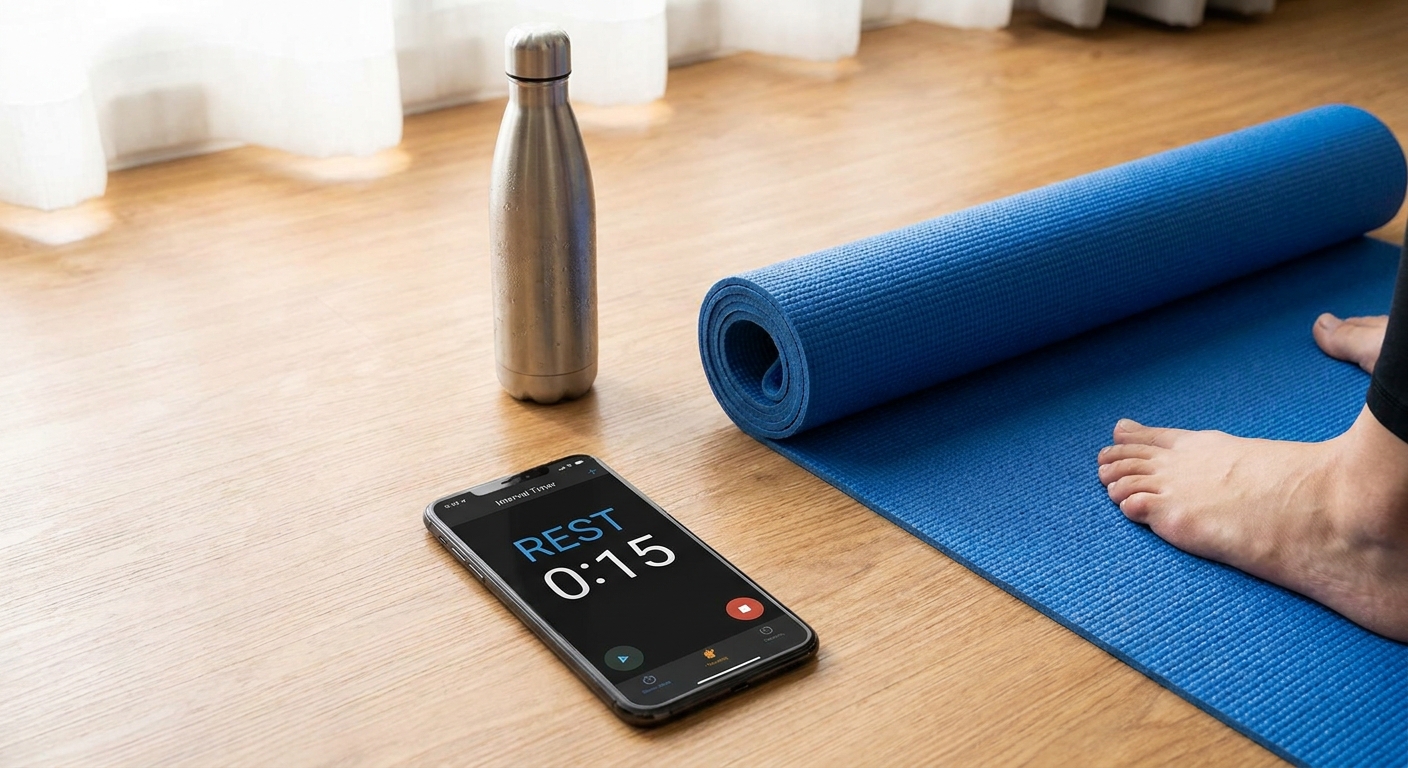
- Set a timer for 4 rounds.
- Warm up for 5 minutes, then start.
When you finish, jot down what felt easy, what felt hard, and what you want to improve next time. That tiny note is how your DIY HIIT circuit becomes a real training plan.