Actionable ways to keep challenging your muscles without weights: harder variations, tempo, range of motion, density, and smart tracking for real muscle grow...
Home Pulse Fit
•
home workouts and fitness
Build Muscle at Home Without Weights
A beginner-friendly guide to building muscle at home with bodyweight workouts. Learn the hypertrophy basics, progressive overload methods, and a simple 4-week plan you can repeat.

Marcus Thorne
Marcus Thorne is an NASM-certified personal trainer and the creator behind Home Pulse Fit. After successfully transforming his own health using only bodyweight routines in his small apartment, he left his demanding corporate career to help others do the same. Today, he is dedicated to making fitness accessible, sustainable, and entirely gym-free for busy beginners.
Published
October 18, 2026
Updated
October 18, 2026
When I first tried to “get in shape,” I assumed it required a gym membership, heavy dumbbells, and long workouts. Turns out, the game changer was much simpler: learning how to make bodyweight exercises progress.
If you are a busy beginner, you can build muscle at home without weights. You just need a few key rules, the right exercise progressions, and a plan you can repeat consistently.
What you will get in this guide:
- How muscle growth works without weights
- Simple ways to create progressive overload at home
- A beginner-friendly exercise menu with easy progressions
- A 4-week muscle-building plan you can repeat
- Common mistakes that stall results (and how to fix them)
Can you build muscle with just bodyweight?
Yes. Muscle growth (hypertrophy) comes from giving your muscles a challenge they are not used to, supporting recovery with enough food and sleep, and repeating. Weights are one way to do that, but they are not the only way.
With bodyweight training, you build muscle by manipulating things like:
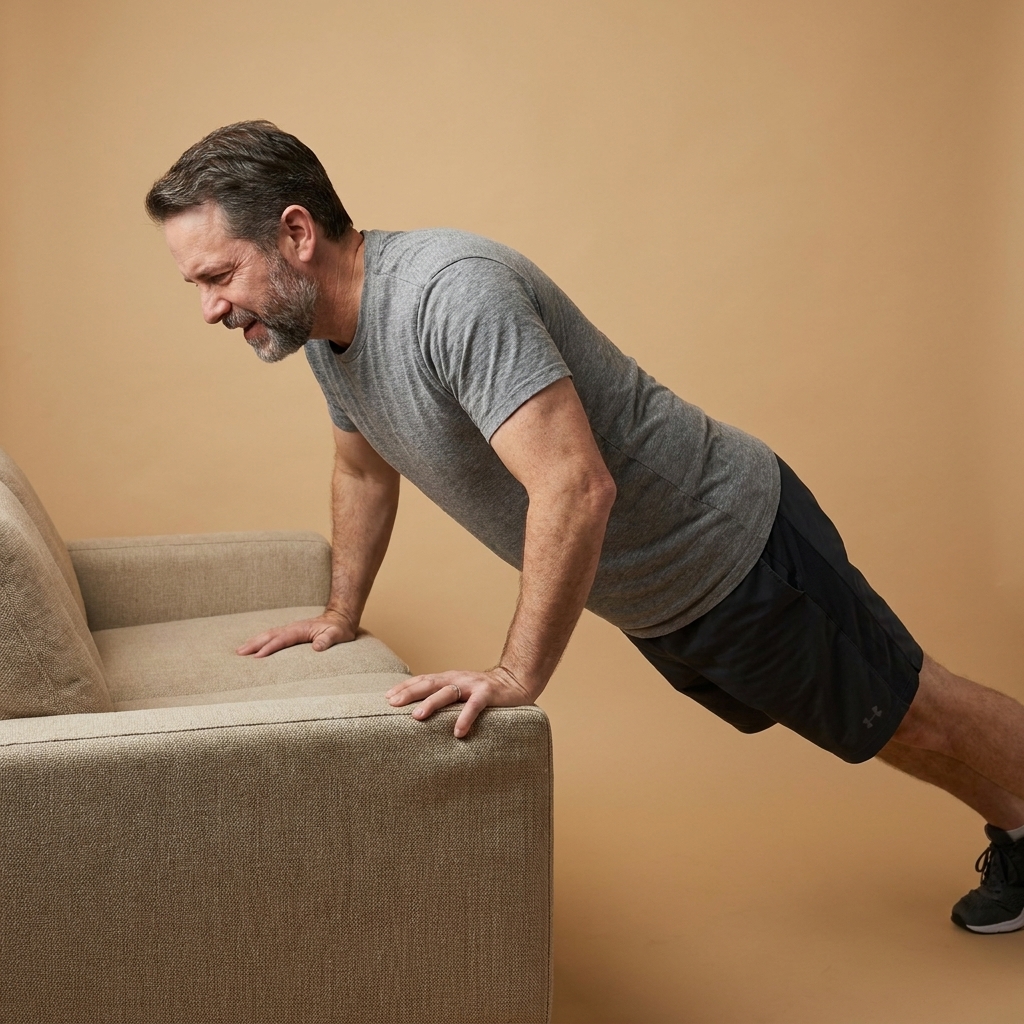
- Leverage: making an exercise mechanically harder (for example, incline push-up to floor push-up to feet-elevated push-up)
- Range of motion: working through a deeper, controlled movement
- Tempo: slowing the lowering phase and pausing
- Unilateral work: single-leg or single-arm variations
- Quality hard reps: controlled reps that challenge you, not just more flailing
If you are brand new, your body is extremely responsive. That is good news. You do not need fancy equipment to start building strength and muscle.
The 3 rules for building muscle at home
1) Train close to fatigue (with clean form)
For muscle growth, your main sets should feel challenging, but still controlled. A simple way to gauge it is “reps in reserve” (RIR), meaning how many good reps you could still do if you had to.
- Most main work sets: often stop with about 1 to 3 reps left in the tank
- Learning sets count too: if you are brand new, some early sets can be a bit easier while you lock in form
- Technique first: if your form breaks, the set is over even if you feel like you can keep going
2) Progress one small thing each week
Bodyweight training works when you make it harder over time. Pick one knob to turn each week:
- Add 1 to 2 reps per set
- Add 1 set to an exercise
- Slow the lowering phase (example: 3 seconds down)
- Add a pause at the hardest point (example: 1 to 2 seconds at the bottom)
- Upgrade the variation (example: wall push-up to incline push-up to floor push-up)
3) Recover like it is part of the plan
Your workouts are the signal. Recovery and nutrition are how you cash that signal in over time. If you are constantly sore, exhausted, or sleeping badly, your progress slows down fast.
- Sleep: aim for 7 to 9 hours
- Protein: include a solid protein source at each meal
- Rest days: at least 1 to 2 per week for beginners
Progressive overload without weights
If you take nothing else from this article, take this: your bodyweight is not the limit, your exercise variation is.
Use these tools (in order)
- Improve your range of motion: controlled, full reps before you chase harder moves
- Increase reps: keep form clean, stop just shy of failure
- Increase sets: add one set to your main moves
- Manipulate tempo: 2 to 4 seconds lowering, brief pause, smooth lift
- Change leverage: elevate feet, move hands, switch to single-leg
A quick “hard enough” checklist
At the end of a set, ask:
- Could I do more than 3 perfect reps? If yes, it was likely too easy.
- Did my form fall apart? If yes, the variation was too hard or I pushed too far.
- Did I feel the target muscle working? If no, slow down and tighten technique.
Track it in one line
Write down what you did so you can beat it next time. One simple log line is enough: exercise variation, sets, reps, and a quick RIR note (example: “Incline push-up, 3x10, 2 RIR”).
The beginner exercise menu
You do not need 25 exercises. You need a few that cover your whole body and that you can progress for months.
Push (chest, shoulders, triceps)
- Wall push-up (easiest)
- Incline push-up (hands on couch or table)
- Knee push-up (an option if it lets you keep strict form and comfortable shoulders)
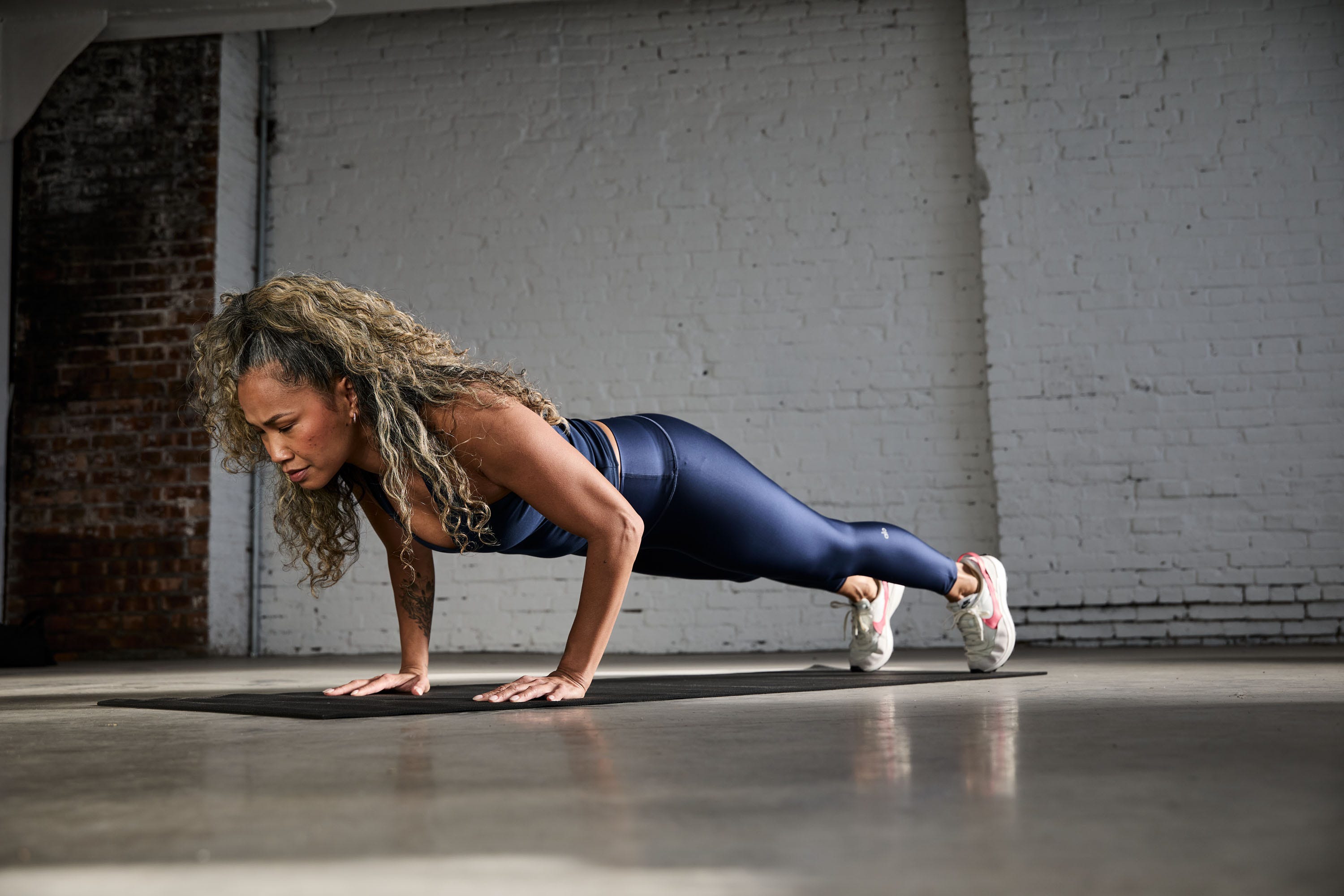
- Floor push-up
- Feet-elevated push-up (harder)
Pull (back, biceps) with minimal or no equipment
Pulling is the trickiest without gear. If you can add one simple tool later, a doorframe pull-up bar or a suspension trainer helps a lot. A basic resistance band is also a cheap, safer way to get good rows at home.
Safety first for DIY pulling
- Do not pull on unstable furniture.
- Avoid hollow-core doors and flimsy doorframes.
- Test your setup gently before you go hard. If it shifts, cracks, or flexes, do not use it.
- When in doubt, do floor-based back work (below) or use a resistance band.
- Doorframe isometric row: hold a sturdy doorframe, lean back slightly, and pull as hard as you can for time
- Towel row on a sturdy post: loop a towel around a solid, fixed post and row your body toward it
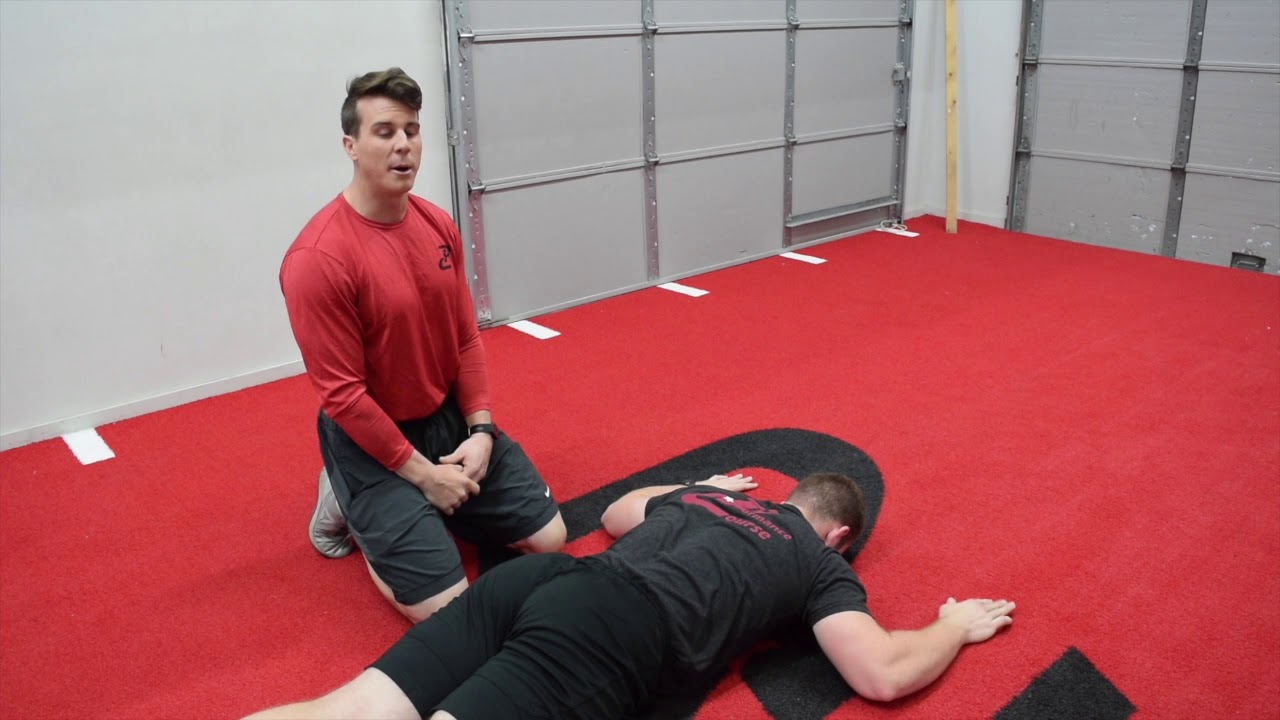
- Prone back work: “Y-T-W” raises and swimmer lifts on the floor
Legs (quads, glutes, hamstrings)
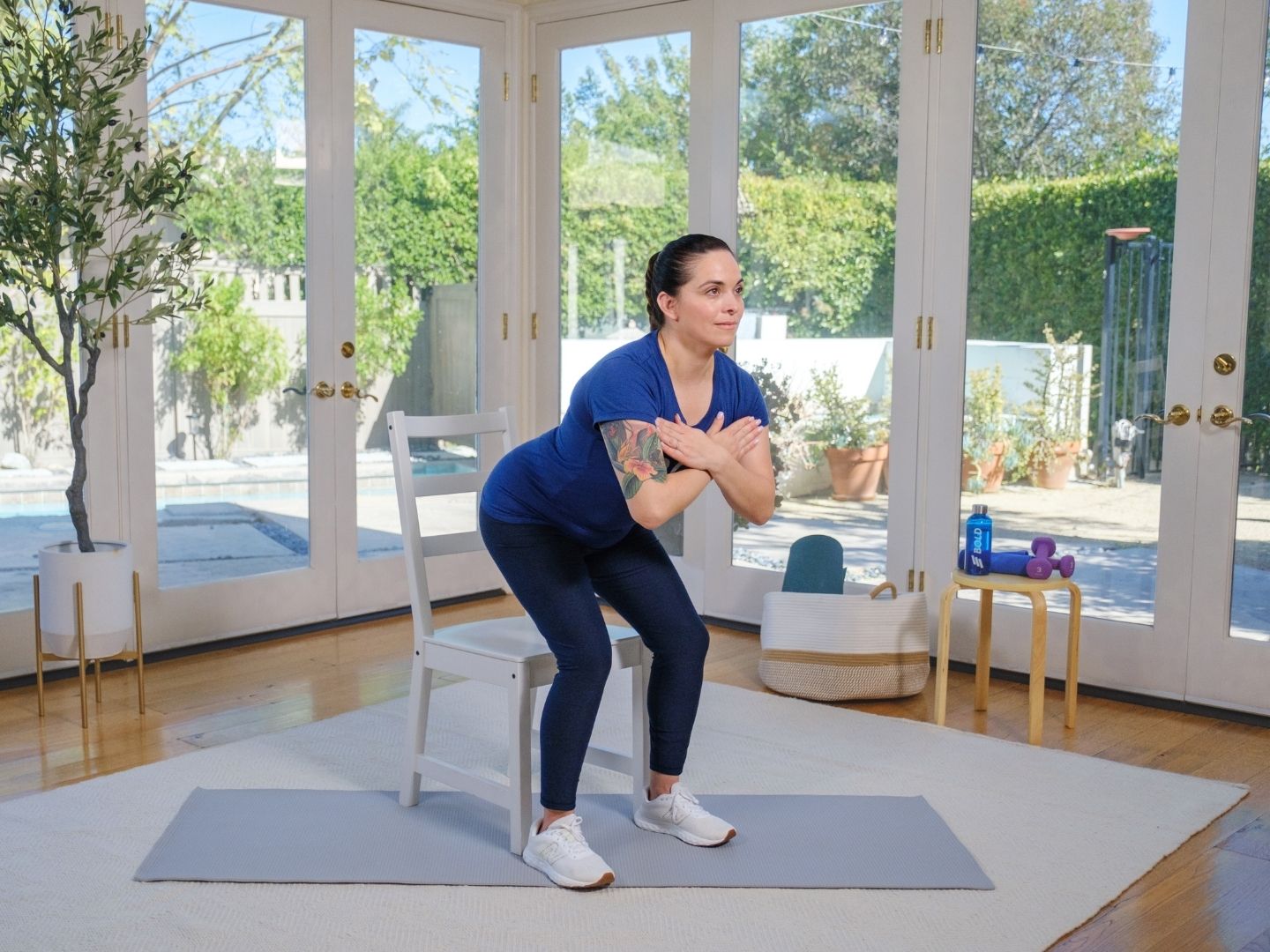
- Box squat to chair
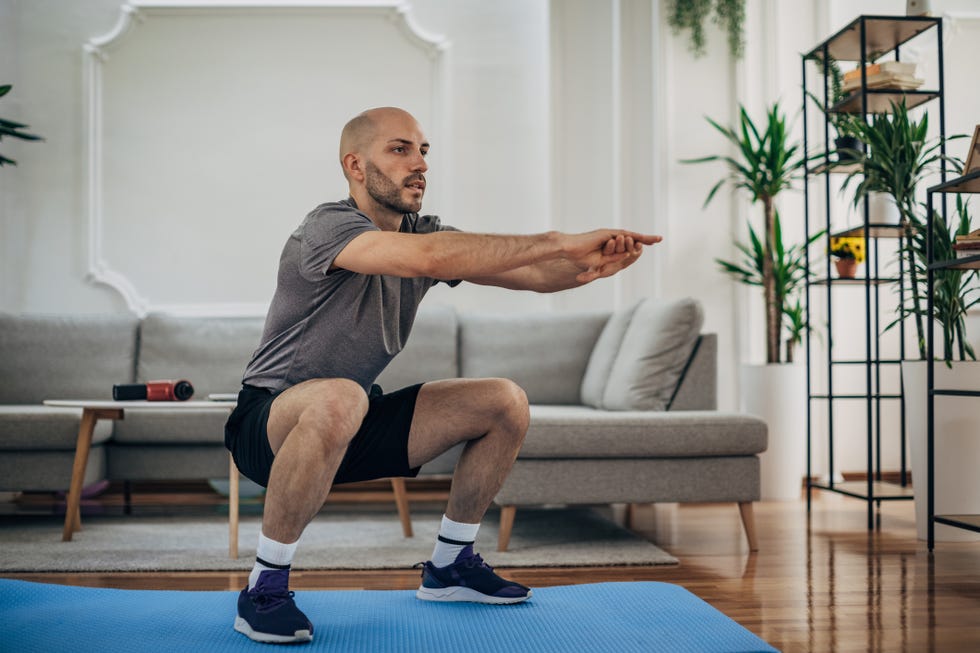
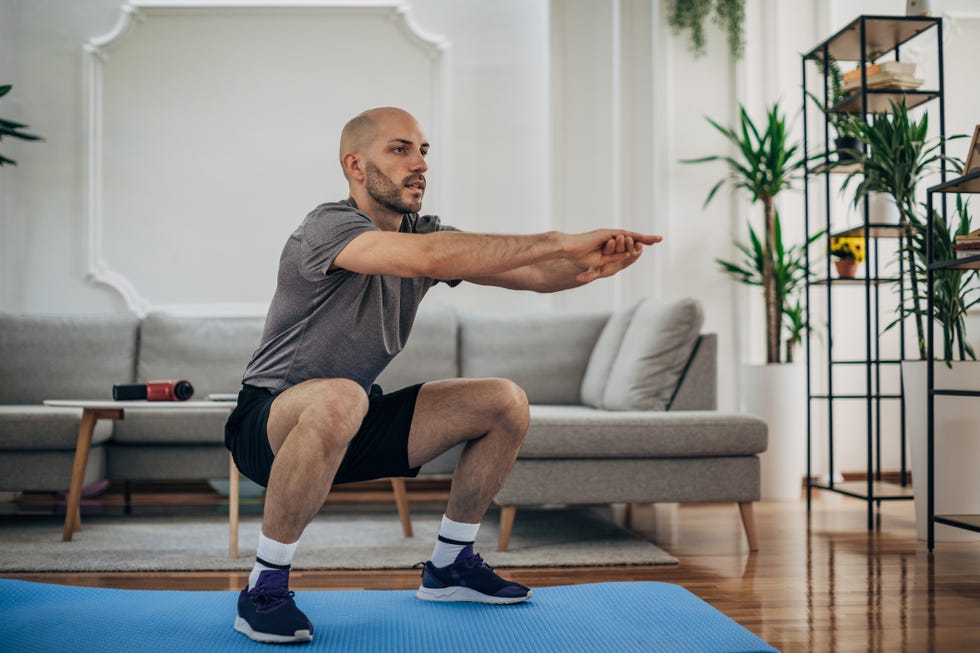
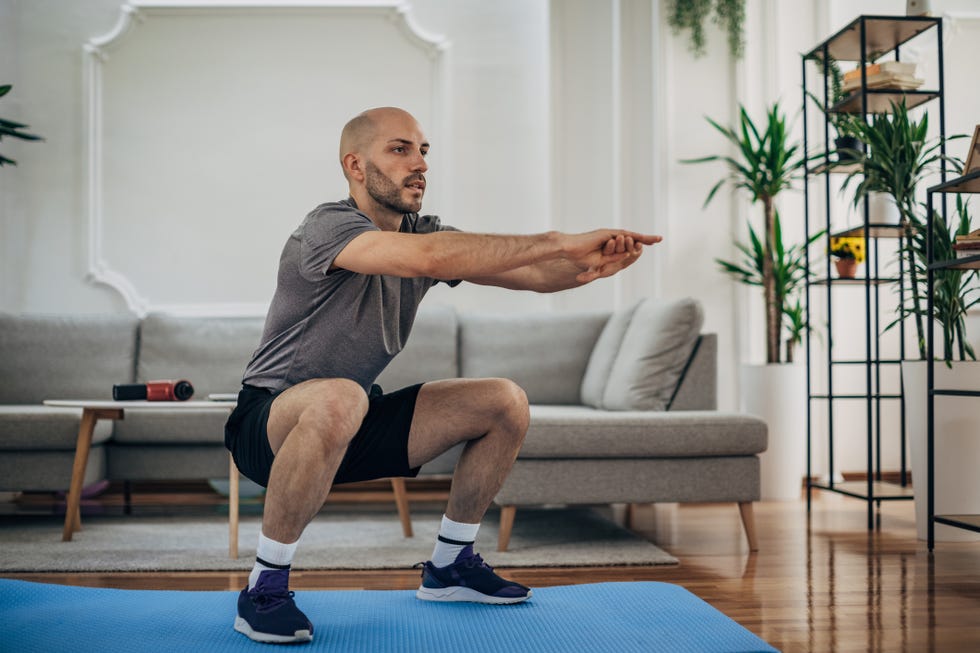
- Bodyweight squat
- Split squat (rear foot on floor)
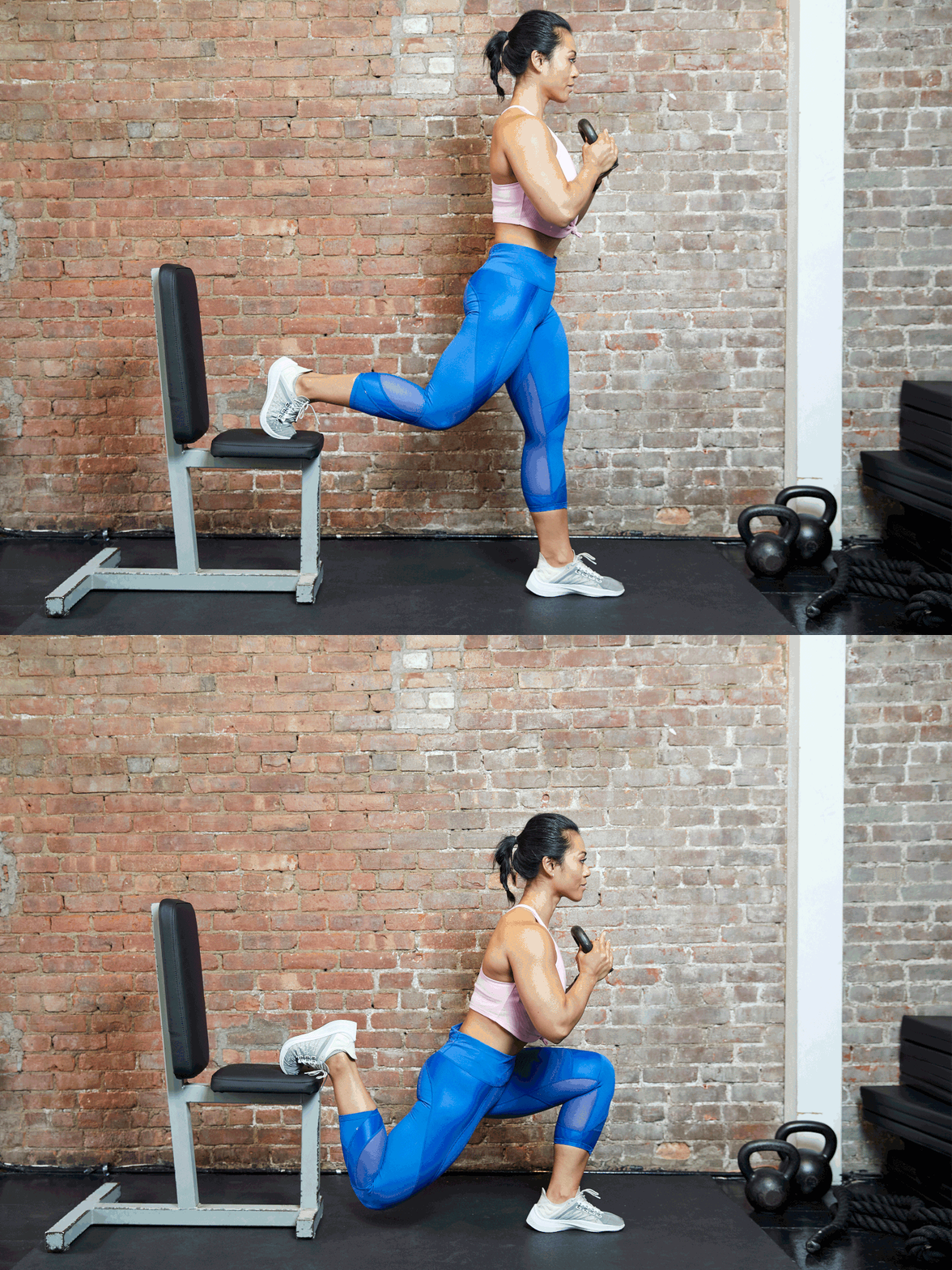
- Bulgarian split squat (rear foot elevated on couch)
- Single-leg Romanian deadlift (balance and hamstrings)
- Hip bridge to single-leg hip bridge
Core (stiffness and control)
- Dead bug
- Plank (front and side)
- Hollow hold (progress slowly)
- Slow mountain climbers
Calves and extras (optional)
- Single-leg calf raises on a step
- Tibialis raises (back against wall, lift toes)
- Scapular push-ups for shoulder control
Your 4-week beginner muscle plan
This plan is built for beginners who want muscle and strength without living in workout land. You will train 3 days per week. Each workout is about 20 to 35 minutes.
Schedule
- Monday: Workout A
- Wednesday: Workout B
- Friday: Workout A
- Next week swap (B, A, B)
Warm-up (4 to 6 minutes)
- 30 to 45 seconds easy marching in place
- 10 hip hinges
- 8 to 10 slow squats to comfortable depth
- 8 shoulder circles each direction
- 5 to 8 incline push-ups (very easy effort)
Workout A (push + legs + core)
- Incline or floor push-up: 3 sets of 6 to 12 reps
- Split squat: 3 sets of 8 to 12 reps per side
- Hip bridge: 3 sets of 10 to 15 reps
- Plank: 3 sets of 20 to 45 seconds
Workout B (legs + back + core)
- Squat (chair or free): 3 sets of 8 to 15 reps
- Single-leg Romanian deadlift: 3 sets of 8 to 12 reps per side
- Doorframe isometric row (or prone Y-T-W if you do not have a safe setup): 4 rounds of 15 to 30 seconds hard pull
- Dead bug: 3 sets of 6 to 10 reps per side (slow and controlled)
Rest between sets: 60 to 120 seconds. If your breathing is out of control, rest longer. If you feel totally fresh, you can keep it closer to 60 seconds.
How to progress for 4 weeks
Use this simple ladder for each main exercise:
- Week 1: pick variations you can do for the lower end of the rep range with clean form
- Week 2: add 1 to 2 reps per set (or add 5 seconds to holds)
- Week 3: add 1 set to your first two exercises in the workout
- Week 4: keep sets the same, slow the lowering phase to 3 seconds on your first two exercises
After week 4, repeat the cycle with slightly harder variations, or keep the same moves and aim for higher quality reps and better control.
Nutrition basics for muscle gain
I am not here to hand you a perfect meal plan. I am here to help you actually follow something.
Protein: the daily anchor
A simple target for many beginners is 20 to 40 grams of protein per meal, 3 to 4 meals per day. Needs vary by body size and goals, so if you want a more personalized target, a common evidence-based range is about 1.6 to 2.2 grams of protein per kilogram of bodyweight per day.
Examples:
- Greek yogurt with fruit and nuts
- Eggs plus a side of cottage cheese
- Chicken, tofu, or beans with rice and veggies
- Tuna or tempeh wrap
Calories: choose your lane
- If you want to build muscle faster: eat a small surplus. Add one snack with protein and carbs daily.
- If you want recomposition (muscle up while leaning out): keep portions steady, focus on protein, train consistently.
Hydration and carbs matter
If your workouts feel flat, do not assume you “lack motivation.” Often you are under-fueled. A banana, oats, rice, potatoes, or toast around training can help performance and recovery.
Common mistakes that stall gains
Doing the same easy workout forever
If you repeat the same reps with the same form and the same rest for months, your body adapts and stalls. Pick one progression each week.
Rushing reps
Fast, bouncy reps usually shift work away from the muscle and toward momentum. Slow down. Own the lowering phase.
Skipping legs
Leg training drives full-body muscle and makes everyday life easier. Start with chair squats and split squats. You will get stronger quickly.
Ignoring pulling work
Even without equipment, do something for your back. Isometrics (only if your setup is truly solid), prone raises, and controlled swimmers add up. Your shoulders will thank you.
Going all-out every session
Consistency beats intensity. Your goal is to finish workouts feeling like you could come back in two days and do it again, not crawl to the shower.
Pushing through sharp pain
Muscle burn and effort are normal. Sharp, increasing, or joint pain is a different category. Reduce range of motion, switch to an easier variation, and consider checking in with a qualified clinician if pain persists.
Beginner FAQ
How long does it take to see muscle growth?
Many beginners notice strength improvements in 2 to 4 weeks. Visible muscle changes often show up in 6 to 12 weeks, depending on training consistency, nutrition, sleep, and starting point.
How many push-ups do I need to build muscle?
You can build muscle with whatever version challenges you for about 6 to 15 controlled reps per set. For some people that is a wall push-up. For others it is a floor push-up. The right level is the one that makes you work hard with clean form.
What if my wrists hurt during push-ups?
First, try an incline push-up so less load goes through your wrists. You can also hold onto push-up handles or sturdy dumbbell handles if you have them. Some people do fine on fists, but only do that if it feels comfortable for your wrists and knuckles. Persistent sharp pain deserves a check-in with a qualified clinician.
Do I need supplements?
No. If you want one simple, evidence-based option, creatine monohydrate is widely studied. But it is optional. You will get most of your results from consistent training, enough protein, and sleep.
Is it okay to train every day?
You can move daily, but for muscle building as a beginner, 3 full-body sessions per week is a sweet spot. On off days, walk, stretch gently, or do light mobility.
A simple next step
Pick your training days for the next two weeks right now. Put them on your calendar like a meeting. Then start with the plan above and keep the promise small: show up, do the warm-up, and do your first exercise. Momentum is built one repeatable workout at a time.
If you want, tell yourself one sentence before your first session: “Today I am just practicing.” That mindset takes the pressure off and makes consistency easier, which is where the muscle comes from.