Actionable ways to keep challenging your muscles without weights: harder variations, tempo, range of motion, density, and smart tracking for real muscle grow...
Home Pulse Fit
•
home workouts and fitness
Bodyweight Squats vs. Lunges
Squats or lunges for home leg day? Learn what each targets, how to do them with great form, plus warm-ups, mobility fixes, knee-friendly tweaks, and simple programming.

Marcus Thorne
Marcus Thorne is an NASM-certified personal trainer and the creator behind Home Pulse Fit. After successfully transforming his own health using only bodyweight routines in his small apartment, he left his demanding corporate career to help others do the same. Today, he is dedicated to making fitness accessible, sustainable, and entirely gym-free for busy beginners.
Published
October 18, 2026
Updated
October 18, 2026
If you are building a gym-free leg day at home, two moves will carry you a long way: the bodyweight squat and the lunge. They look simple, but they train your legs in very different ways. The good news is you do not have to pick a permanent winner. Once you understand what each exercise is best at, you can choose the right one for your body, your space, and your goals.
In this guide, I will break down squats vs. lunges in plain English, show you clean form, and give you a few plug-and-play routines you can run in your living room without fancy gear.
The quick verdict
- For building a strong foundation fast: squats are usually the first stop. They are stable, easy to scale, and great for learning lower-body mechanics.
- For balance, glute focus, and ironing out left to right differences: lunges shine because each leg works more independently, which can expose strength and coordination asymmetries.
- For knee comfort: it depends. Many people find squats feel better when done with a solid hip hinge and good control, while others feel better with a shorter-range lunge or a reverse lunge. We will cover knee-friendlier options for both.
- For the best home leg day overall: combine them. A squat pattern plus a lunge pattern is a simple recipe for well-rounded legs.
What they train
Bodyweight squats
Main muscles: quads (front of thighs), glutes, adductors (inner thighs), and core as a stabilizer. Your calves contribute for balance and ankle stability, but they are not usually the main target.
How it feels: both legs share the load at the same time. Because you are more stable, squats are excellent for accumulating quality reps and getting stronger, especially for beginners.
Why they are great at home: you can progress them without equipment by slowing down, adding pauses, increasing range of motion, or moving to harder variations later.
Lunges
Main muscles: quads and glutes, plus more demand on the hips and core for stability. You also get extra work for the muscles that keep your pelvis steady (important if you sit a lot).
How it feels: one leg is doing the majority of the work at a time, which exposes weak links quickly. That is a good thing, as long as you scale intelligently.
Why they are great at home: they do not require much space if you choose the right style, and they build real-world strength for stairs, carrying groceries, and getting up off the floor.
Quick warm-up
Before you squat or lunge, give yourself 3 to 5 minutes to get warm. You should feel looser, not exhausted.
- Ankle rocks: 8 to 10 reps per side (knee gently forward over toes, heel stays down).
- Hip hinges or “good mornings”: 10 reps (hands on hips, push hips back, feel hamstrings load).
- Glute bridges: 10 to 15 reps (squeeze at the top for 1 second).
- Easy bodyweight squats: 8 slow reps to your comfortable depth.
Shoe note: if it is safe for you, flat shoes or barefoot usually feel more stable than squishy running shoes. Also pick a surface that is not slippery.
Squat form
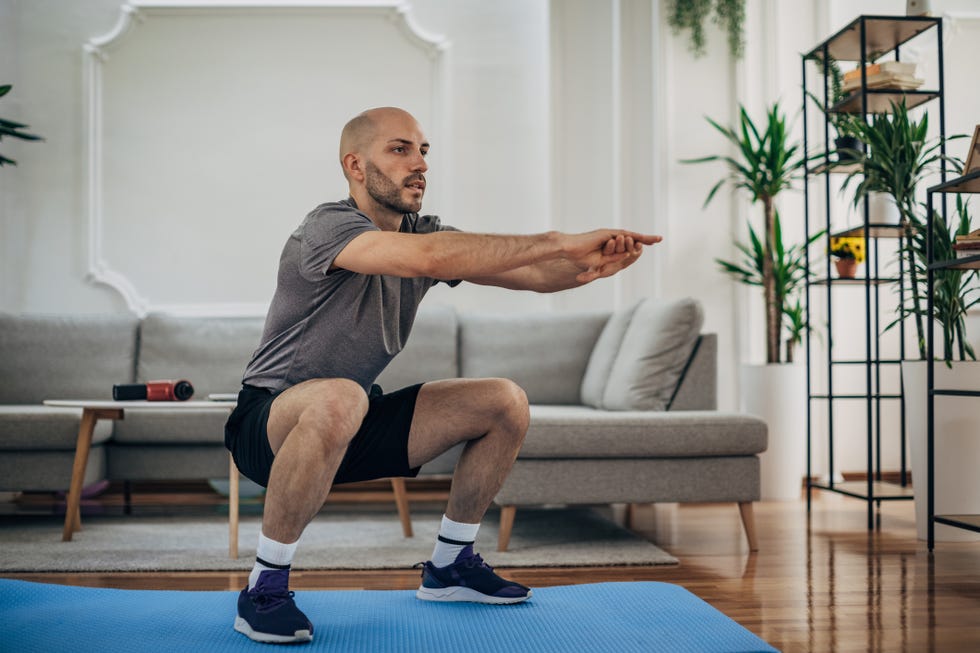
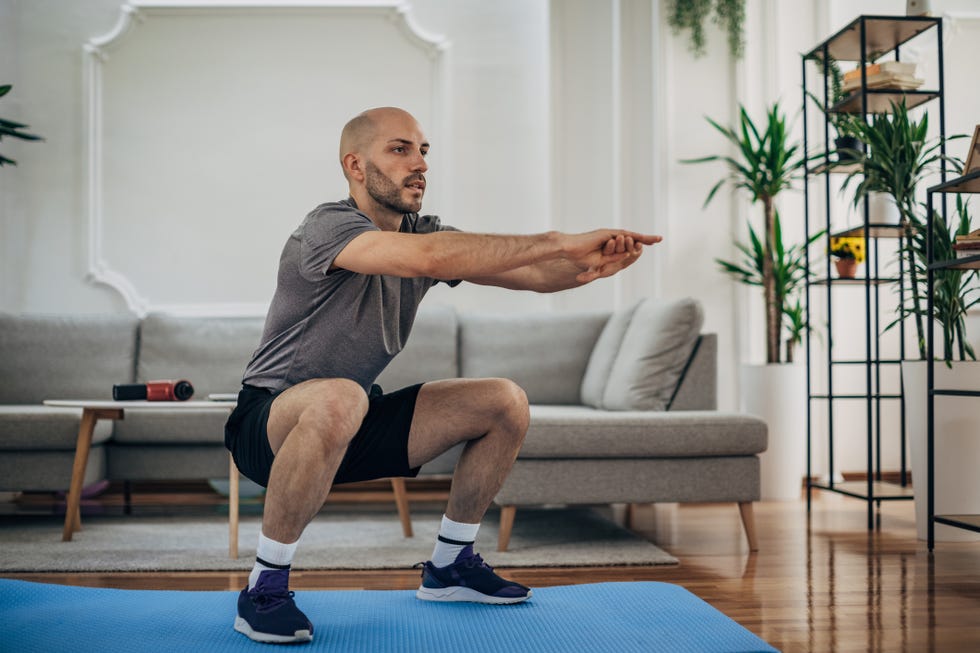
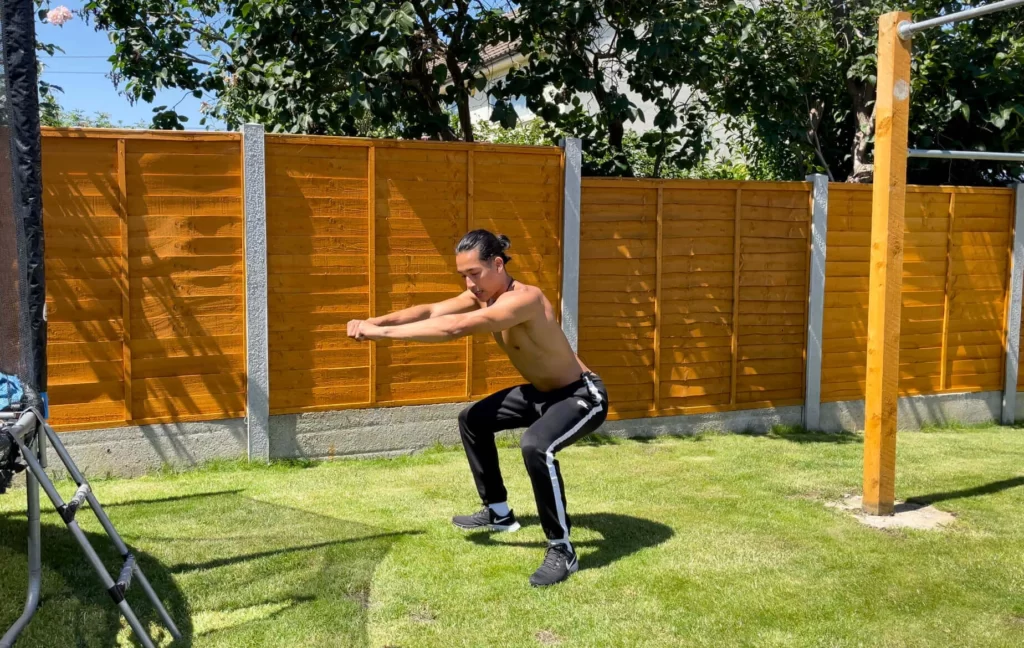
Think of a squat as sitting between your heels while keeping your whole foot down, not collapsing forward onto your toes.
Setup
- Stand with feet about shoulder-width apart. Toes can point slightly outward if that feels natural.
- Stance tip: start around shoulder-width, then nudge your feet a little wider or narrower until you can keep your whole foot planted and your knees track comfortably with your toes.
- Brace your midsection like you are about to cough, then keep that gentle tension.
- Reach arms forward as a counterbalance if needed.
Descent
- Start by sending your hips back a little, then bend the knees.
- Keep your whole foot planted: big toe, little toe, and heel.
- Let knees track in the same direction as your toes. Do not force them outward, just do not let them cave inward.
Bottom position
- Go as low as you can without losing a neutral spine or lifting heels.
- Neutral spine means your back stays roughly the same shape as you move, no hard rounding and no aggressive arching.
- If you feel your low back tuck hard under you, stop slightly higher for now and build mobility gradually.
Stand up
- Push the floor away.
- Keep chest tall and ribs stacked over hips.
- Finish by squeezing glutes, not by leaning back.
Breathing
For most beginners, this works well: inhale on the way down, then exhale as you stand up while keeping your midsection braced. If you tend to hold your breath, the exhale cue fixes it fast.
Common squat mistakes
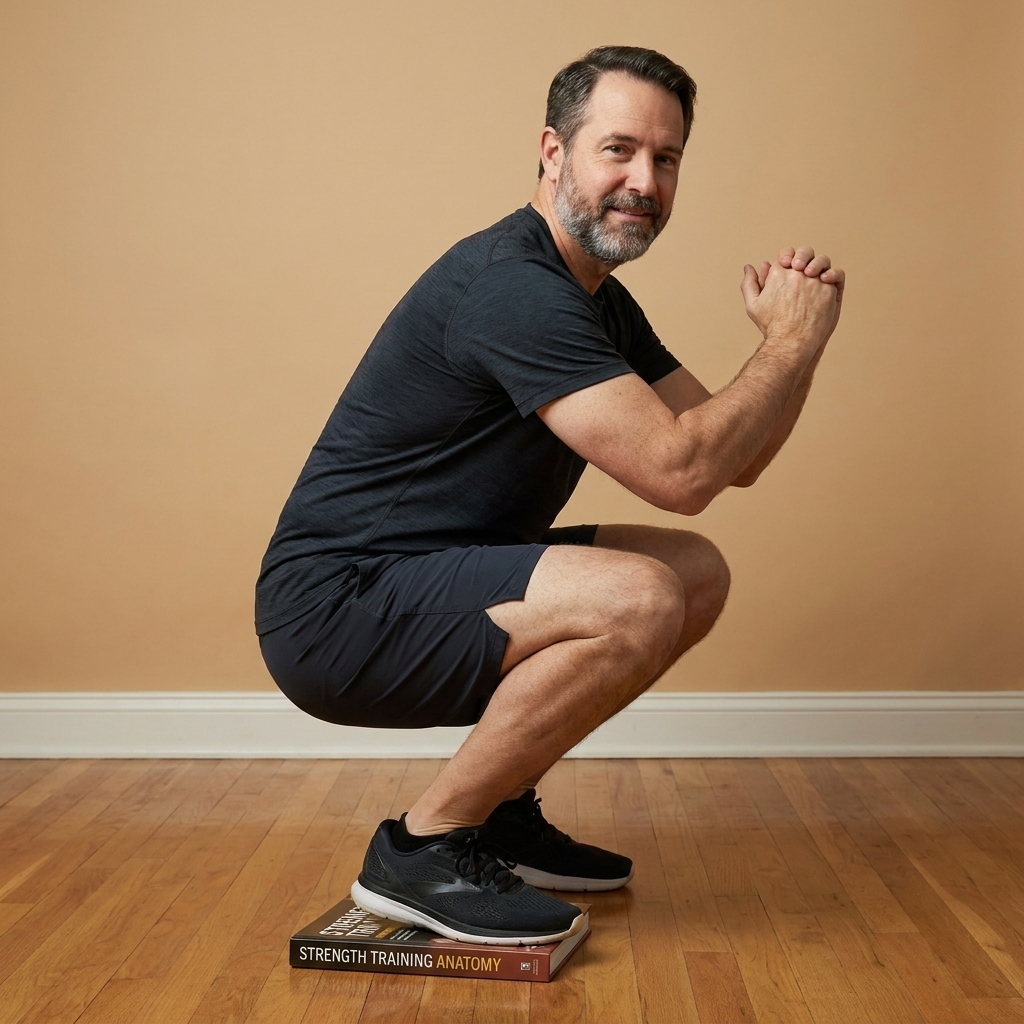
- Heels popping up: widen stance slightly, slow down, and squat to a comfortable depth. You can also elevate heels on a thin book temporarily, but keep working toward flat feet.
- Knees caving in: reduce depth, slow the lowering phase, and think “knees follow toes.”
- Feeling it only in quads: add a small hip hinge first and try a 2 second pause at the bottom while staying balanced.
Squat options by level
- Beginner regression: box squat to a chair. Sit back with control, lightly tap, then stand.
- Advanced progression: assisted pistol squat to a chair or couch. Hold a door frame or countertop for support, and keep reps controlled.
Lunge form
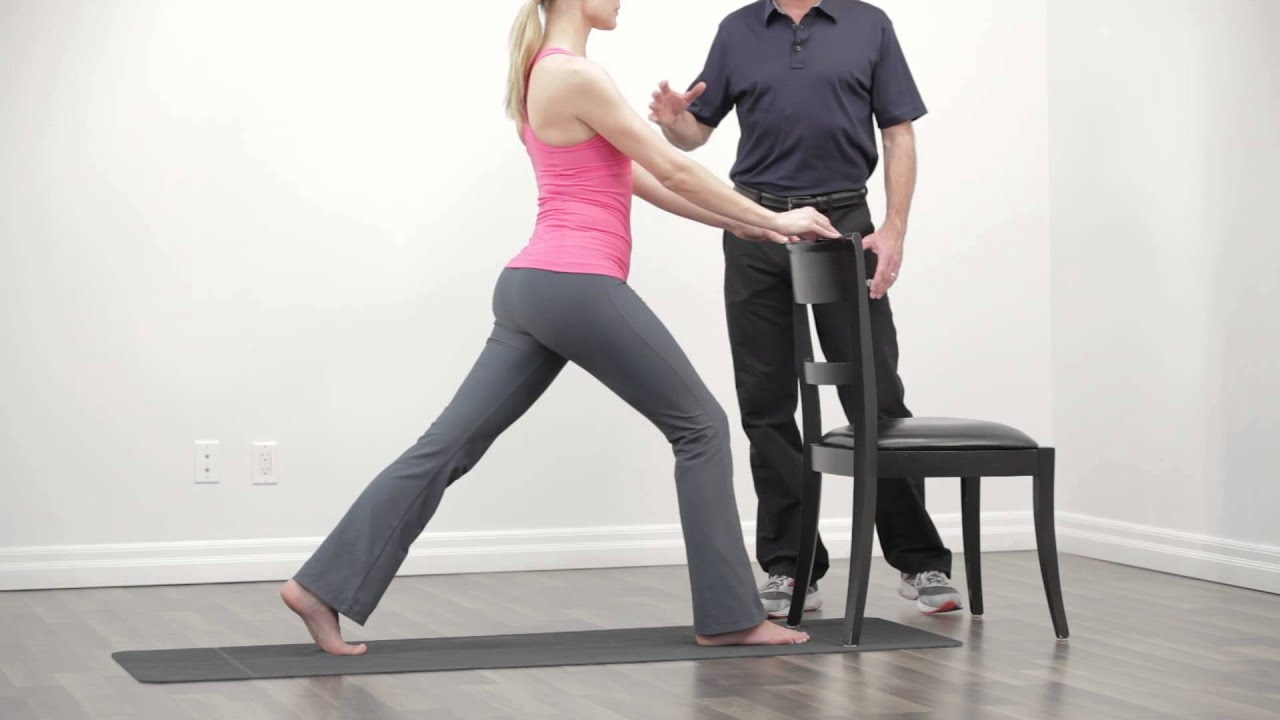
Lunges get a bad rap because the classic forward lunge can feel wobbly. At home, I often start beginners with reverse lunges or split squats first. They train a similar squat and lunge pattern, but they remove some of the stepping and deceleration demands, and they often feel smoother on the knees and easier to balance.
Option 1: Reverse lunge
- Stand tall, feet hip-width.
- Step one foot back and land softly on the ball of the back foot.
- Lower straight down. Front shin can angle slightly forward, but keep front heel down.
- Front knee tracks over toes. Back knee points toward the floor.
- Push through the front foot to return to standing.
Option 2: Split squat
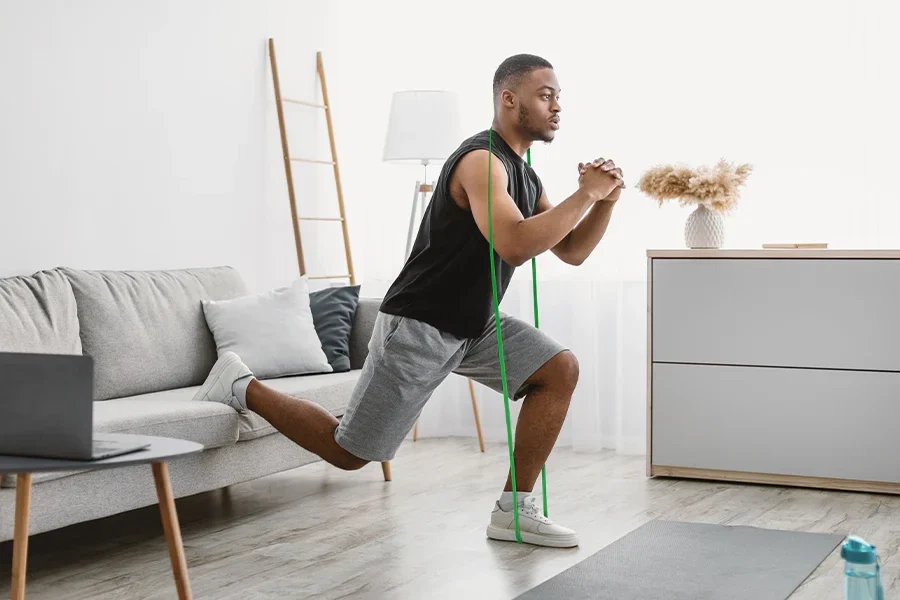
This is basically a lunge with your feet planted the whole time. It is excellent if stepping back and forth irritates your knees or throws off balance.
- Take a split stance and keep it.
- Lower with control, straight down like an elevator.
- Rise back up without shifting your feet.
Option 3: Forward lunge
Forward lunges are not “bad,” but they often feel more knee-forward if you take a shorter step or stay very upright. If your goal is more knee tolerance and quad work, that can be useful. If your knees are sensitive, start with reverse lunges.
- Step forward far enough that you can keep the front heel down.
- Lower under control, then push back to the start.
Common lunge mistakes
- Wobbling: shorten the range of motion, use split squats, and lightly hold a wall or chair for support.
- Front heel lifting: take a slightly longer step and slow down.
- Knee pain in front leg: switch to reverse lunge, reduce depth, and focus on a quiet, controlled descent.
Lunge options by level
- Beginner regression: split squat hold. Get in a split stance, drop a few inches, and hold 10 to 20 seconds per side while staying tall.
- Advanced progression: Bulgarian split squat using a couch. Start with a low back-foot height and use light support until it feels solid.
Which is better?
General strength
Squats usually win early. They are stable, easy to learn, and build a base that makes lunges feel smoother later.
Glute focus
Lunges often feel more glute-heavy, especially reverse lunges and split squats with a slightly longer stance. Squats still build glutes too, but many beginners “find” their glutes faster with unilateral work.
Muscle with only bodyweight
Both work, but lunges often stay challenging longer. High-rep squats can turn into more of a conditioning event once you get used to them. Lunges, split squats, and tougher cousins (like Bulgarian split squats) can keep pushing your legs for a long time with no equipment.
Limited space
Squats and split squats. You can do both in a yoga-mat-sized footprint.
If a knee is cranky
First, if you have sharp pain, swelling, locking, or pain that gets worse week to week, get assessed by a qualified clinician.
For normal “my knees are sensitive” situations, here is what often helps:
- Try reverse lunges instead of forward lunges.
- Use a shorter depth on both squats and lunges, then gradually increase as comfort improves.
- Slow the lowering to about 3 seconds if it feels better. Control builds tolerance for many people.
- Keep the foot planted and avoid letting the heel pop up.
Mobility sticking points
If your heels lift in squats
This is often related to ankle mobility, but stance, limb proportions, and motor control can matter too. Use a heel-elevated squat as a temporary regression (thin book or small plate under the heels), and add 30 to 60 seconds of ankle rocks per side a few days per week.
If you tip forward a lot
This is often a mix of hip mobility, ankle mobility, and core control. Practice a few slow hip hinges before squats, and try box squats to a chair so you can stay more upright while you learn the pattern.
Programming
My favorite rule for busy beginners: pick one squat pattern and one lunge pattern, then keep them in your routine for 3 to 6 weeks. Consistency beats intensity, especially when you are learning form.
Progression tools
- Add reps: build from 8 reps to 15 reps per set.
- Add sets: go from 2 sets to 4 sets.
- Slow tempo: 3 seconds down, 1 second pause, stand up.
- Add pauses: 2 to 5 seconds at the bottom position.
- Increase range of motion: squat a bit deeper, lunge a bit lower over time.
- Shorten rest: keep form clean, but tighten rest from 90 seconds down to 45 to 60 seconds.
Two home leg days
Workout A
- Bodyweight squats: 3 sets of 8 to 12 reps
- Reverse lunges: 3 sets of 6 to 10 reps per side
- Glute bridge: 3 sets of 10 to 15 reps
- Calf raises: 2 sets of 12 to 20 reps
Workout B
- Tempo squats (3 seconds down): 4 sets of 8 to 10 reps
- Split squats: 3 sets of 8 to 12 reps per side
- Wall sit: 2 rounds of 20 to 45 seconds
Weekly schedule idea: do one leg day twice per week (for example Tuesday and Friday). If you only have one day, alternate Workout A and Workout B each week.
How hard should it feel?
Aim to finish most sets with about 2 reps left in the tank. You should feel challenged, but you should not be grinding or losing form. When you can exceed the top end of the rep range with clean reps, progress using one of the tools above.
Best variations
Squat variations
- Box squat to a chair: great for learning depth and control. Lightly tap, do not collapse.
- Pause squat: hold 2 seconds at the bottom.
- Narrow stance squat: can increase quad emphasis if comfortable.
- Squat to calf raise: adds ankle and calf work, and increases time under tension.
Lunge variations
- Reverse lunge: stable and knee-friendlier for many people.
- Split squat: great for small spaces and balance building.
- Rear-foot elevated split squat (Bulgarian): very challenging using a couch. Only add when regular split squats feel solid.
- Lateral lunge: a great alternative if you want more hip and inner-thigh work without the rotational demands of curtsy lunges.
- Curtsy lunge (cautiously): can light up the side glutes and hip stabilizers, but it also increases rotation and knee-tracking demands. Keep the knee tracking with your toes and skip it if it tweaks your knees.
If you are progressing to a rear-foot elevated split squat, keep it simple: start with a lower back-foot height (ottoman over chair), use support from a wall, and keep reps modest until it feels smooth.
FAQs
Should I do squats or lunges first?
If you are doing both in one session, start with the movement you care most about improving. Most beginners do well starting with squats first because they require less balance. If your goal is better single-leg strength or glute focus, start with reverse lunges or split squats.
Can I build legs with only squats?
You can build a solid base, especially in your quads and overall lower-body endurance. Long term, adding a lunge pattern helps keep your hips strong and can reduce left to right imbalances.
Why does my back leg cramp in lunges?
Usually it is the hip flexors or quads of the back leg working hard, especially if you sit a lot. Shorten the stance slightly, keep torso tall, and reduce depth for a couple weeks while your body adapts.
How many reps are best for bodyweight legs?
Most people do well with 8 to 15 reps for squats and 6 to 12 reps per side for lunges, using slower tempo or pauses when higher reps stop feeling challenging.
My recommendation
If you are trying to make leg day sustainable at home, do not overthink the debate. Build your week around both patterns:
- Squat pattern: squats or tempo squats
- Lunge pattern: reverse lunges or split squats
That combination gives you strength, muscle, balance, and joint resilience without needing a gym membership or a two-hour window in your day. Start small, keep reps clean, and let consistency do the heavy lifting.