Safe progression methods for home bodyweight workouts: add reps, slow the tempo, increase range, change leverage, shorten rest, add load, and follow a simple...
Home Pulse Fit
•
home workouts and fitness
Build Muscle at Home With Progressive Overload
Learn how to build muscle at home using progressive overload in bodyweight training. Get specific exercise upgrades, rep and tempo progressions, and a simple weekly plan.

Marcus Thorne
Marcus Thorne is an NASM-certified personal trainer and the creator behind Home Pulse Fit. After successfully transforming his own health using only bodyweight routines in his small apartment, he left his demanding corporate career to help others do the same. Today, he is dedicated to making fitness accessible, sustainable, and entirely gym-free for busy beginners.
Published
October 18, 2026
Updated
October 18, 2026
If you have ever thought, “Bodyweight is great for getting in shape, but can it really build muscle?”, I get it. I used to think muscle required a gym membership, heavy dumbbells, and two-hour sessions. Then I started training in a small apartment with nothing but my bodyweight, a chair, and a little patience.
The secret is not fancy equipment. It is progressive overload, which simply means you gradually make your muscles do a little more work over time. Do that consistently and your body has a reason to adapt by getting stronger and supporting muscle growth.
Progressive overload, explained simply
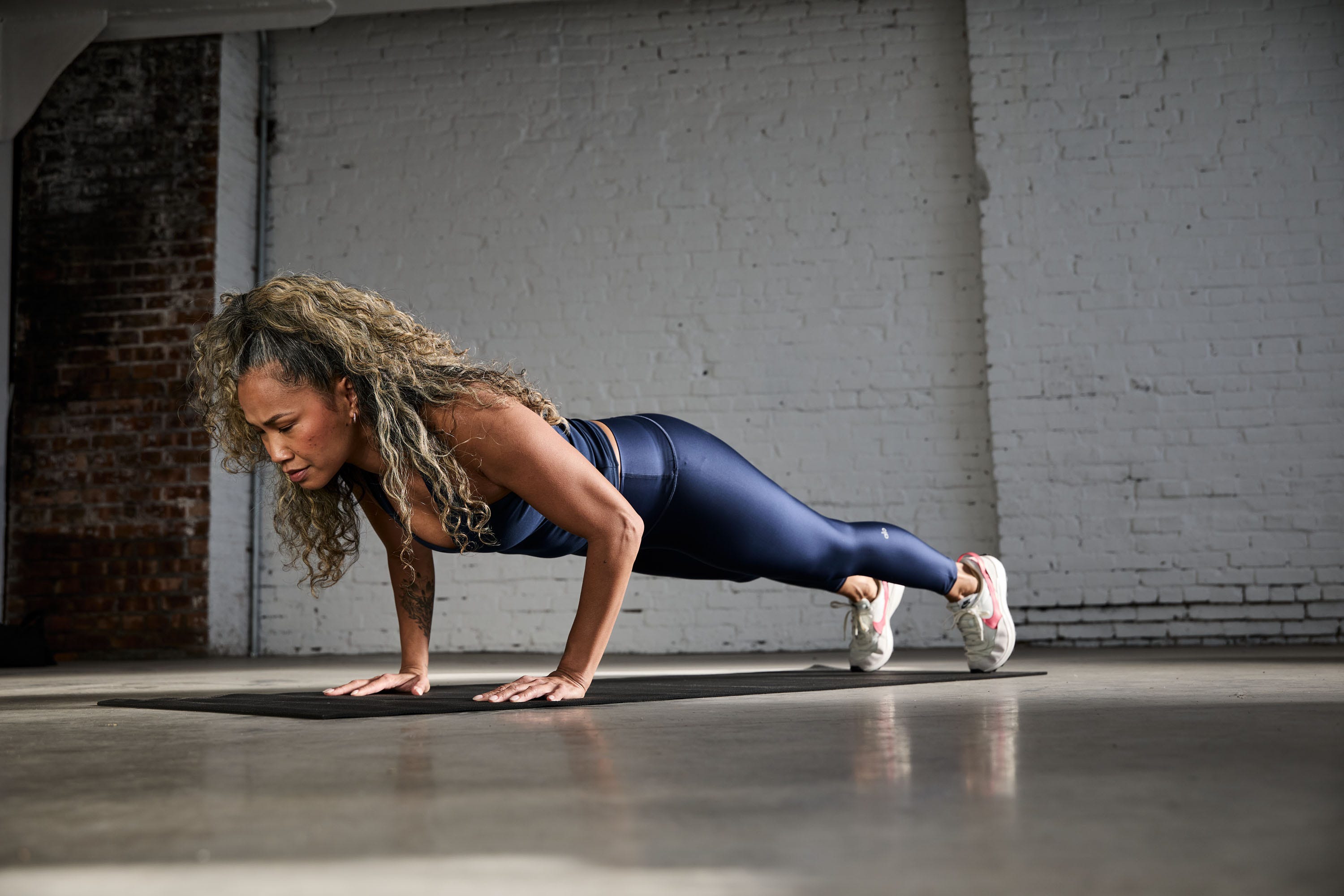
Progressive overload is any small, repeatable change that makes an exercise more challenging for the target muscle. In the gym, that is usually “add five pounds.” At home, we use different levers:
- More reps or more sets
- Slower tempo (especially on the way down)
- More range of motion (deeper squat, fuller push-up), as long as it is controlled and comfortable
- Harder variation (from knee push-ups to full push-ups, then to decline)
- Shorter rest or more work in the same time (training density)
- Better control and cleaner form (yes, this counts)
The goal is not to destroy yourself. The goal is to keep your workouts challenging enough that next month you are clearly stronger than this month.
How hard to push for muscle
For building muscle, you want most working sets to land close to fatigue while still keeping form solid. A simple way to do that is RIR, which stands for “reps in reserve.”
- Most sets: finish with about 1 to 3 reps in reserve
- Occasionally: go to 0 to 1 reps in reserve on your last set of an exercise, if your form stays clean
If you stop every set when it feels easy, your body has no reason to change. If you grind sloppy reps every workout, you will burn out or irritate joints. Aim for challenging, repeatable, recoverable.
Warm-up (5 minutes)
Before you start, do 5 minutes of easy movement and a couple of ramp-up sets so your first “working set” is not your first rep of the day.
- 30 to 60 seconds each: brisk walk in place, arm circles, hip hinges, bodyweight squats
- Then do 1 to 2 easier sets of your first push and first leg move (for example, incline push-ups before floor push-ups)
5 ways to overload at home
1) Add reps inside a rep range
This is the simplest progression and it works well for beginners.
- Pick a rep range like 8 to 12.
- When you can hit 12 reps on all sets with good form, upgrade the exercise variation.
Example: Incline push-ups (hands on counter) for 3 sets of 8 to 12. Once you can do 3x12 cleanly, move your hands lower (couch), then eventually to the floor.
2) Slow the tempo
Tempo is a powerful lever for home training because it increases time under tension without changing equipment.
- Start with a normal pace.
- Progress to 3 seconds down.
- Then try 4 seconds down or add a pause at the bottom.
Example tempo: 3-1-1 means 3 seconds down, 1 second pause, 1 second up.
3) Increase range of motion (when it fits)
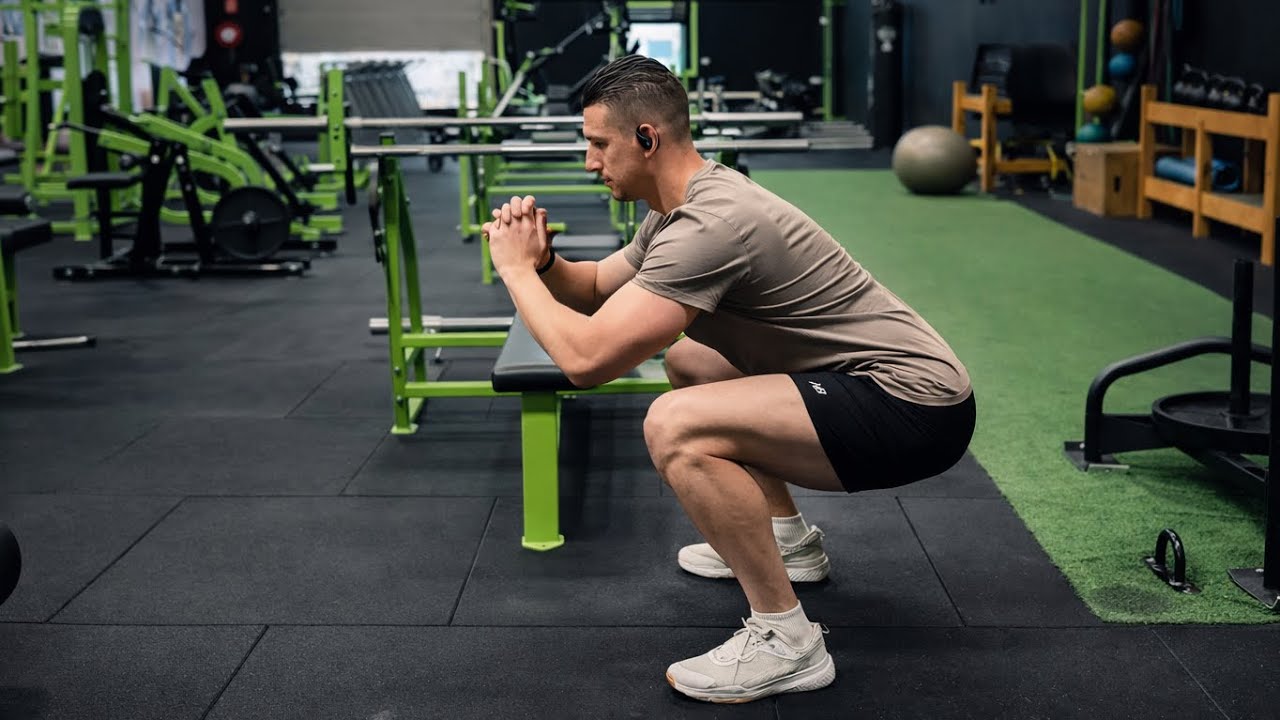
In many exercises, a longer range of motion can increase the training stimulus. That is not a universal rule, and it is only worth doing if you can control it and stay pain-free.
- Push-ups: hands on yoga blocks or sturdy books to get a deeper stretch (stable surface only).
- Split squats: elevate the front foot slightly to increase depth if your hips and knees tolerate it.
- Glute bridges: progress to hip thrusts with shoulders on a couch for deeper hip flexion.
4) Upgrade the leverage (harder variation)
This is the “add weight” equivalent for bodyweight. A few classic progressions:
- Push-up progression: wall → counter → couch → floor → feet elevated → slow eccentrics → deficit push-ups
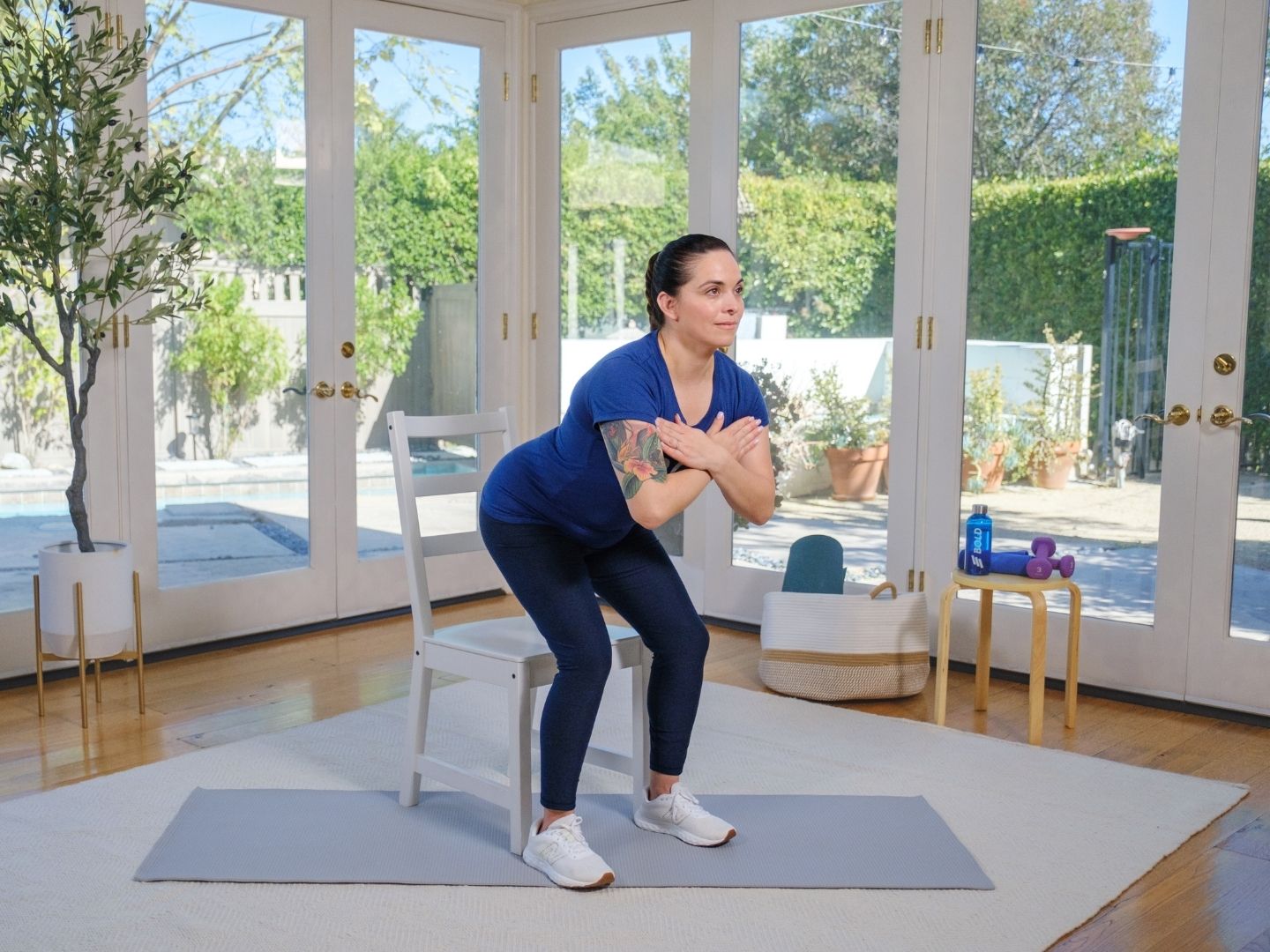
- Squat progression: box squat → full squat → tempo squat → split squat → Bulgarian split squat → assisted pistol squat
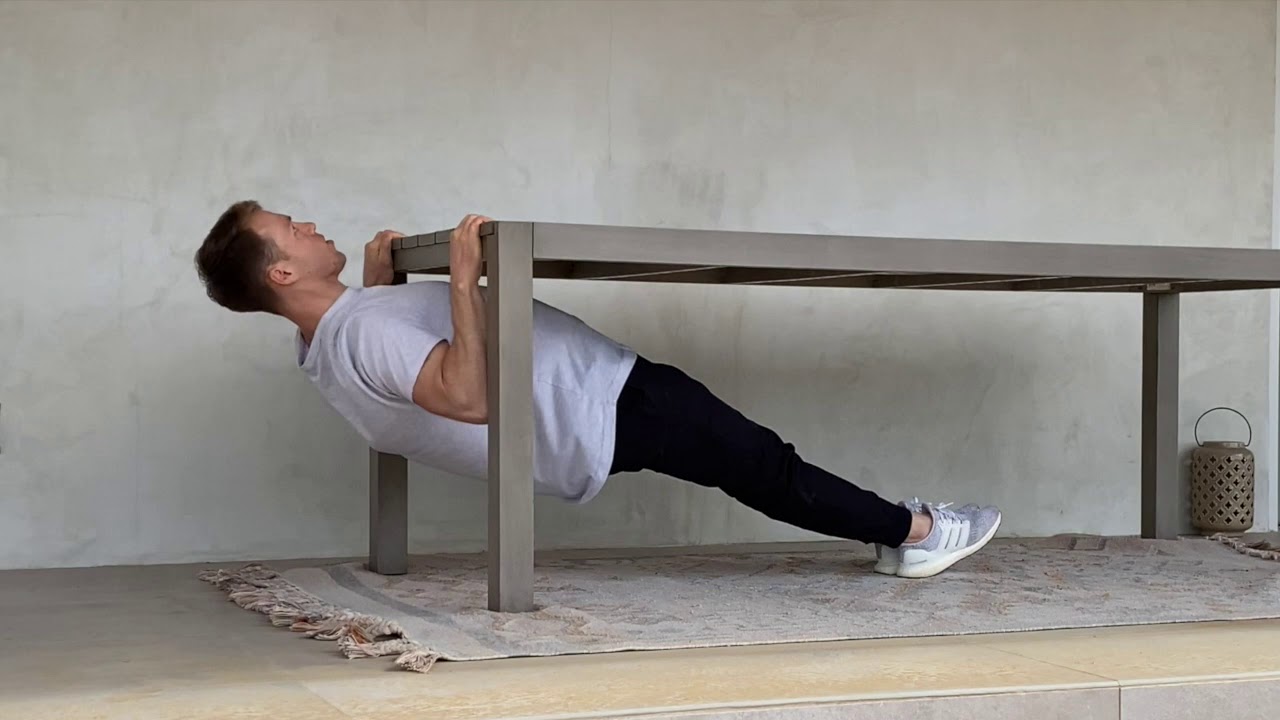
- Row progression (using a table or straps): higher angle → lower angle → feet farther out → pause at the top
5) Train density (more work in the same time)
This is perfect when your schedule is tight. Keep the exercise the same, but gradually do more total reps with the same rest, or the same total reps with less rest.
Example: Last week you did 3 sets of push-ups with 90 seconds rest. This week you keep the same reps, but rest 75 seconds.
Weekly volume and rest
If you want a simple rule of thumb, most people grow well with about 8 to 15 challenging sets per muscle group per week. Beginners often do fine on the low end, especially if sets are close to failure.
Rest matters more than people think. If you cut rest too aggressively, your reps drop because you are out of breath, not because the muscle is getting a better stimulus.
- Big sets (hard push-ups, split squats, rows): rest about 90 to 180 seconds
- Smaller moves (core, lighter accessories): rest about 60 to 120 seconds
- Density training: use it in phases, not as the only way you progress
Exercise upgrades without weights
Below are practical, at-home ways to progress the big patterns: push, pull, squat, hinge, and core. These movements give you the best muscle-building return for your time.
Push (chest, shoulders, triceps)
- Incline push-up: hands on counter or sturdy table. Make it harder by lowering the incline.
- Floor push-up: progress with a 3 to 4 second lowering.
- Decline push-up: feet on a couch or chair to shift more load to upper chest and shoulders.
- Diamond push-up: more triceps emphasis. Keep elbows from flaring aggressively.
- Pike push-up: more shoulder focus. Elevate feet to increase difficulty.
Pull (back, biceps) without a gym
Pulling is the hardest pattern for true no-equipment training, but you still have options.
- Table rows: lie under a sturdy table and row your chest toward the edge. Bend knees to make it easier, straighten legs to make it harder.
- Door towel rows (use caution): only attempt if you understand the risks. Anchor on the hinge side of a sturdy door that closes toward you, lock it if possible, and test with partial weight before leaning back. If anything shifts, skip it. A safer long-term upgrade is a doorway pull-up bar or suspension straps with a proper door anchor.
- Isometric towel row: sit tall, wrap a towel around your feet, and pull hard for 20 to 40 seconds while resisting with your legs. Not perfect, but it hits the back.
Squat pattern (quads, glutes)
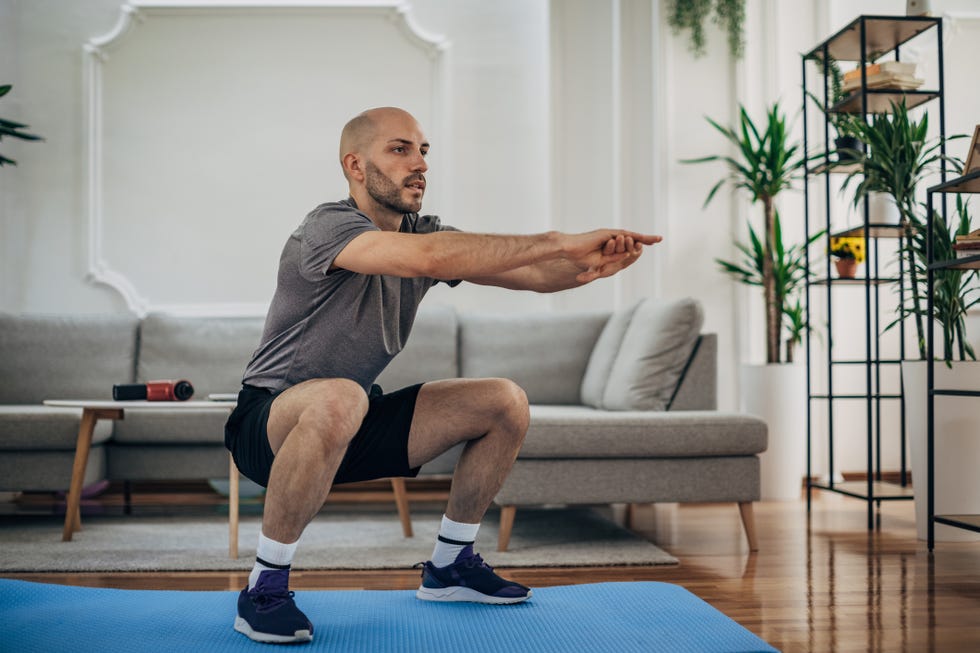
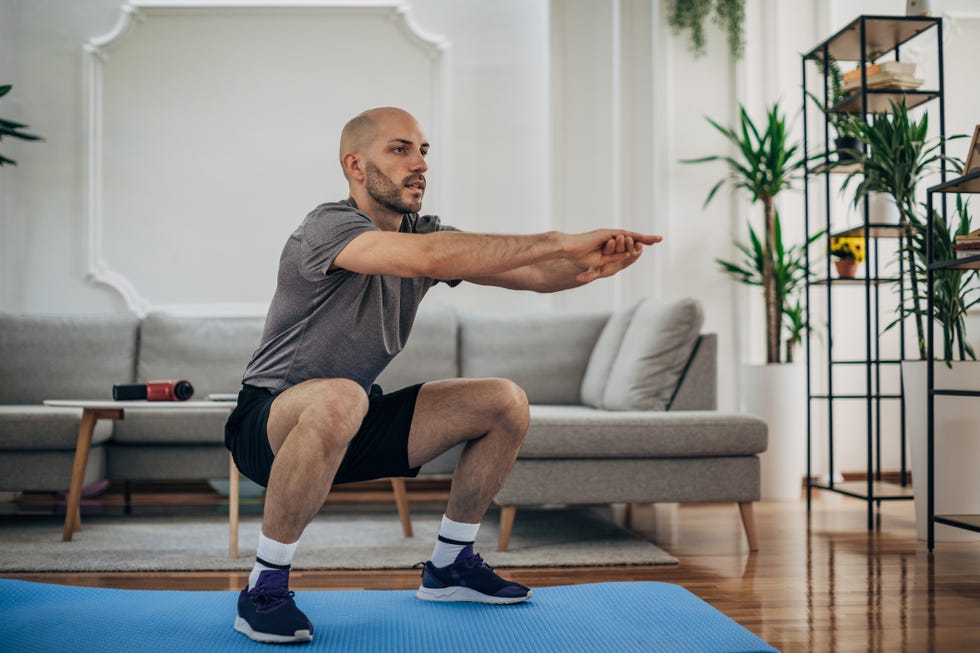
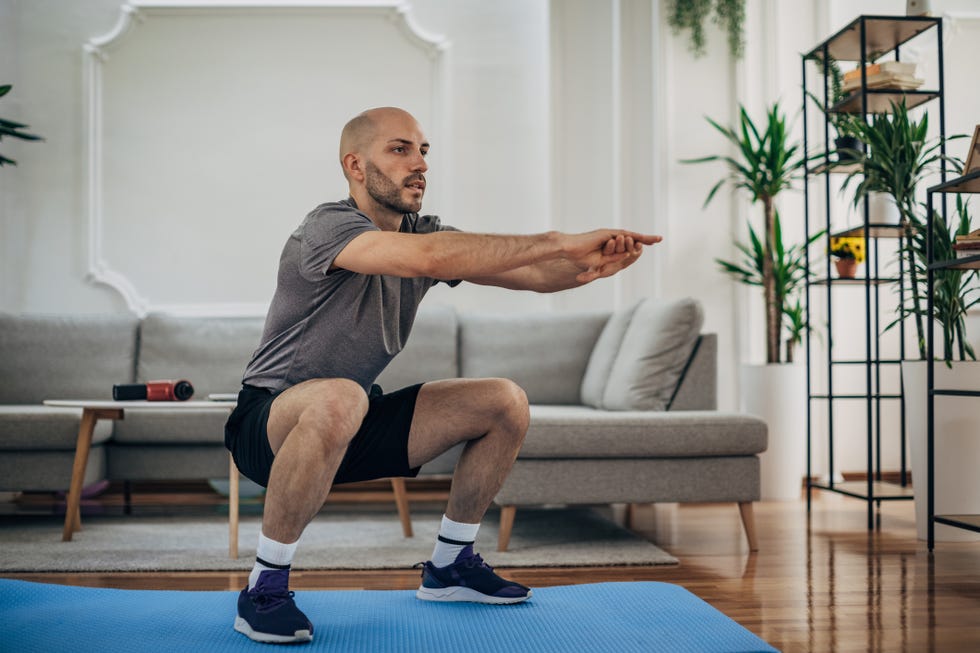
- Bodyweight squat: progress with tempo and pauses.
- Split squat: a big muscle-builder with minimal space. Add a longer pause at the bottom.
- Bulgarian split squat: rear foot on a chair or couch. Start conservative.
- Step-ups: use sturdy stairs. Increase height or slow the lowering.
If bodyweight squats start feeling too easy over time, that is normal, especially for legs. Your next “home upgrade” can be as simple as a loaded backpack, a pair of water jugs, or a sandbag, but you can go a long way with unilateral work (split squats, Bulgarians) first.
Hinge pattern (glutes, hamstrings)
- Hip thrust: shoulders on couch, feet on floor. Add a 2-second squeeze at the top.
- Single-leg hip thrust: a clean progression that hits glutes hard.
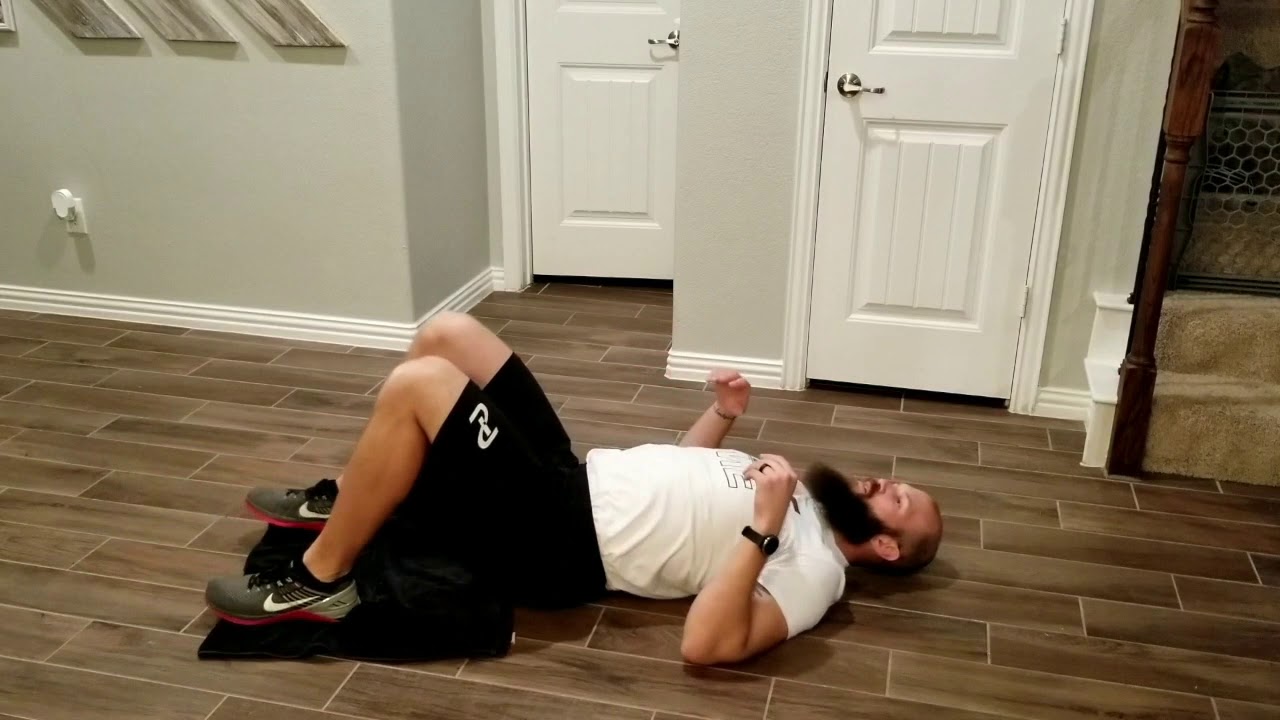
- Hamstring walkouts: from a glute bridge, walk heels out and in slowly.
- Sliding hamstring curls: heels on towels on a smooth floor. Curl slowly and control the return.
Core (strength that transfers)
- Plank: increase time only up to about 60 seconds, then switch to harder variations.
- RKC plank: short, intense holds by squeezing glutes and pulling elbows toward toes while breathing steadily.
- Dead bug: slow, controlled reps with a full exhale.
- Hollow hold or tuck hollow: progress by extending legs.
- Side plank: progress to star side plank or add slow hip dips.
If you have high blood pressure or you are prone to dizziness, avoid breath-holding on hard isometrics. Keep breathing and stop if anything feels off.
3-day plan (simple)
If you want muscle growth, you need enough weekly training and a clear way to progress. Here is a repeatable structure that works well for most beginners.
Schedule
- Day 1: Full body A
- Day 2: Rest or light walk
- Day 3: Full body B
- Day 4: Rest
- Day 5: Full body A (next week start with B)
Full body A
- Push-up variation: 3 sets of 8 to 12
- Split squat: 3 sets of 8 to 12 per side
- Hip thrust: 3 sets of 10 to 15
- Table row or isometric towel row: 3 sets of 6 to 12 (or 20 to 40 seconds)
- Dead bug: 2 to 3 sets of 6 to 10 per side (slow)
Full body B
- Pike push-up or decline push-up: 3 sets of 6 to 10
- Squat (tempo): 3 sets of 10 to 15
- Hamstring walkouts or sliding curls: 3 sets of 6 to 10
- Row variation: 3 sets of 6 to 12
- Side plank: 2 to 3 sets of 20 to 45 seconds per side
How to progress
Use this ladder:
- Week 1: Find variations you can do with 1 to 3 reps in reserve.
- Weeks 2 to 4: Add reps until you hit the top of the rep range on all sets.
- Next: Upgrade one notch (harder variation, slower tempo, or slightly deeper range you can control), then drop reps back toward the low end and build again.
Track progress (no app needed)
You do not need a fancy app. You need a note that answers three questions:
- What did I do? (exercise variation)
- How much? (sets and reps, or hold time)
- How hard? (roughly how many reps in reserve)
Example log entry: “Couch incline push-ups: 3x10, 2 RIR.” Next time, aim for 3x11 or keep reps and slow the lowering.
Also, track form wins. Cleaner reps, deeper control, less wobbling, and better tension are all real progress that leads to more productive sets.
If you stall
Stalls happen. Use this quick checklist before you scrap your plan.
- Check recovery: if sleep is down and stress is up, hold steady for a week instead of forcing progress.
- Eat enough: if you are in a steep calorie deficit, strength and muscle gains can slow.
- Add a set: if an exercise has felt “easy hard” for weeks, add 1 set for that movement pattern.
- Change one lever: keep the same exercise but add a slower lowering or a pause.
- Deload: every 4 to 8 weeks, consider a lighter week (fewer sets, more reps in reserve) to let joints and motivation catch up.
Common mistakes
- Changing workouts every week: novelty feels productive, but progression builds muscle. Stick with movements long enough to improve.
- Only doing high-rep burnouts: sets of 30 to 50 can work, but many people never get close enough to fatigue. Make some sets meaningfully challenging.
- Skipping pulling work: push-ups alone can leave shoulders cranky. If you can safely row under a table, do it.
- Rushing reps: speed can hide weakness. Control builds strength.
- Undereating protein: your workouts are the signal, food is the building material.
Nutrition and recovery
I will keep this practical:
- Protein: a common target for muscle gain is roughly 0.7 to 1.0 grams per pound of bodyweight per day (or 1.6 to 2.2 g per kg). Needs vary with body size, age, leanness, and total calories, and beginners can still make progress at lower intakes. If that range feels like a lot, start by adding a solid protein source to each meal.
- Calories: building muscle is usually easier if you are not in a steep calorie deficit. If fat loss is also your goal, go slower and be patient.
- Sleep: 7 to 9 hours is the boring answer, but it works.
- Rest days: muscles grow when you recover. If you are constantly sore and your reps are dropping, pull back slightly.
If you are returning postpartum, managing a medical condition, or dealing with joint pain that does not improve with form changes, it is worth checking in with a clinician or qualified coach before pushing intensity.
FAQ
Can I build muscle with bodyweight only?
Yes, especially as a beginner or returning exerciser. You just have to apply progressive overload through variations, tempo, range of motion, and smart programming.
How long does it take to see muscle growth?
Many people notice strength improvements in a few weeks, often around 2 to 4. Visible muscle changes commonly take longer, often 6 to 12 weeks or more, and can be faster or slower depending on consistency, nutrition, sleep, starting point, and whether you are in a calorie deficit.
Do I need to train to failure?
Not every set. Getting close to failure (about 1 to 3 reps in reserve) is enough for most sets. Save true all-out sets for occasional finishers or the last set of an exercise, and only if your form stays clean.
What if push-ups are too hard right now?
Start with incline push-ups on a counter or sturdy table. Your first progressive overload goal can be lowering the incline over time. That is real strength.
What if I do not have a safe way to do rows?
Use table rows if you have a stable setup. If you do not, use isometric towel rows, slow reverse snow angels on the floor, and extra work for rear shoulders. If you ever add one item later, a doorway pull-up bar or suspension straps with a proper anchor can open up pulling options dramatically.
Next steps
If you take one thing from this: pick a few movements, write them down, and try to beat them a little over time. One more rep. One slower lowering. One cleaner set. That is progressive overload, and it is how you build muscle at home without turning your living room into a gym.
Start with the 3-day plan, keep a simple log, and commit to four weeks of small upgrades. Most of the results people miss are on the other side of consistency.