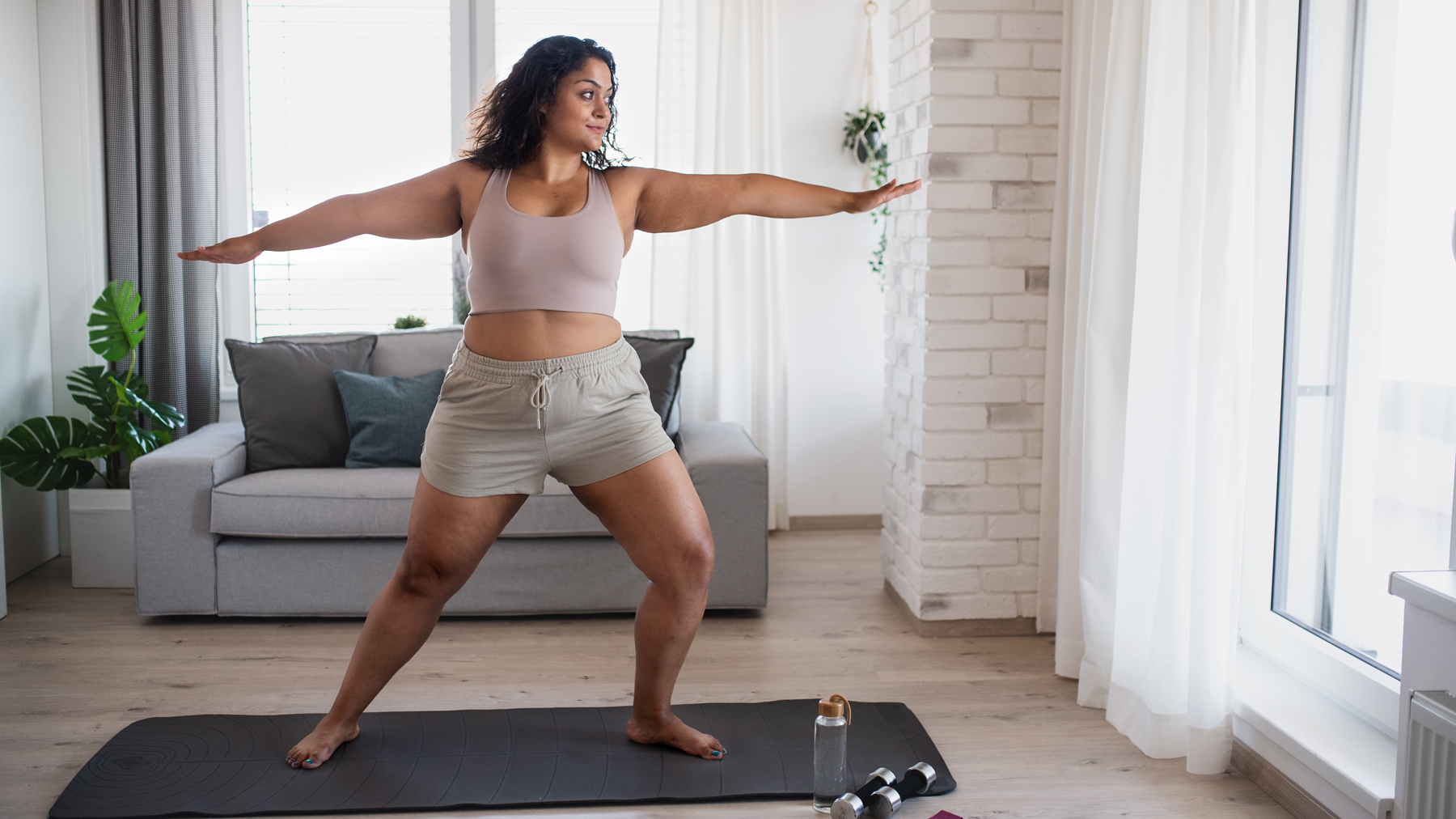
No jumps, no heavy landings, no neighbor drama. Try these 10 low-impact HIIT moves and a ready-to-follow 20-minute apartment routine.
Home Pulse Fit
•
home workouts and fitness
30-Day No-Running Cardio Challenge
A daily, progressive 30-day cardio challenge for absolute beginners. Build stamina at home with zero running and no equipment in about 10 to 25 minutes total.

Marcus Thorne
Marcus Thorne is an NASM-certified personal trainer and the creator behind Home Pulse Fit. After successfully transforming his own health using only bodyweight routines in his small apartment, he left his demanding corporate career to help others do the same. Today, he is dedicated to making fitness accessible, sustainable, and entirely gym-free for busy beginners.
Published
October 18, 2026
Updated
October 18, 2026
If you are an absolute beginner and the idea of running sounds like a punishment, you are in the right place. This 30-day challenge is cardio with no treadmill, no mile goals, and no breathless, defeated feeling that makes people quit.
I built my own fitness comeback in a small apartment using short bodyweight routines. The biggest lesson I learned is simple: consistency beats intensity. So we are going to start easy, progress slowly, and keep every workout doable in a living room.
How it works
- Duration: 30 days
- Time per day: about 10 to 25 minutes total (warm-up, main set, and cool-down)
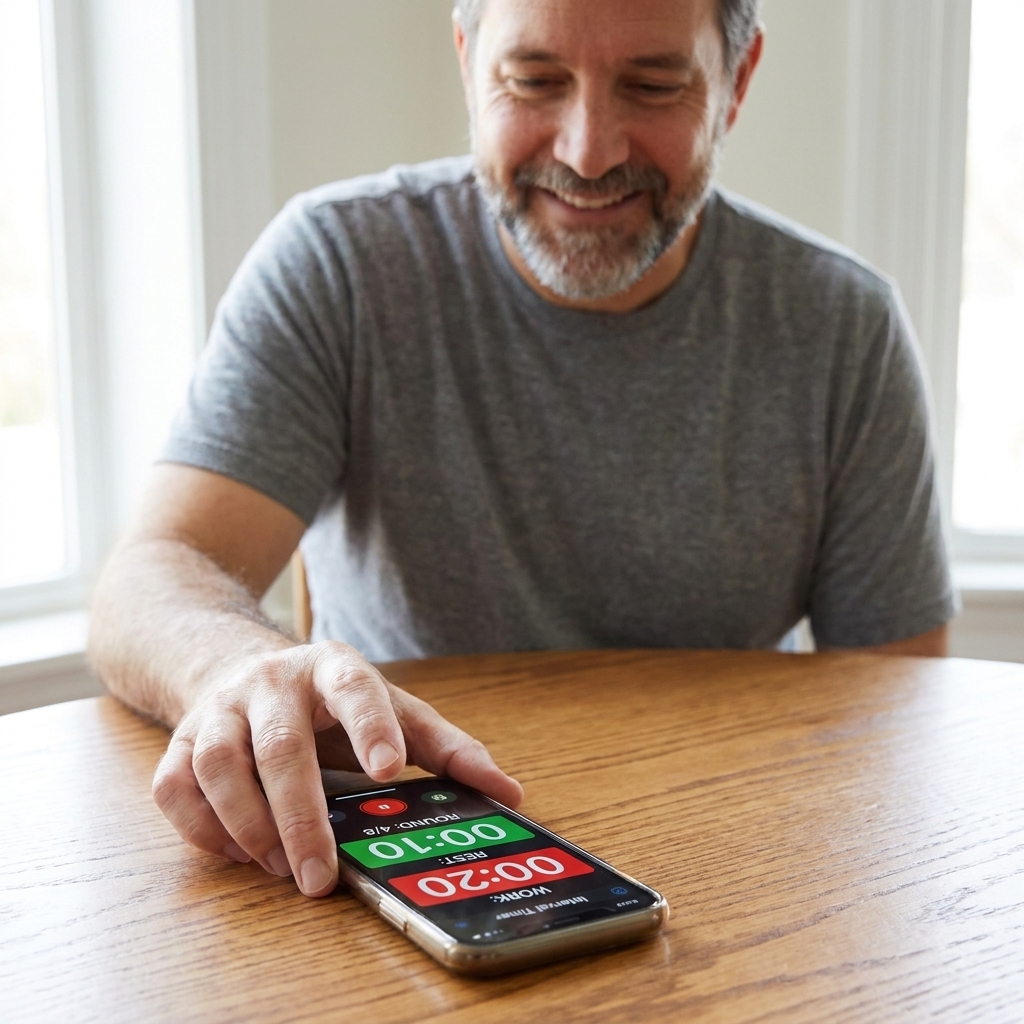
- Equipment: none (optional chair, towel, and a timer)
- Impact level: low to moderate, with options to keep it joint-friendly
- Progression: you repeat simple moves, then add time or a small bump in intensity
Most days use intervals: you work for a short time, then rest. Intervals can be a beginner-friendly way to build cardio fitness, because you can keep the effort appropriate for your current capacity and still get meaningful work done.
If 30 straight days feels like too much, do this as a 5-days-per-week plan and simply keep going until you complete all 30 workouts. No restarting required.
Safety and form notes
Use the talk test
Your goal on most days is moderate effort. You should be able to say a short sentence, but you do not want to sing. Later weeks include a few days that may feel more challenging. If you are gasping, slow the move down, shorten range of motion, or add rest.
If you like a number: aim for about 4 to 6 out of 10 effort most days. On later weeks, if you feel good and your form stays clean, some intervals can drift toward 6 to 7 out of 10. You should still feel in control.
Make your space safer
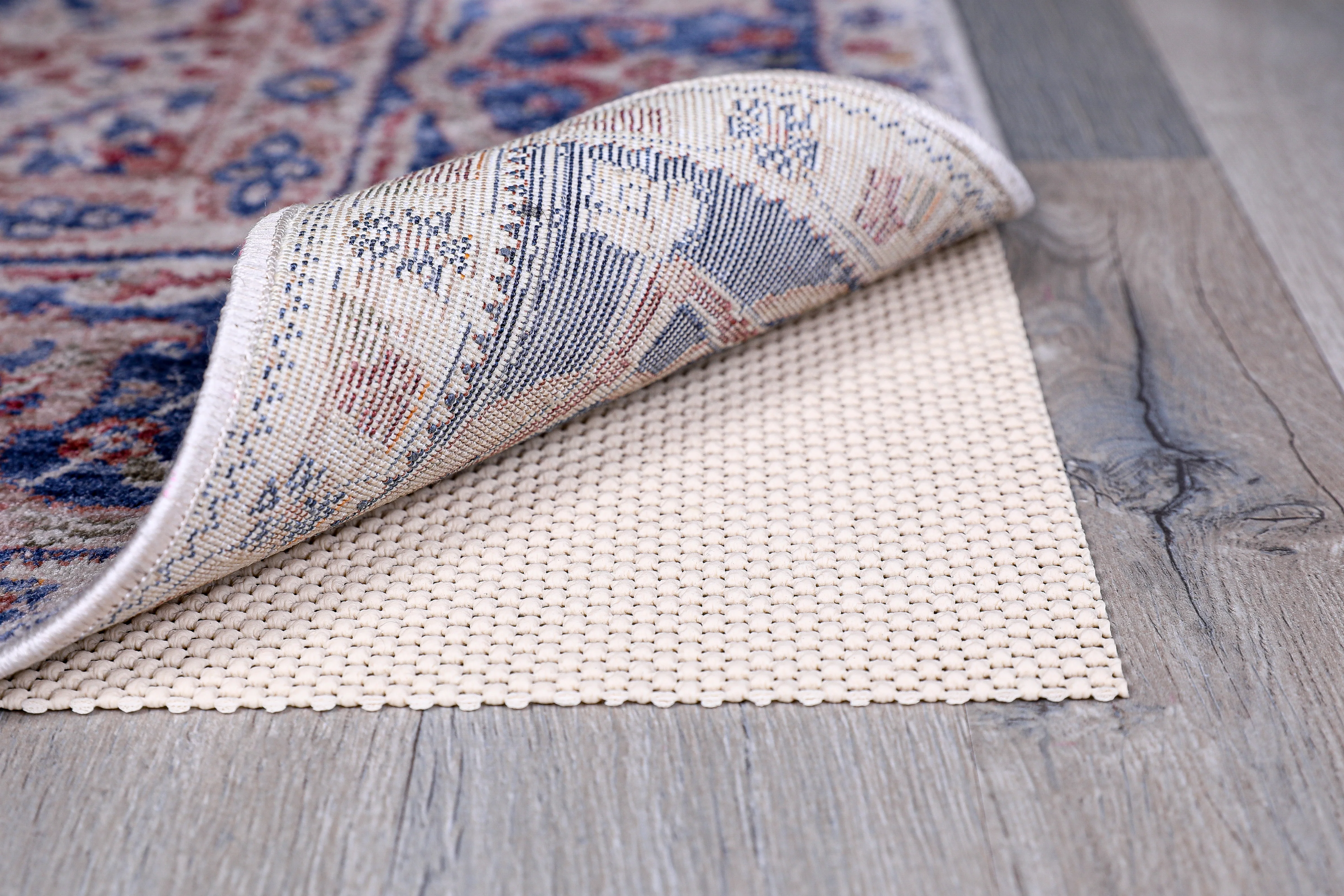
Clear a small rectangle of floor space before you start. Check that rugs do not slide, and avoid socks on slick floors. If you use a chair, pick a sturdy one that does not wobble and will not scoot backward.
Joint-friendly swaps
- Jumping bothers knees or ankles: do the same move without leaving the floor.
- Wrists get cranky: choose standing moves instead of plank-based moves, or use hands on a couch for an incline.
- Low back feels tight: keep a tall posture and make every movement smaller and cleaner.
Stop if you feel sharp pain
Normal cardio discomfort is breathing harder, feeling warm, and feeling mild muscle burn or fatigue. Sharp pain, dizziness, faintness, chest pressure, or unusual shortness of breath is not a push-through situation. If you have medical concerns, check with a clinician before starting.
Warm-up and cool-down
Do this every day. The daily times listed in the plan below refer to the main set only. Add this warm-up and cool-down to hit the full 10 to 25 minutes.
5-minute warm-up
- 60 seconds: easy march in place
- 30 seconds: shoulder circles and arm swings
- 60 seconds: step-touch side to side
- 30 seconds: gentle hip circles
- 60 seconds: alternating knee lifts (slow)
- 60 seconds: heel digs with arms reaching forward
3 to 5-minute cool-down
- 60 seconds: slow march, nasal breathing if possible
- 30 seconds each: calf stretch (both sides)
- 30 seconds each: quad stretch or standing hamstring reach (both sides)
- 30 seconds: chest opener (hands clasped behind or doorway stretch)
The moves
These are intentionally simple. You will get better at them fast, and that is the point.
- March in place: tall posture, swing arms, land softly.
- Step-touch: step side to side, tap the trailing foot in, keep it smooth and easy.
- Step jacks: step out to the side as arms go overhead, step back in.
- Fast feet (no jump): quick tiny steps, knees soft, stay light.
- Squat to chair tap (optional chair): sit back, tap the chair, stand tall.
- Knee lifts or knee drives: lift one knee at a time. A knee drive is the same pattern with a little more intent and arm action.
- Low-impact skaters: step behind and across, reach hands toward front foot.
- Shadow boxing: light punches at chest height, rotate gently through the torso.
- Incline mountain climber (optional add-on move): hands on a couch or sturdy counter, drive knees one at a time, keep back flat.
How to scale any day
Make it easier
- Work slower and keep steps smaller.
- Rest longer (or pause the timer).
- Choose standing moves only.
Make it harder
- Add bigger arm swings and stronger posture.
- Shorten rests by 5 seconds.
- Add one extra round if you feel great and your form stays clean.
If you feel sore or run-down
Take an extra active recovery day, or repeat the last workout at an easier pace. The goal is to finish most sessions feeling like you could do something similar tomorrow.
Your 30-day plan
Format key: “Work 30s / Rest 30s” means alternate work and rest for each move. Complete the listed circuit in order, then repeat for the number of rounds shown.
Time note: For interval days below, the “main set” time matches the interval math. If you prefer a little more time on your feet, add 1 to 2 extra minutes of easy marching at the end.
Week 1: build the habit
- Day 1: 8 min circuit. Work 20s / Rest 40s. Moves: March, Step jacks, Shadow boxing, March. 2 rounds.
- Day 2: 8 min circuit. Work 20s / Rest 40s. Moves: Knee drives, Fast feet, Step-touch, Shadow boxing. 2 rounds.
- Day 3: 12 min easy cardio (continuous). March 2 min, Step-touch 2 min, Knee lifts 2 min, repeat once.
- Day 4: 8 min circuit. Work 25s / Rest 35s. Moves: Step jacks, Squat to chair tap, March, Shadow boxing. 2 rounds.
- Day 5: 8 min circuit. Work 25s / Rest 35s. Moves: Low-impact skaters, Knee drives, Fast feet, Step-touch. 2 rounds.
- Day 6: Active recovery. 10 to 20 min easy walk or gentle mobility at home.
- Day 7: 8 min circuit. Work 30s / Rest 30s. Moves: March, Step jacks, Shadow boxing, Knee drives. 2 rounds.
Week 2: add stamina
- Day 8: 8 min circuit. Work 30s / Rest 30s. Moves: Step jacks, Squat to chair tap, Shadow boxing, Fast feet. 2 rounds.
- Day 9: 8 min circuit. Work 30s / Rest 30s. Moves: Knee drives, Low-impact skaters, March, Shadow boxing. 2 rounds.
- Day 10: 6 min low-impact intervals. Work 40s / Rest 20s. Moves: March, Step-touch, Step jacks. 2 rounds.
- Day 11: 8 min circuit. Work 35s / Rest 25s. Moves: Fast feet, Shadow boxing, Squat to chair tap, Knee drives. 2 rounds.
- Day 12: 8 min circuit. Work 35s / Rest 25s. Moves: Low-impact skaters, Step jacks, March, Shadow boxing. 2 rounds.
- Day 13: Active recovery. 10 min mobility plus 5 min easy marching.
- Day 14: 10 min circuit. Work 30s / Rest 30s. Moves: Step jacks, Knee drives, Shadow boxing, Fast feet, March. 2 rounds.
Week 3: gentle HIIT
- Day 15: 8 min circuit. Work 40s / Rest 20s. Moves: Step jacks, Shadow boxing, Squat to chair tap, March. 2 rounds.
- Day 16: 8 min circuit. Work 40s / Rest 20s. Moves: Knee drives, Fast feet, Low-impact skaters, Step-touch. 2 rounds.
- Day 17: 16 min steady cardio (continuous). March 3 min, Step jacks 2 min, Shadow boxing 3 min, repeat once (adjust pace as needed).
- Day 18: 10 min circuit. Work 40s / Rest 20s. Moves: Step jacks, Knee drives, Shadow boxing, Squat to chair tap, March. 2 rounds.
- Day 19: 8 min circuit. Work 45s / Rest 15s. Moves: Fast feet, Low-impact skaters, Shadow boxing, March. 2 rounds.
- Day 20: Active recovery. Easy walk or light stretching 15 to 25 min.
- Day 21: 16 min ladder intervals. Do the 4-move circuit twice at Work 30s / Rest 30s, then do the same 4-move circuit twice at Work 40s / Rest 20s. Moves: Step jacks, Knee drives, Shadow boxing, March.
Week 4: confidence week
- Day 22: 8 min circuit. Work 45s / Rest 15s. Moves: Step jacks, Shadow boxing, Squat to chair tap, Knee drives. 2 rounds.
- Day 23: 8 min circuit. Work 45s / Rest 15s. Moves: Low-impact skaters, Fast feet, March, Shadow boxing. 2 rounds.
- Day 24: 22 min steady cardio (continuous). March 4 min, Step jacks 3 min, Shadow boxing 4 min, repeat once at an easier pace.
- Day 25: 10 min circuit. Work 40s / Rest 20s. Moves: Step jacks, Knee drives, Shadow boxing, Squat to chair tap, Fast feet. 2 rounds.
- Day 26: 8 min circuit. Work 50s / Rest 10s. Moves: March, Step jacks, Shadow boxing, Low-impact skaters. 2 rounds (slow down as needed).
- Day 27: Active recovery. 15 min mobility plus 5 min easy marching.
- Day 28: 10 min circuit. Work 45s / Rest 15s. Moves: Step jacks, Knee drives, Shadow boxing, Squat to chair tap, March. 2 rounds.
- Day 29: 9 min confidence intervals. Work 60s / Rest 30s. Moves: March, Shadow boxing, Step jacks. 2 rounds.
- Day 30: Graduation workout, 10 min. Work 40s / Rest 20s. Moves: Step jacks, Knee drives, Shadow boxing, Fast feet, Squat to chair tap. 2 rounds. Finish with a slow 3 to 5 min cool-down.
Optional add-on (1 to 2 times this month): If you want to try the one move that feels the most “workout-y,” add this after your main set on any day you feel good: Incline mountain climbers on a couch, 2 rounds of 20s work / 40s rest. Keep it slow and controlled.
Progress checks
- Breathing: you recover faster during rest periods.
- Coordination: you stop thinking so hard about the steps.
- Energy: you feel better after the session than before it.
- Consistency: you show up even on low-motivation days.
If you want one simple number to track, use this: after the workout, note how hard it felt from 1 to 10. Over time, the same workout should feel easier, or you can do a bit more work with the same effort.
Beginner FAQ
Will this burn calories without running?
Any movement burns calories, and these circuits can contribute to meaningful energy expenditure over time. How much depends on your effort, workout length, body size, and the rest of your routine, especially sleep and food. The real win is doing it often enough to matter.
Do I need shoes?
If you have sensitive feet or downstairs neighbors, wear supportive trainers. If you prefer barefoot, keep movements controlled and use a non-slip surface.
What if I miss a day?
Do not restart. Just continue with the next day. Your body does not know what day the calendar says. It only knows you showed up again.
Can I do this if I am very deconditioned?
Yes. Start with smaller steps, slower pace, and longer rests. Your only job in Week 1 is to finish feeling like you could do it again tomorrow.
Should I add strength training?
If you can, pair this with 2 short strength sessions per week (10 to 20 minutes) focused on squats, pushes, hinges, and core. If that feels like too much right now, complete the 30 days first. Momentum matters.
After Day 30
Day 30 is not a finish line, it is proof. You can build fitness at home, in little chunks, without running.
- Option A: Repeat the challenge and aim for slightly less rest.
- Option B: Keep 3 cardio days and add 2 strength days.
- Option C: Choose your favorite 4-move circuit and do it 3 times a week.
If you want a simple next step: keep the habit. Put cardio on your calendar like a meeting, because it is one, with your future self.