No jumps, no heavy landings, no neighbor drama. Try these 10 low-impact HIIT moves and a ready-to-follow 20-minute apartment routine.
Home Pulse Fit
•
home workouts and fitness
HIIT vs. LISS at Home
HIIT and LISS both work, but they feel very different in your living room. Learn the pros, cons, calorie burn realities, and how to choose the best cardio style for fat loss, endurance, stress, and busy schedules.

Marcus Thorne
Marcus Thorne is an NASM-certified personal trainer and the creator behind Home Pulse Fit. After successfully transforming his own health using only bodyweight routines in his small apartment, he left his demanding corporate career to help others do the same. Today, he is dedicated to making fitness accessible, sustainable, and entirely gym-free for busy beginners.
Published
October 18, 2026
Updated
October 18, 2026
If you have ever tried to do cardio at home and immediately hit the mental wall of What kind? you are not alone. Two of the most common options you will see are HIIT (High-Intensity Interval Training) and LISS (Low-Intensity Steady State).
I used to assume the sweaty, hard thing must be the best thing. Then I started training in a small apartment, juggling work stress, and realizing something important: the best cardio is the one you can repeat next week. Not the one that destroys you once.

Let’s break down what HIIT and LISS actually are, what each one is best at, and how to choose the right option for your goals, body, and schedule.
What HIIT and LISS mean
HIIT (High-Intensity Interval Training)
HIIT is short bursts of hard work followed by easier recovery periods. Think: 20 seconds of fast movement, 40 seconds to catch your breath, repeated for several rounds. (The ratios vary. You might also see 30/30, 40/20, or longer work intervals depending on the workout.)
Home HIIT examples: squat jumps, mountain climbers, high knees, fast step-ups on a sturdy step, or a bodyweight circuit done at a “can’t comfortably chat” pace.
LISS (Low-Intensity Steady State)
LISS is one continuous, easier effort that you can maintain for a longer time. The simplest cue is a conversational pace: you can talk in full sentences, but you are still working.
Home LISS examples: brisk walking (outside or in place), low step-ups, easy marching circuits, dancing at a steady pace, or gentle stair climbing.
Simple intensity check: HIIT usually feels like roughly 8 to 9 out of 10 effort during work intervals. LISS usually feels like about 4 to 6 out of 10, steady the whole time. Your numbers may be a little different depending on your fitness and the day you are having.
HIIT vs. LISS in plain English
| Factor | HIIT | LISS |
|---|---|---|
| Time per session | 10 to 25 minutes | 25 to 60+ minutes |
| How it feels | Challenging, breathy, intense | Manageable, steady, sustainable |
| Recovery needs | Higher | Lower |
| Joint impact | Can be higher (but modifiable) | Usually lower |
| Best for | Time-crunched conditioning, sport-style intensity | Base endurance, stress-friendlier volume |
| Consistency for beginners | Depends on recovery and stress | Often easier to stick with |
Neither is “better.” They are tools. And like any tool, the right one depends on what you are building.
Which one burns more fat?
This is where fitness marketing gets loud. Here is the calm, useful version.
Fat loss comes from a calorie deficit
Both HIIT and LISS can support fat loss. The main driver is your overall weekly balance: nutrition, daily movement, strength training, sleep, and how consistently you show up.
HIIT is time-efficient, but it costs more recovery
HIIT often feels like it is melting fat because your heart rate climbs quickly. It can also slightly increase post-exercise oxygen consumption (the “afterburn” effect), but for most people it is smaller than headlines suggest.
LISS can add up fast
LISS sessions tend to be longer, which is why they work well for people who prefer a calmer pace and want to rack up weekly movement without feeling wrecked.
My real-world rule: pick the style you can repeat 3 to 5 days a week (even if some days are short). Weekly consistency beats “perfect” intensity.
What HIIT is best for
- Busy schedules: If you have 15 to 20 minutes, HIIT can deliver a strong cardio hit.
- Improving conditioning fast: Intervals train you to recover quicker between efforts.
- Breaking boredom: The constant change can make workouts feel faster.
- People who enjoy a challenge: If intensity motivates you, HIIT can be fun.
When HIIT may not be ideal
- You are already stressed or underslept: HIIT is another stressor. On rough weeks, it may increase fatigue or make appetite harder to manage for some people.
- You have cranky knees, hips, or ankles: Jumping-based HIIT can irritate joints. (You can still do low-impact HIIT, but it needs smart exercise selection.)
- You are new to exercise: Beginners can do HIIT, but “high intensity” should be relative. Your first HIIT should not feel like a fitness test.

What LISS is best for
- Building an endurance base: LISS supports aerobic fitness and helps you practice steady effort. (HIIT can also improve aerobic fitness. LISS is just typically easier to recover from and easier to do more often.)
- Recovery and stress management: Many people feel calmer after LISS, not crushed.
- Higher weekly volume: Because it is easier to recover from, you can do it more often.
- Joint-friendly movement: Low impact options like brisk walking, step-ups, and marching are often easier on the body.
When LISS can feel frustrating
- You hate longer sessions: If 40 minutes feels impossible, LISS can be a tough sell.
- You want high-intensity conditioning: LISS is not designed to feel hardcore.

Pick based on your goal
Fat loss
Best answer: whichever you can do consistently while also lifting (or doing strength-focused bodyweight training) and eating in a mild calorie deficit.
- Choose HIIT if time is tight and you recover well.
- Choose LISS if stress is high, joints are sensitive, or you want more weekly movement without burnout.
Endurance
Lean toward LISS 2 to 4 times per week, with optional short HIIT once weekly if you enjoy it.
Heart health and daily energy
LISS is the easiest win because it is repeatable. A brisk 25 to 40 minutes, most days, adds up quickly.
Athletic conditioning
HIIT shines because it teaches your body to go hard, recover, and repeat. Keep it 1 to 3 sessions per week, not daily.
Lowering stress
LISS wins most of the time. Add light mobility work and you have a solid decompression routine.
Warm-up and cool-down
Before either style, take 3 to 5 minutes to warm up with easy marching, arm circles, gentle squats, and a few slow step-ups. Afterward, cool down for 2 to 5 minutes with an easier pace and relaxed breathing until your heart rate comes down.
Low-impact HIIT at home
HIIT does not have to mean pounding your joints. You can keep intensity high with faster tempo, bigger range of motion, and short rests.
Low-impact HIIT (15 minutes)
Format: 30 seconds work, 30 seconds rest. Complete 2 to 3 rounds.
- Fast march with strong arm drive
- Step-back lunges (alternate)
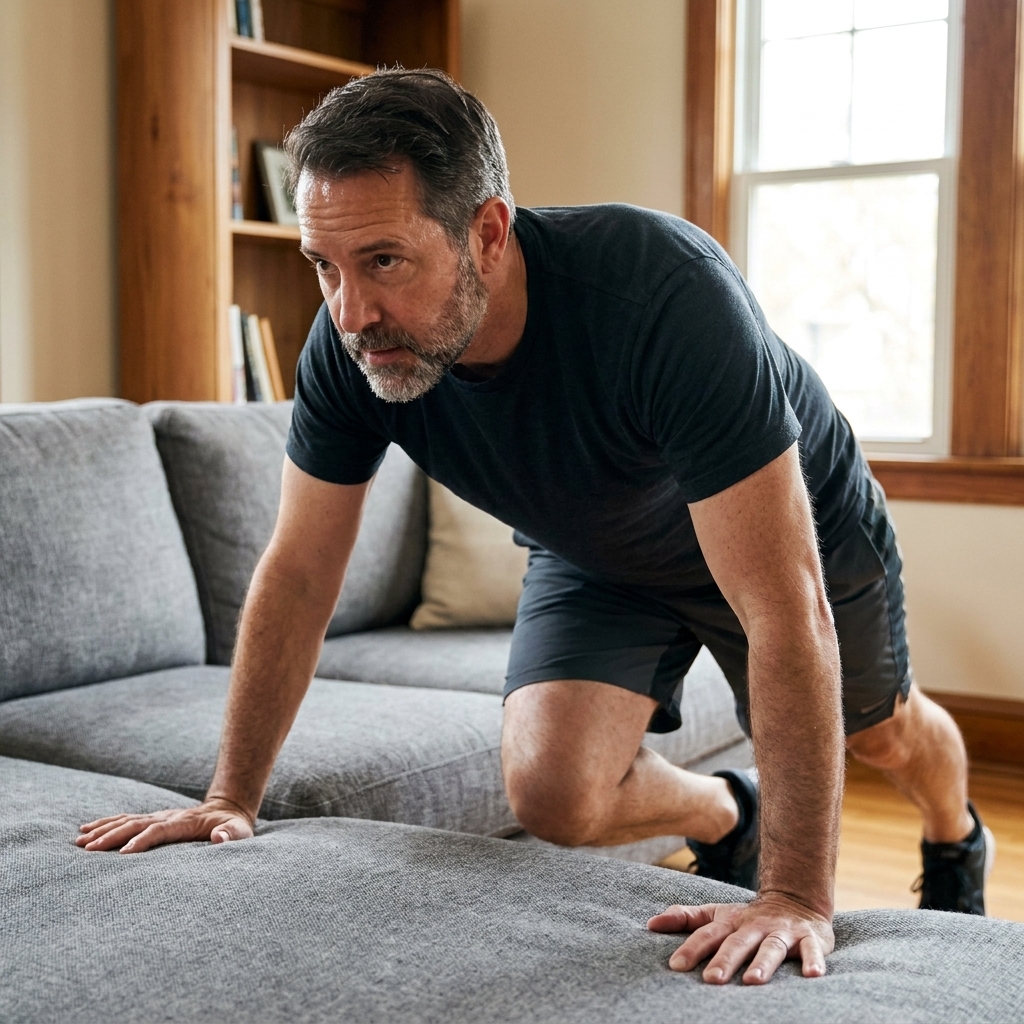
- Hands-elevated mountain climbers (hands on a couch or sturdy chair)
- Squat to calf raise (move quickly, control the knees)
- Plank shoulder taps (slow enough to stay stable)
Coach tip: If you cannot maintain decent form, the interval is too intense. Reduce speed, shorten range of motion, or add rest.
LISS at home without boredom
LISS fails when it feels like punishment. The solution is to give it a “container” that makes it easy to finish.
Living room LISS circuit (30 minutes)
Format: steady pace, no breathless spikes. Repeat for 5 to 6 rounds.
- 2 minutes brisk marching in place
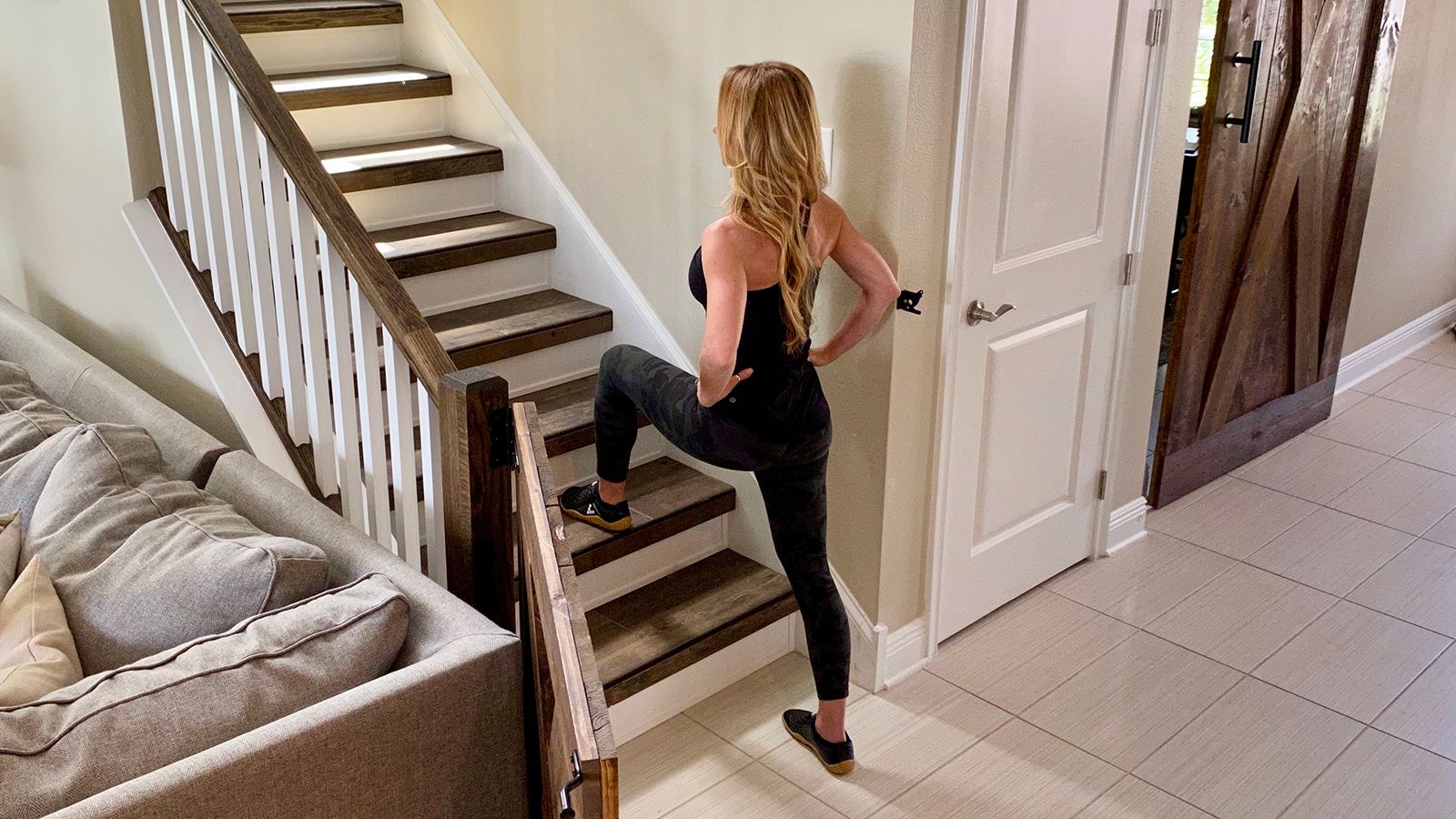
- 1 minute easy step-ups (use a sturdy step or bottom stair)
- 1 minute side steps with arm swings
- 1 minute gentle stair climb or hallway walk
Make it stick: Do this while listening to a podcast or calling a friend. LISS pairs well with life.
How often to do each
A simple weekly example
- 2 days: strength-focused bodyweight training
- 2 days: LISS (25 to 45 minutes)
- 1 day: optional HIIT (10 to 18 minutes)
- Daily: a short walk or “movement snack” if you can
If you only want to choose one cardio style, choose the one you can do at least 2 to 3 times per week without dreading it.
Recovery reality: Many beginners, and many people with high life stress, do best with HIIT 1 to 2 times per week. You can do more if you are recovering well, but more is not automatically better.
How to progress
Pick one knob to turn at a time. For HIIT, add a round, increase work time slightly, or shorten rest. For LISS, add 5 to 10 minutes, add a small incline (stairs or a step), or increase your pace while staying at a conversational effort.
Common mistakes and fixes
Mistake: Every HIIT session turns into a max-effort sufferfest
Fix: Finish each interval feeling like you could keep the same quality for about 10 to 15 more seconds if you had to. You should end tired, not destroyed. Save true all-out efforts for rare tests, not weekly routines.
Mistake: LISS is so easy it is basically a stroll
Fix: Aim for a brisk pace where you can talk but not sing. If you track steps, increase cadence slightly. If you do not, focus on purposeful arm swing and steady breathing.
Mistake: Doing HIIT but skipping strength training
Fix: Add 2 strength sessions per week. Strength helps you keep muscle while you lose fat and helps your joints handle cardio better.
Mistake: Choosing the “best” plan on paper instead of the one you will repeat
Fix: Choose the plan that matches your life right now. You can always change later. Your body loves consistency more than novelty.
What to do today
If you want my quick, coach-in-your-corner decision guide:
- Pick HIIT today if you slept well, feel mentally up for a push, and only have 10 to 20 minutes.
- Pick LISS today if you are stressed, sore, low on sleep, or you simply need a workout that feels sustainable.
- Pick both across the week if you want the most balanced results and can recover well.
Cardio is not a character trait. You do not have to be a “HIIT person” or a “LISS person.” You are a person who is building a routine in real life, in real space, with a real schedule.
FAQ
Is HIIT safe for beginners at home?
Yes, as long as “high intensity” is relative to your fitness level. Start with low-impact moves, longer rests, and fewer rounds. Your first goal is finishing with decent form.
Do I need equipment for HIIT or LISS?
No. A mat helps. A sturdy step or bottom stair is useful. If you have a jump rope, it can be great, but it is optional.
What if I live in an apartment and need quiet cardio?
Choose LISS (marching, step-ups, brisk walking) or low-impact HIIT (no jumps). Keep movements grounded and focus on speed, range of motion, and short rests to raise intensity without noise. Supportive shoes and a thicker mat or rug can also reduce sound.
Can I do HIIT and LISS in the same week?
Absolutely. A very workable combo is 1 HIIT session and 2 LISS sessions weekly, plus 2 strength sessions. That gives you results without living in recovery mode.
Any safety concerns I should consider?
If you are pregnant or postpartum, have a heart or metabolic condition, take blood pressure meds, or have an injury history, it is smart to check in with a clinician or qualified trainer before pushing intensity. And if you feel chest pain, dizziness, or unusual shortness of breath, stop and get medical help.