A practical, beginner-friendly breakdown of HIIT vs. LISS you can do at home, plus simple routines and a decision guide to match your schedule, stress level,...
Home Pulse Fit
•
home workouts and fitness
Home Workouts After a Cold: A Cautious Restart Checklist
Not sure if you should work out after a cold? Use this symptom-led checklist to decide when to rest, when to call a clinician, and how to restart gently at home without backsliding.

Marcus Thorne
Marcus Thorne is an NASM-certified personal trainer and the creator behind Home Pulse Fit. After successfully transforming his own health using only bodyweight routines in his small apartment, he left his demanding corporate career to help others do the same. Today, he is dedicated to making fitness accessible, sustainable, and entirely gym-free for busy beginners.
Published
October 18, 2026
Updated
October 18, 2026
When you finally start feeling like yourself after a cold, it is tempting to jump right back into your usual routine and “make up for lost time.” I get it. As a former project manager, I used to treat missed workouts like overdue tasks.
But with a basic viral upper respiratory infection, the win is not doing the most. The win is returning in a way that helps you recover fully and keeps your momentum.

This checklist is designed for otherwise healthy adults recovering from a minor cold. It will help you decide whether to rest, seek medical advice, or ease back in. It is symptom-led on purpose, because your body’s timeline matters more than a fixed schedule.
First, a quick safety note
This is general fitness guidance, not medical advice. If you have a chronic condition (asthma, heart disease, immune suppression), are pregnant, or you are recovering from anything more than a straightforward cold, it is smart to check in with a clinician before resuming exercise.
Also important: do not use exercise to “test” concerning symptoms. Light movement can be part of recovery, but you should not provoke symptoms to see what happens. Keep it gentle, and stop immediately if red-flag symptoms show up.
One more clarity point: people often use “cold” to mean flu, COVID, RSV, bronchitis, or a sinus infection. If you have a positive COVID or flu test, suspect you might, or you had significant body aches, heavy fatigue, or a high fever, take a more conservative approach and follow local public health guidance and your clinician’s advice.
The decision
1) Rest today if any of these are true
- You still have a fever (about 100.4°F/38°C or higher), or you were feverish recently and still feel wiped out.
- Your symptoms are worsening instead of gradually improving.
- You are significantly fatigued in a way that feels different than “I slept poorly.”
- Your resting heart rate is unusually high compared with your normal baseline, especially paired with weakness or dizziness. If you do not normally track this, do not start tracking it just because you are sick.
- You are likely dehydrated (dark urine, dry mouth). A headache that improves with fluids can be a clue, but it is not a sure sign.
- Your sleep is still a mess because of coughing or congestion.
Rest is not “doing nothing.” Think of it as active recovery: fluids, food, light movement around the house, and an early bedtime.
2) Get medical advice if you notice red flags
If you have any of the following, skip the workout and consider contacting a clinician. If symptoms are severe, sudden, or scary, seek urgent care.
- Chest pain, chest tightness, or pressure
- Shortness of breath at rest, or unusual breathlessness that feels out of proportion to the effort
- Wheezing or a whistling sound when breathing (especially if new for you)
- Fainting, severe dizziness, or confusion
- Bluish lips or face
- Coughing up blood
- Fever that persists or returns after improving (for example, a fever lasting more than about 3 days, or a fever that comes back after you thought you were over it)
- Symptoms that clearly worsen with light activity like walking to the kitchen
These are not “push through it” situations. Your job is to get evaluated, not to be tough.
3) Consider a gentle restart if you meet these baseline checks
- You have been fever-free and are steadily improving.
- Your symptoms are mostly mild and manageable (common examples: slight congestion, occasional cough, low energy that is improving).
- You can do normal daily tasks without getting winded.
- You can breathe comfortably through your nose or mouth without feeling panicky or tight-chested.
- You slept reasonably well last night, or you are trending better.
Your symptom-led restart checklist
Instead of a strict “week 1, week 2” plan, use these checkpoints. You move forward only when your body checks the box.
Checkpoint A: Easy movement, no payback
Try a single 5 to 15 minute session today. Not a workout, just a feel-good check that should be boring.
- Easy walk around your home
- Gentle mobility: neck rolls, shoulder circles, hip circles
- Light stretching with slow breathing
Pass if you feel the same or better afterward and later that day.
Stop immediately if you get chest pain or tightness, feel faint, become unusually short of breath, wheeze, or feel anything that makes you pause and think, “This is not normal for me.” Rest and consider medical advice if symptoms persist.
Checkpoint B: Keep it truly easy
If Checkpoint A went well, your first workout back should feel like: “I could do more, but I am choosing not to.”
- Duration: 10 to 20 minutes
- Effort: about 3 to 4 out of 10
- Talk test: you can speak in full sentences comfortably
- Breathing: steady and calm, no gasping
Checkpoint C: How you feel later and tomorrow
This is the step most people skip. The goal is not to survive the session. The goal is to recover from it.
After your first gentle workout, check in:
- Did my symptoms stay the same or improve?
- Did I sleep okay?
- Is my energy stable today?
- Is my cough the same or worse?
If you feel worse the next day, treat that as data. Back off and give yourself more recovery time.
What “gentle” looks like
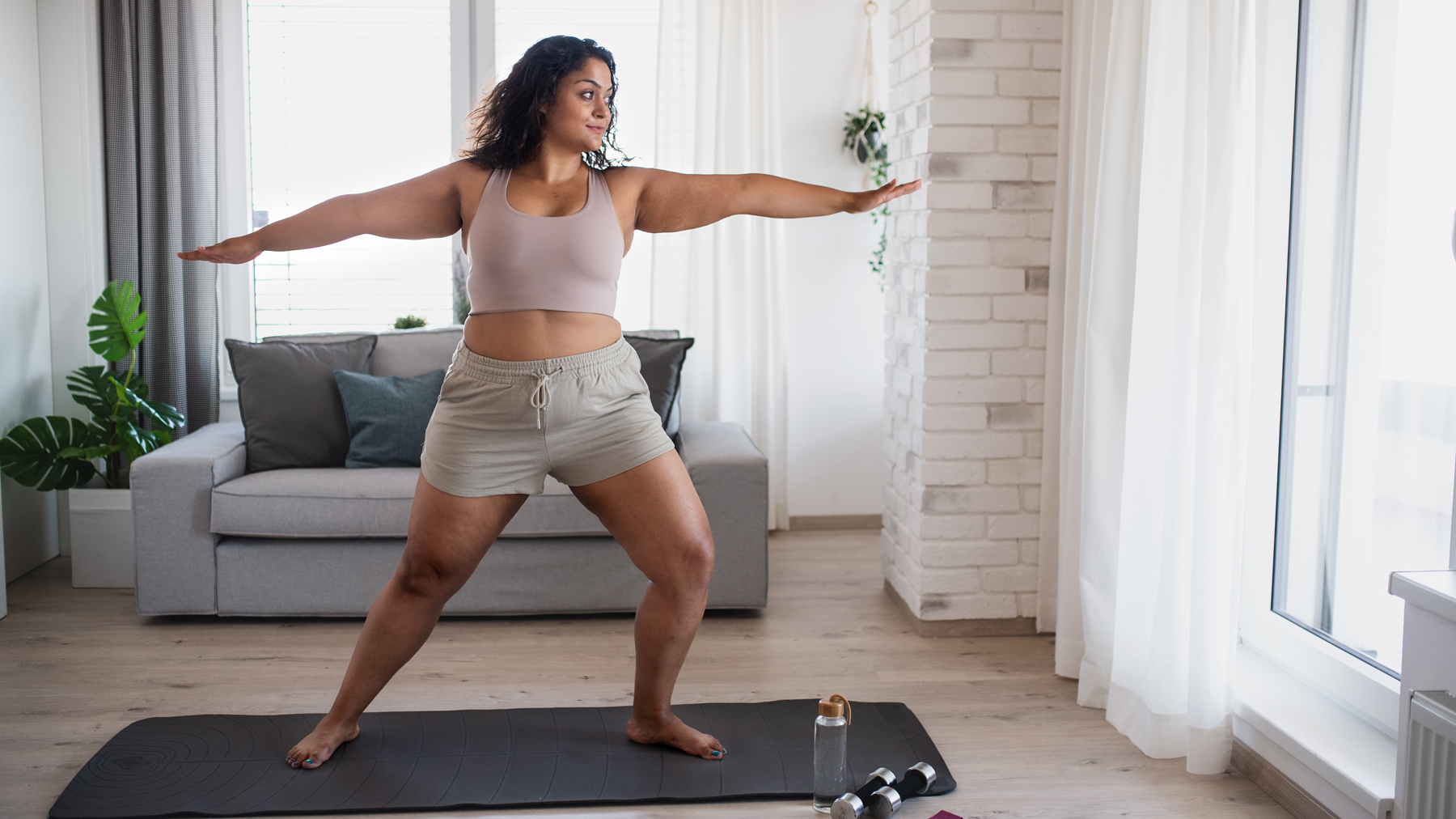
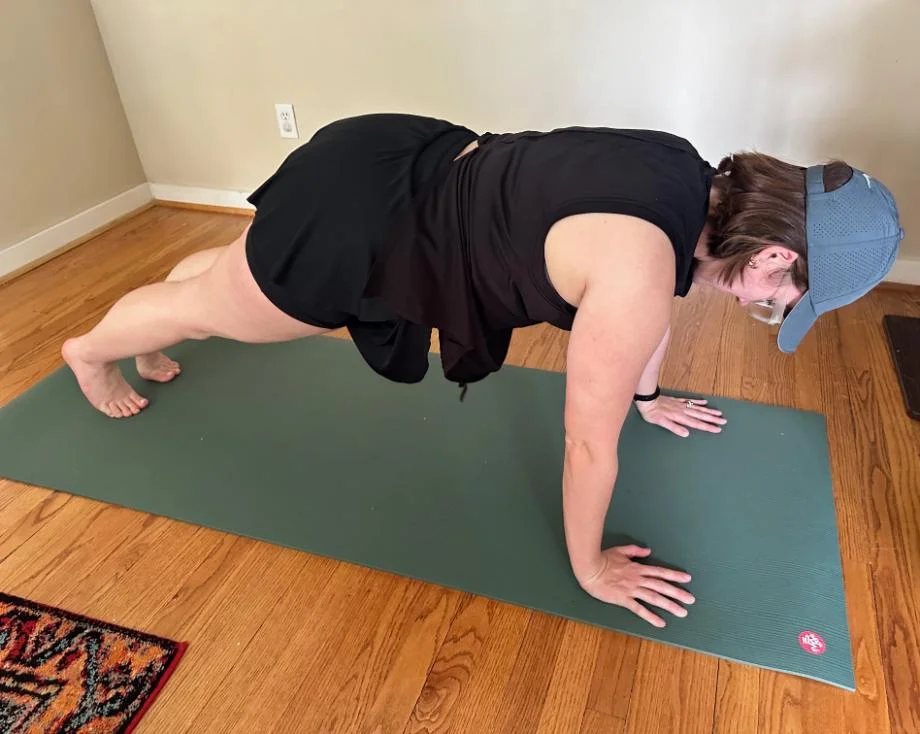
If you are cleared by the checklist above, here are beginner-friendly ways to restart without overdoing it. Pick one and keep it easy.
Option 1: 12-minute mobility and core reset
- Cat-cow: 6 slow reps
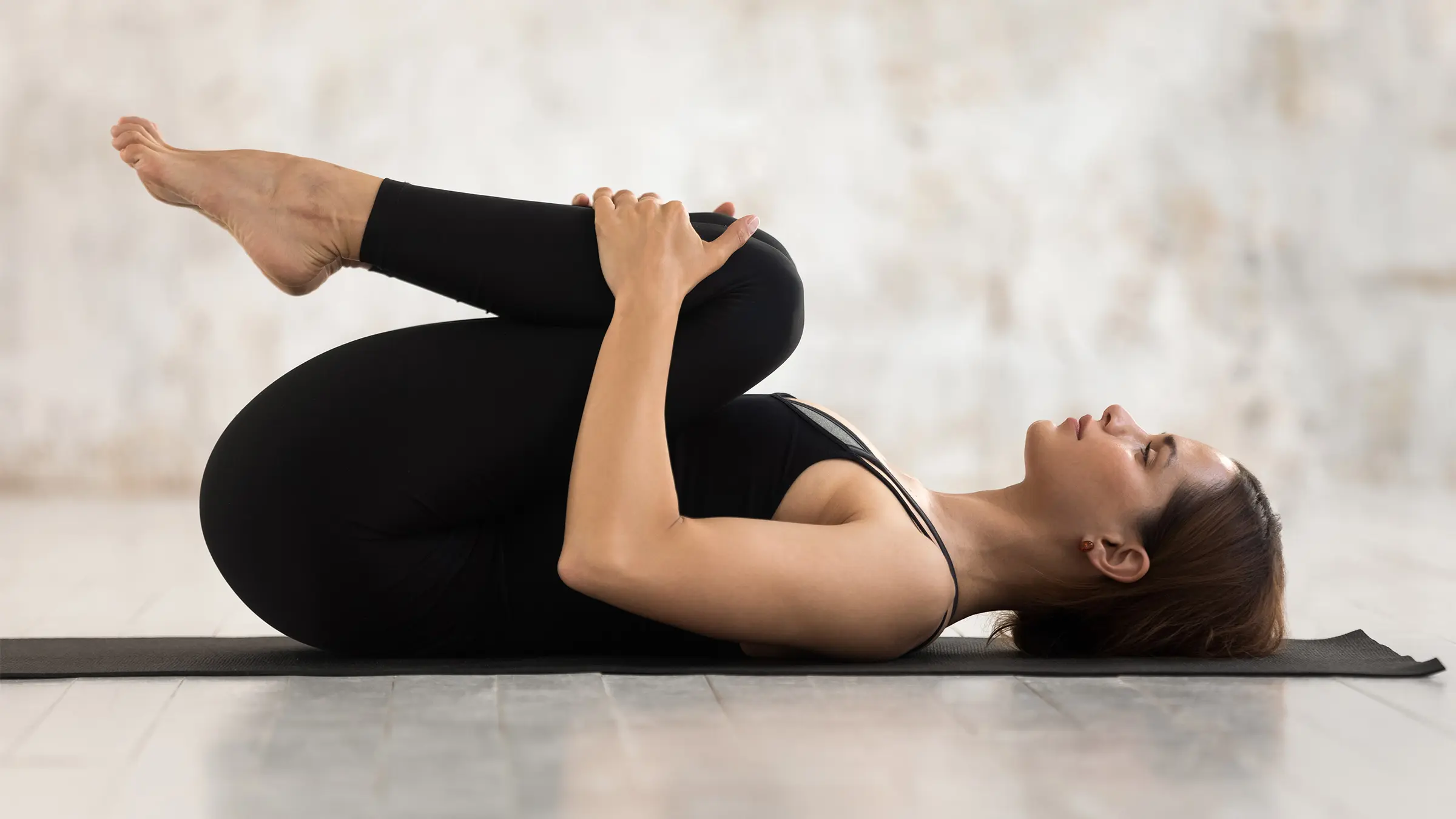
- Child’s pose breathing: 4 to 6 slow breaths
- Glute bridge: 2 sets of 8 reps
- Dead bug (slow): 2 sets of 6 reps per side
- Standing calf raises (hold a wall): 2 sets of 10 reps
Option 2: 10-minute easy strength circuit
Do 2 rounds. Rest as needed.
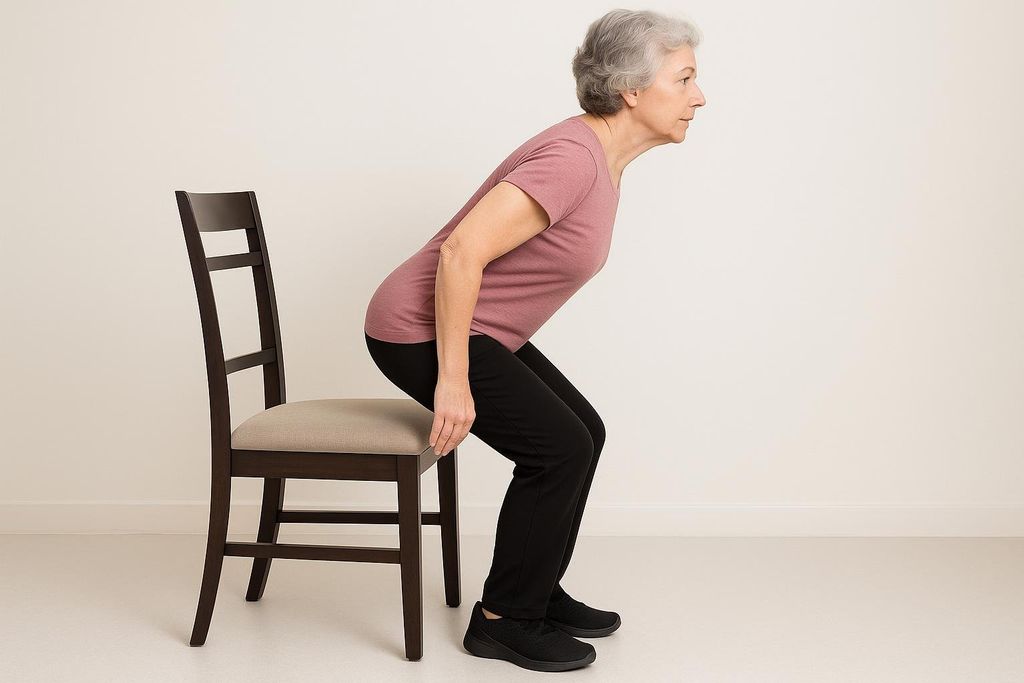
- Chair sit-to-stand: 8 reps
- Wall push-ups: 8 reps
- Hip hinge good-mornings (hands on hips): 8 reps
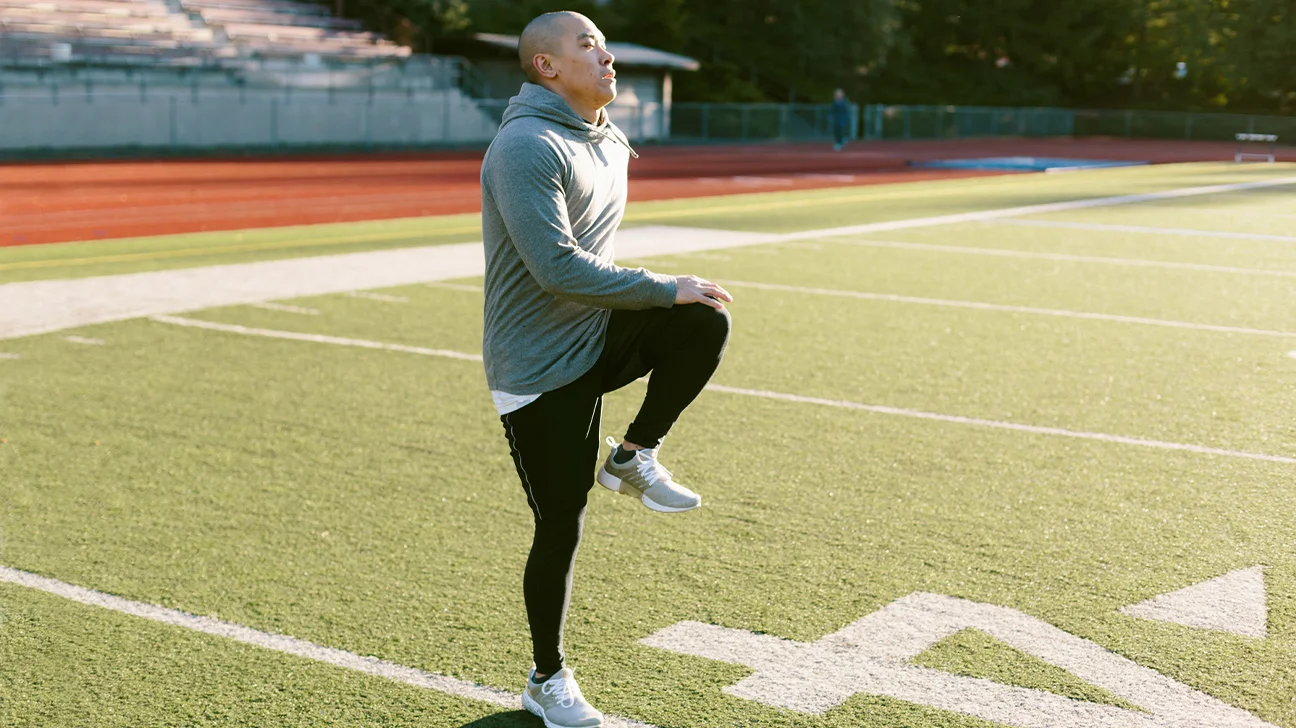
- March in place: 45 seconds
Option 3: Recovery walk at home
- 5 minutes easy walking in place
- 3 minutes gentle step-ups on a stable step (optional)
- 2 minutes slow nasal breathing while walking
Rule: stop while you still feel good. You are building consistency, not proving toughness.
What to avoid at first
- No high-intensity intervals (sprints, burpees, max circuits).
- No “see where I’m at” tests (max push-ups, timed runs, hardest set).
- No long sessions just because you missed days.
- No breath-holding straining. Keep reps smooth and easy.
- No training through chest symptoms or unusual breathlessness.
When in doubt: reduce intensity first, reduce duration second, and keep the movements simple.
A simple progression
Use this as a practical ladder. You only climb when you feel stable.
- Step 1: Easy movement (5 to 15 minutes) with no symptom flare.
- Step 2: Short, easy workout (10 to 20 minutes), light sweat at most.
- Step 3: Normal workout movements at reduced volume (about 50 to 70 percent of your usual).
- Step 4: Gradually add sets and minutes back over several sessions.
Many people can resume light activity once they are fever-free and clearly improving. Getting all the way back to full intensity often takes a few additional days, sometimes longer, especially after flu or COVID. If symptoms worsen at any step, drop back down. That is not failure. That is smart training.
FAQ
Should I work out if I still have a cough?
A mild, improving cough may be okay with very gentle movement, but a cough that is worsening, deep, painful, paired with chest tightness, or makes you unusually breathless is a reason to rest and consider medical advice. Your breathing should feel steady and unforced during exercise.
What about “above the neck” symptoms?
Some people use the “above the neck” idea (runny nose, mild sore throat) as a green light. I prefer a safer version: even with mild symptoms, keep effort low and watch what happens later that day and the next day. If anything moves into the chest, your energy tanks, or symptoms worsen, stop.
How hard should my first workout feel?
Easy. You should be able to hold a conversation in full sentences. If you are breathing hard enough that talking is choppy, you are going too fast for a comeback session.
Is sweating a good sign that I am “back”?
Not necessarily. Sweating can happen from a warm room or mild effort. The better signs are steady improvement in symptoms, normal daily energy, and no setback the next day.
When should I return to intense workouts?
When you can complete several easy to moderate sessions with no symptom flare, no unusual breathlessness, and no next-day crash. If you are unsure, stay conservative. Consistency beats intensity, especially during recovery.
What if I’m going back to the gym?
Be a good citizen: wait until you are fever-free and improving, follow facility policies, and consider extra space or a mask if you are still coughing. If you are actively sick, a home session is the kinder choice.
A coach-style reminder
Getting sick does not erase your progress. If anything, coming back patiently is a skill that builds long-term fitness.
If you want a simple rule to carry with you: return with less intensity than you think you need, and give your body a full day to prove it handled it well.
Your next workout is not a test. It is the first brick back on the path.